
Anxiety can affect your thoughts, emotions, body, sleep, work, and relationships. If worry or fear is becoming difficult to manage, you may wonder how to get diagnosed with anxiety. Getting a diagnosis usually starts with talking to a healthcare or mental health professional about your symptoms, how long they have lasted, and how they affect your daily life. A professional may also use screening tools and check for other possible causes.
At Placid Psychiatry in Fullerton, CA, you can discuss anxiety symptoms with a mental health professional and learn what type of support may be appropriate for you. The practice offers in-person care in Fullerton as well as telehealth appointments.
Understanding Anxiety and Anxiety Disorders

Anxiety is a normal response to stress. It can help you stay alert when you face a challenge or possible danger. However, anxiety can become a concern when fear or worry is intense, happens often, or begins to interfere with everyday life.
Anxiety disorders include several conditions with different patterns of fear, worry, and avoidance. Common types include generalized anxiety disorder, panic disorder, social anxiety disorder, and specific phobias.
What Is an Anxiety Disorder?
An anxiety disorder is more than occasional nervousness or worry. It can involve ongoing fear, excessive worry, physical symptoms, or avoidance that makes daily activities harder.
For example, someone with generalized anxiety disorder may worry about many areas of life and have difficulty controlling those worries. The symptoms may continue for months and affect work, relationships, sleep, or other responsibilities.
A professional looks at the overall pattern rather than one symptom. Your provider may consider the type of anxiety you experience, how long it has been happening, and whether it is affecting your ability to function.
Common Signs and Symptoms of Anxiety
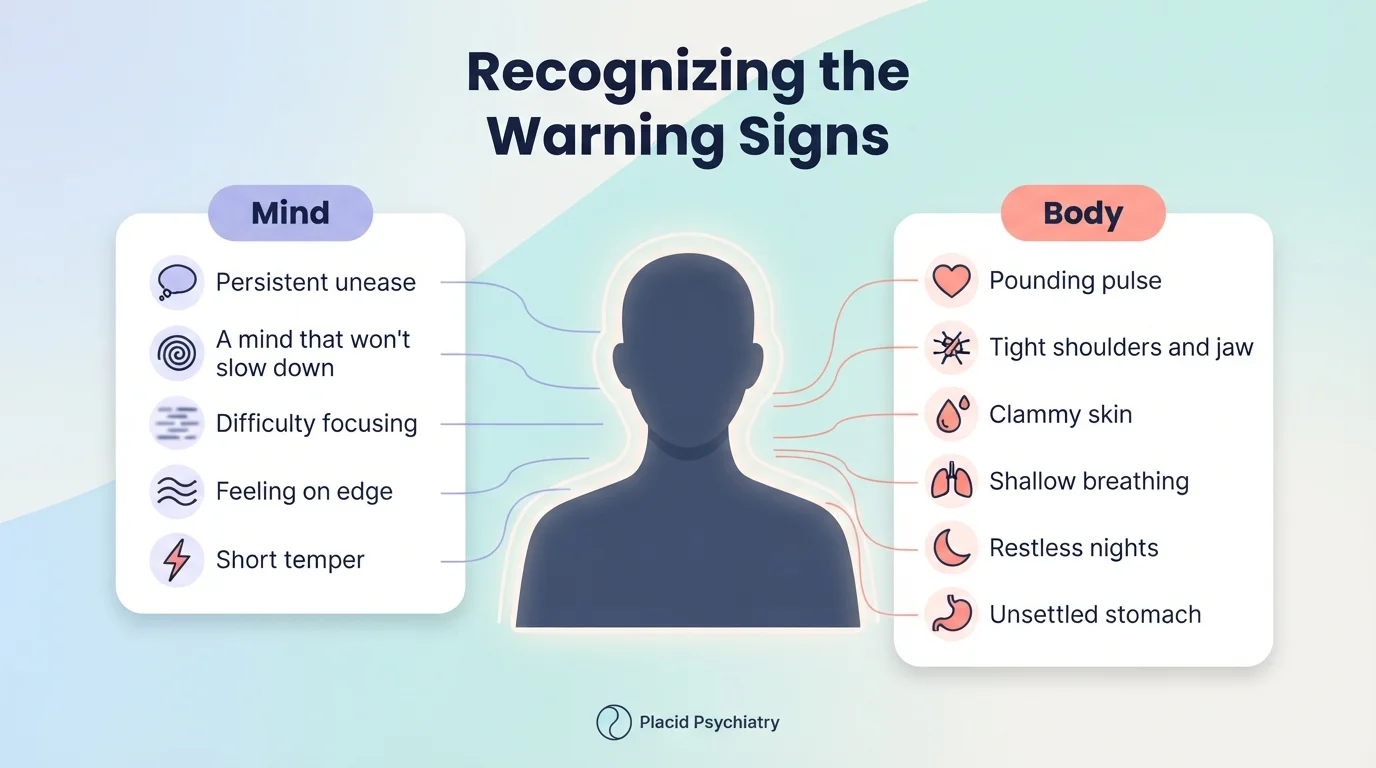
Anxiety can affect both your mind and body. Common symptoms may include:
- Excessive or difficult-to-control worry
- Feeling restless or on edge
- Racing thoughts
- Trouble concentrating
- Irritability
- Muscle tension
- Sleep problems
- Fast heartbeat
- Sweating or trembling
- Shortness of breath
- Stomach discomfort
- Avoiding situations because of fear
Not everyone experiences the same symptoms. Some people mainly notice emotional symptoms, while others notice physical symptoms first.
How to Get Diagnosed With Anxiety
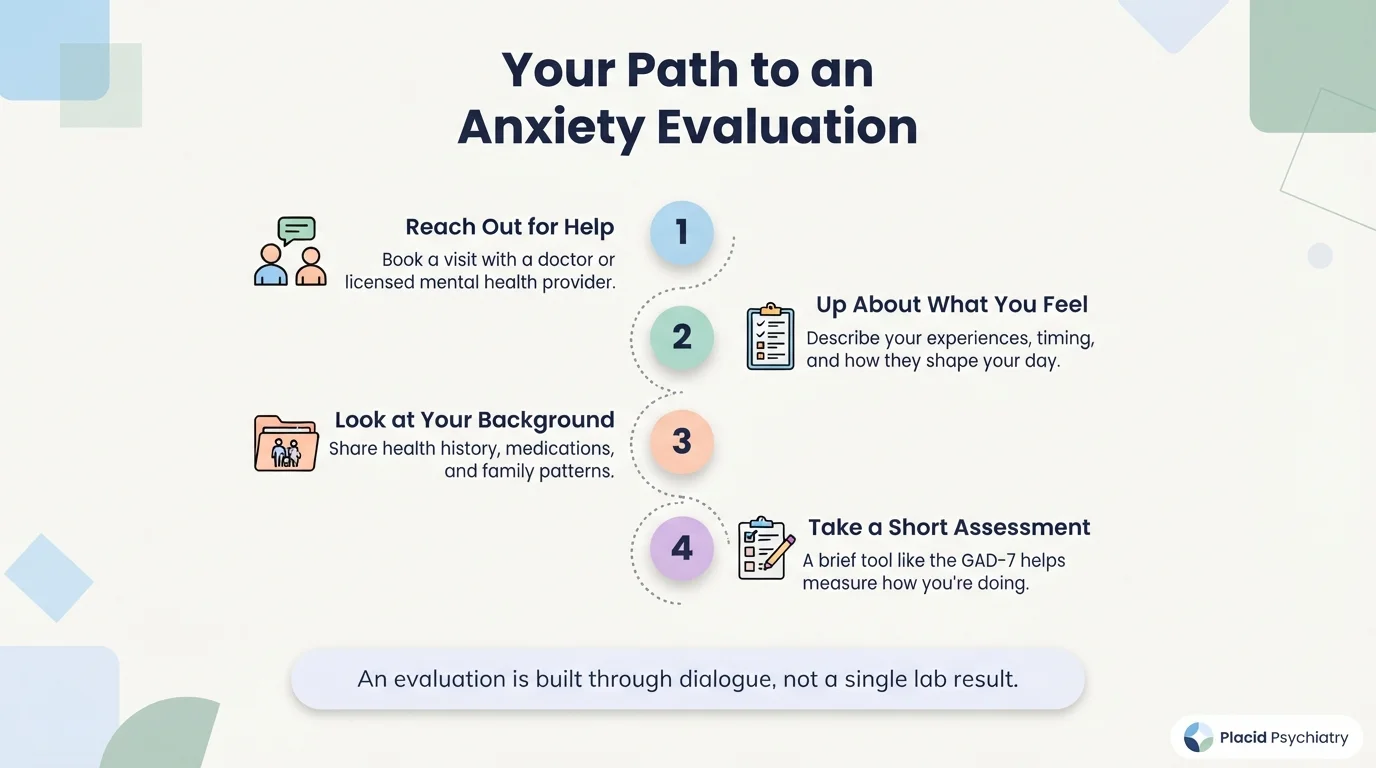
There is no single blood test or scan that can confirm every anxiety disorder. Diagnosis usually involves a conversation and clinical assessment. Your provider will look at your symptoms, history, daily functioning, and other possible explanations.
Start With a Primary Care Doctor or Mental Health Professional
You can start with a primary care doctor, psychiatrist, psychologist, or another qualified mental health professional. A primary care doctor can also help determine whether a physical health condition may be contributing to your symptoms.
Mental health professionals can assess anxiety symptoms and determine whether they fit a specific anxiety disorder. NIMH recommends talking with a healthcare provider when you think you may have symptoms of conditions such as generalized anxiety disorder or panic disorder.
Discuss Your Symptoms and Concerns
During an appointment, be honest about what you have been experiencing. You may be asked when your symptoms started, how often they happen, what makes them worse, and how they affect your life.
You can also explain symptoms that may feel unrelated, such as headaches, stomach problems, poor sleep, or trouble concentrating. Physical symptoms can be part of anxiety, so sharing the full picture can help your provider understand what is happening.
Review Your Medical and Family History
Your provider may ask about your medical history, medications, past mental health concerns, family history, and major life events. This information can help provide context for your symptoms.
Some physical health conditions and medications can produce symptoms that resemble anxiety. A complete history helps your provider consider these possibilities instead of assuming every symptom is caused by anxiety.
Complete an Anxiety Screening
You may be asked to complete a short questionnaire about your symptoms. One commonly used tool is the GAD-7, which asks about anxiety symptoms over a recent period. A screening questionnaire can help identify the level of symptoms and support the assessment.
However, a questionnaire by itself does not provide a complete diagnosis. A professional needs to consider your symptoms and personal situation as a whole. NICE describes the GAD-7 as a useful assessment tool, while clinical assessment remains important.
Anxiety Screening Tools and Tests
Anxiety screening tools can make an assessment more organized and help track symptoms over time. They are not a replacement for a professional evaluation.
Can an Anxiety Test Diagnose Anxiety?
An online anxiety test or questionnaire cannot, by itself, confirm that you have an anxiety disorder. A screening tool can show that your symptoms may need further evaluation. A professional diagnosis requires more information, including your symptoms, duration, daily functioning, medical history, and other possible causes.
What Your Screening Results Mean
A screening score is only one part of the assessment. A higher score does not automatically mean you have a specific anxiety disorder, and a lower score does not always mean that your concerns are unimportant. Your provider can explain what your results mean and whether additional assessment is needed.
How Doctors Diagnose Different Anxiety Disorders
Doctors diagnose anxiety disorders by looking at the type, frequency, and severity of a person’s symptoms. They may ask about worry, fear, panic attacks, avoidance, physical symptoms, and how these concerns affect daily life. They also consider how long the symptoms have been present and whether they match the criteria for a specific anxiety disorder. Because different conditions can have similar symptoms, a professional may also check for medical problems or other mental health conditions.
The diagnosis can include conditions such as generalized anxiety disorder, panic disorder, social anxiety disorder, and specific phobias. Each condition has its own pattern of symptoms, so doctors do not use one test for every type of anxiety. Instead, they combine your answers, medical and mental health history, screening tools, and clinical judgment to understand what you are experiencing and determine the most appropriate diagnosis.
How to Prepare for an Anxiety Diagnosis
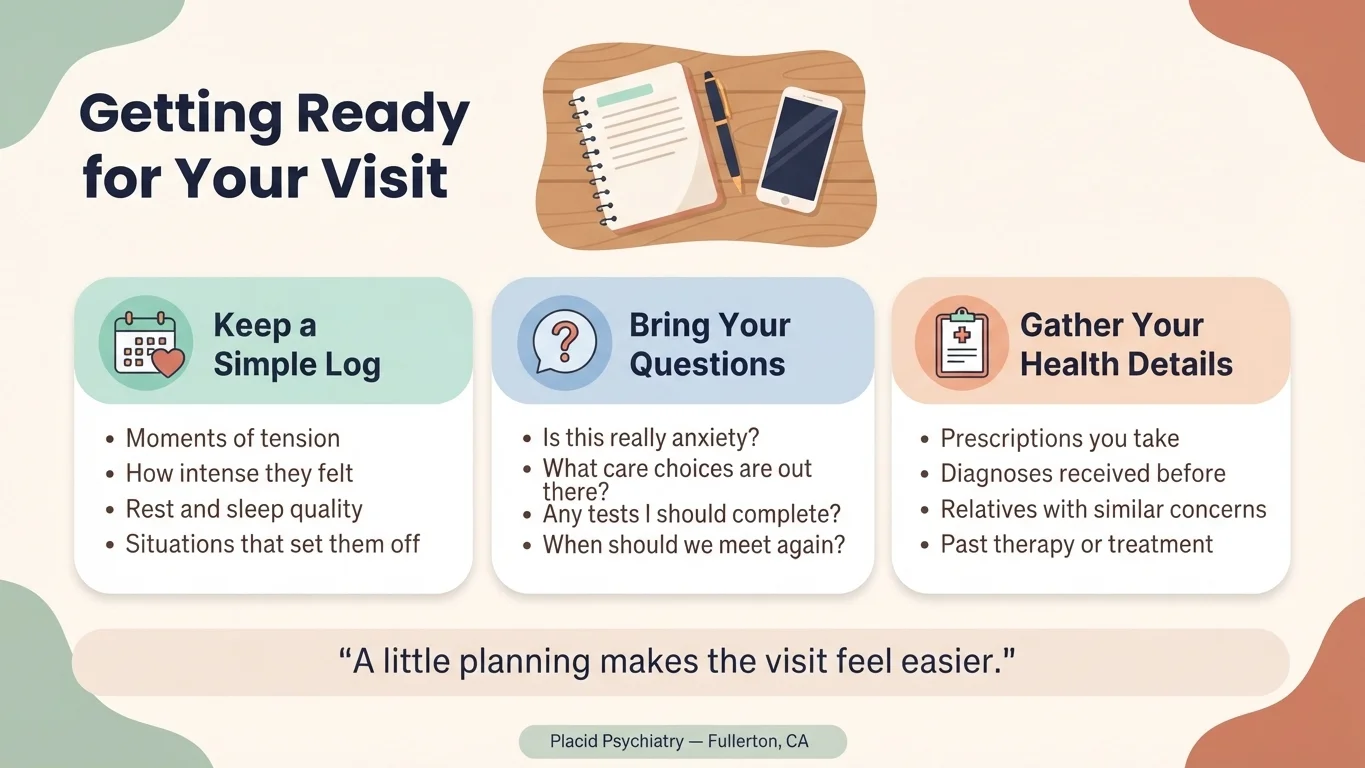
You do not need to have everything figured out before your appointment. A little preparation can make it easier to explain what you have been experiencing.
Track Your Symptoms
For several days or weeks, write down when you feel anxious, what was happening at the time, how strong the symptoms felt, and how long they lasted. You can also track sleep, physical symptoms, panic attacks, avoidance, and situations that seem to trigger anxiety.
Write Down Questions for Your Provider
Bring a short list of questions to your appointment. You might ask:
- Could my symptoms be related to anxiety?
- What type of anxiety might I be experiencing?
- Do I need any medical tests?
- What do my screening results mean?
- What treatment options are available?
- How often should I follow up?
Bring Relevant Medical Information
Bring information about current medications, previous diagnoses, medical conditions, past treatment, and family mental health history if you have it.
This information can help your provider understand your symptoms and consider other factors that may be affecting your mental health.
What Happens After an Anxiety Diagnosis?
Receiving a diagnosis can help explain what you have been experiencing. It can also give you a clearer starting point for treatment.
Discuss Your Treatment Options
Treatment depends on the type and severity of anxiety, your symptoms, your preferences, and other health factors. Options may include psychotherapy, medication, or a combination of approaches. Your provider can explain the available choices and help you understand what each option involves.
Consider Therapy for Anxiety
Therapy can help people understand anxious thoughts, manage symptoms, and develop healthier ways to respond to fear and stress. At Placid Psychiatry, anxiety care can include evaluation, personalized treatment planning, therapy, and medication management based on individual needs.
Follow Up and Monitor Your Symptoms
Anxiety symptoms can change over time. Follow-up appointments allow your provider to see whether treatment is helping and whether anything needs to be adjusted. Keeping track of symptoms can also help you notice changes and communicate them clearly during future appointments.
When Should You Seek Professional Help for Anxiety?
Consider seeking professional help when anxiety is difficult to control, continues for a long time, or interferes with your everyday life.
You may also want to seek an evaluation if anxiety causes repeated panic attacks, affects your sleep, leads you to avoid important activities, interferes with work or relationships, or causes significant physical symptoms.
You do not have to wait until anxiety becomes severe before asking for help. A professional can help you understand what your symptoms may mean and what options are available.
Conclusion
Knowing how to get diagnosed with anxiety can make the process feel less uncertain. Diagnosis usually starts with a conversation about your symptoms, medical and family history, and how anxiety affects your daily life. A provider may also use screening tools such as the GAD-7 and consider whether physical or other mental health conditions could be contributing to your symptoms.
Anxiety is treatable, and getting an assessment can be an important first step toward understanding what you are experiencing. You do not need to diagnose yourself before making an appointment. A qualified professional can help you understand your symptoms and discuss appropriate treatment options.
Get Support for Anxiety
If anxiety is affecting your daily life, Placid Psychiatry in Fullerton, CA can help you take the next step. The practice provides in-person appointments in Fullerton and secure telehealth care, with anxiety treatment that can include evaluation, therapy, and medication management. Ready to understand your anxiety and explore your treatment options? Contact Placid Psychiatry to schedule an appointment.
Frequently Asked Questions
How can I confirm if I have anxiety?
The best way to find out whether you have an anxiety disorder is to speak with a qualified professional. Online tests can help you recognize symptoms, but they cannot provide a complete diagnosis. A professional will consider your symptoms, history, and how anxiety affects your life.
What are some signs of an anxiety disorder?
Common signs include excessive worry, feeling restless or on edge, trouble concentrating, sleep problems, muscle tension, panic symptoms, and avoiding situations because of fear. Anxiety becomes more concerning when it is persistent or interferes with daily life.
Can a doctor diagnose anxiety?
Yes. A primary care doctor can evaluate anxiety symptoms and may diagnose or refer you for further mental health assessment. A psychiatrist, psychologist, or other qualified mental health professional can also evaluate anxiety disorders.
How long does an anxiety diagnosis take?
The time can vary depending on your symptoms and the type of assessment needed. Some evaluations may be completed during one appointment, while more complex concerns may require additional visits or medical evaluation. Your provider can explain what to expect based on your situation.