
Antidepressants are commonly used to treat depression and several anxiety disorders. Two common groups are selective serotonin reuptake inhibitors, or SSRIs, and serotonin-norepinephrine reuptake inhibitors, or SNRIs. The main difference between SSRI and SNRI is how they affect brain chemicals. SSRIs mainly affect serotonin, while SNRIs affect both serotonin and norepinephrine.
At Placid Psychiatry in Fullerton, CA, medication treatment is based on each person’s symptoms, diagnosis, medical history, other medicines, and treatment goals. A psychiatric evaluation can help determine which treatment options may be appropriate.
Although both groups can help with depression and anxiety, they are not identical. They can have different side effects, drug interactions, withdrawal effects, and approved uses. Understanding these differences can help you have a better discussion with your healthcare provider.
What Is the Difference Between an SSRI and SNRI?
SSRIs and SNRIs are both types of antidepressants. They work by changing how certain neurotransmitters are handled in the nervous system. SSRIs mainly affect serotonin. They block the reuptake of serotonin, which allows more serotonin to remain available between nerve cells.
SNRIs also affect serotonin, but they additionally affect norepinephrine. This second neurotransmitter plays a role in alertness, attention, energy, and the body’s response to stress. The basic difference is therefore simple. SSRIs mainly target serotonin, while SNRIs target serotonin and norepinephrine.
This does not mean SNRIs are automatically stronger than SSRIs. Affecting two neurotransmitters does not guarantee better results. People can respond differently to the same medication.
A detailed review of SNRIs explains the pharmacology, clinical effects, and tolerability of these medicines compared with other antidepressant groups. The review also shows that individual SNRIs are not exactly alike. Research on SNRI pharmacology, clinical efficacy, and tolerability provides more detail on these differences.
How Do SSRIs and SNRIs Work?
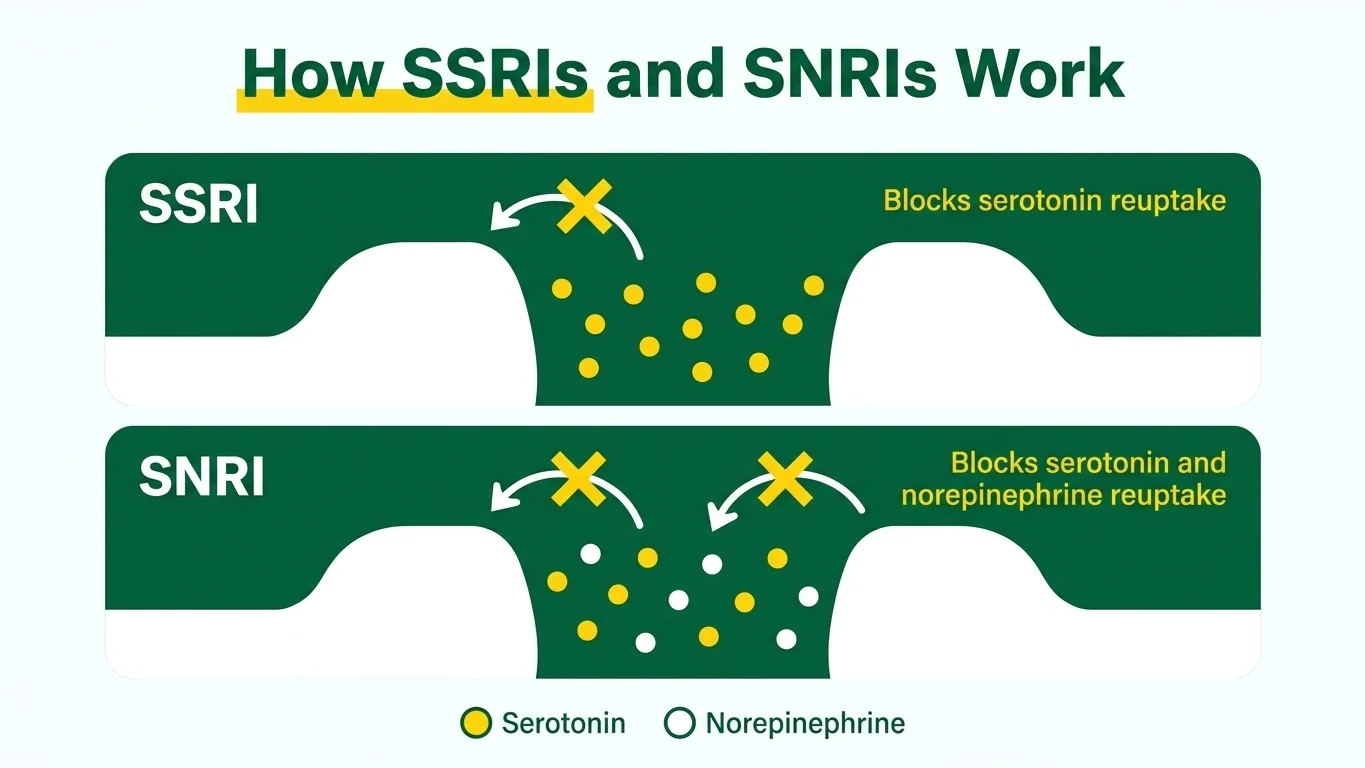
SSRIs and SNRIs affect chemical signaling in the brain, but they do so in slightly different ways. Understanding what each medication group targets can make the difference between them easier to understand.
How SSRIs Affect Serotonin
Serotonin is a neurotransmitter involved in mood, anxiety, sleep, and several other body functions. After serotonin is released between nerve cells, some of it is taken back into the nerve cell. This process is called reuptake.
SSRIs slow this reuptake process. This allows serotonin to remain available for signaling for a longer period. Common SSRIs include fluoxetine, sertraline, escitalopram, citalopram, and paroxetine. The specific effects and approved uses vary between medications.
SSRIs do not simply add serotonin to the brain. Their effects involve changes in communication between nerve cells over time. This is one reason they usually do not provide their full effect immediately.
How SNRIs Affect Serotonin and Norepinephrine
SNRIs also reduce the reuptake of serotonin. However, they additionally affect norepinephrine. Norepinephrine is involved in alertness, attention, energy, and the body’s response to stress.
The amount of serotonin and norepinephrine activity can vary between different SNRIs. Venlafaxine, duloxetine, desvenlafaxine, and levomilnacipran have different pharmacological properties.
The review of serotonin-norepinephrine reuptake inhibitors and their similarities and differences explains why SNRIs should not be treated as one identical medication. The specific drug and dose can affect its clinical effects and side effects.
SSRI vs SNRI: Key Differences at a Glance
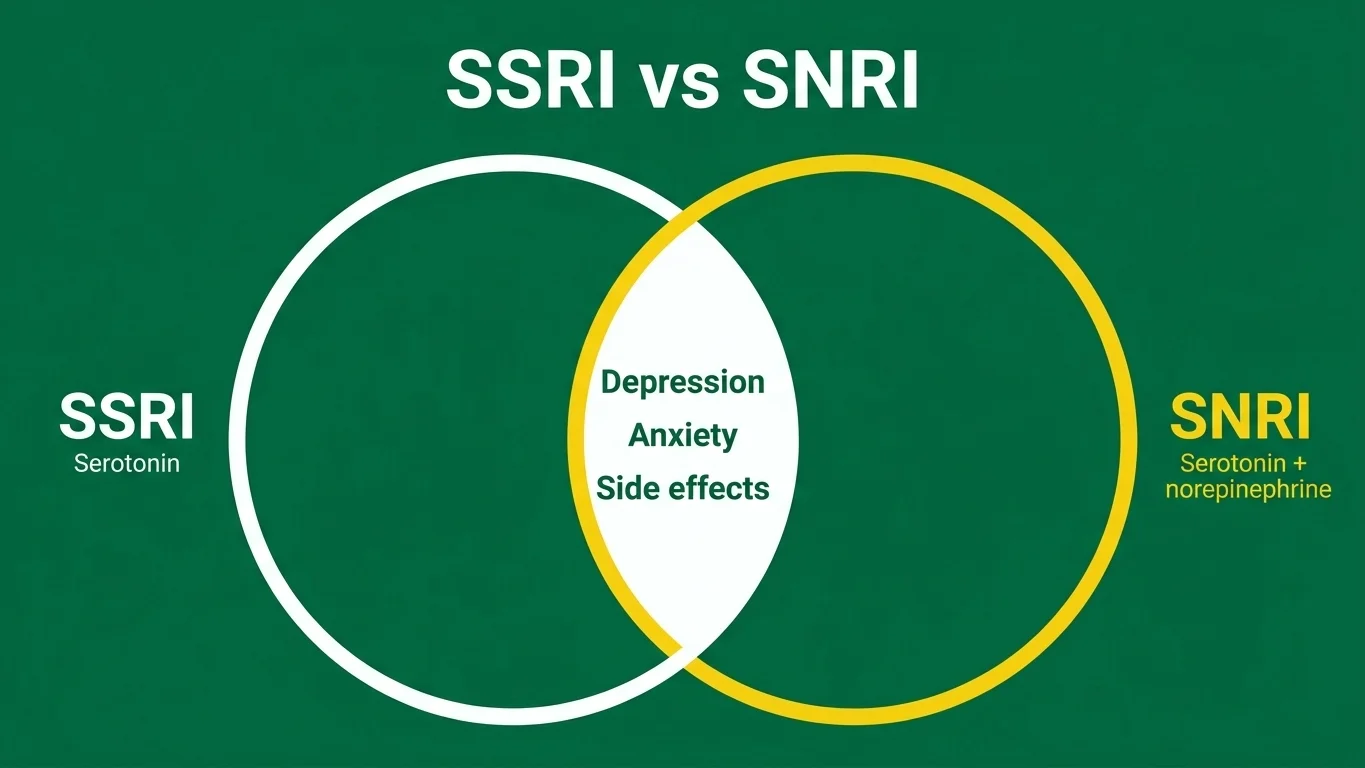
SSRIs and SNRIs have several important differences, but they also have many similarities. Both can be used for depression and certain anxiety disorders. Both can cause side effects, and both may cause discontinuation symptoms if stopped too quickly.
The main difference is the neurotransmitters they affect. SSRIs mainly work through serotonin, while SNRIs affect serotonin and norepinephrine. Their approved uses also differ. Some SNRIs are used for certain chronic pain conditions, while SSRIs generally do not have the same pain-related role.
Side effects can overlap between the two groups. However, some SNRIs can increase blood pressure, which may be an important consideration for some people. Withdrawal symptoms can also occur with both groups. The risk depends on the specific medicine, dose, treatment length, and how quickly the medication is reduced.
Drug interactions are another important consideration. A psychiatrist needs to know about prescription medicines, over-the-counter products, supplements, and herbal products before recommending an antidepressant.
Common SSRI Medications
SSRIs are among the most commonly prescribed antidepressants.
Fluoxetine is an SSRI used to treat depression and several other conditions.
Sertraline is commonly used for depression, panic disorder, obsessive-compulsive disorder, social anxiety disorder, and other conditions depending on the patient’s diagnosis.
Escitalopram is used for depression and generalized anxiety disorder.
Citalopram is mainly used to treat depression.
Paroxetine can be used for depression and several anxiety-related conditions.
These medicines belong to the same group, but they are not identical. They can differ in their half-life, dosing, interactions, side effects, and approved uses.
The FDA provides information on antidepressant medicines, including SSRIs, their common side effects, and important safety considerations.
Common SNRI Medications
SNRIs include several different medicines.
Venlafaxine is used for depression and some anxiety disorders.
Duloxetine is used for depression and anxiety and is also used for certain types of chronic pain.
Desvenlafaxine is mainly used for major depressive disorder.
Levomilnacipran is used for major depressive disorder.
SNRIs should not be treated as one identical group. Their effects on serotonin and norepinephrine can differ.
The Cambridge review of SNRI medicines and their clinical effects discusses differences between individual SNRIs and their use in depression, anxiety, and pain.
What Conditions Are SSRIs Used to Treat?
SSRIs can be prescribed for several mental health conditions. They are commonly used for depression and anxiety disorders. Depending on the specific SSRI, they may also be prescribed for panic disorder, obsessive-compulsive disorder, social anxiety disorder, and post-traumatic stress disorder. Not every SSRI is approved for every condition. The specific medication should be matched with the person’s diagnosis.
SSRIs are also commonly considered when anxiety is a major concern. Clinical guidelines support the use of SSRIs for several anxiety disorders.
Research comparing SSRIs and SNRIs has found that both groups can be effective for anxiety disorders. A systematic review and meta-analysis examined 57 randomized trials involving more than 16,000 adults and found no significant overall difference in efficacy between the two medication groups.
What Conditions Are SNRIs Used to Treat?
SNRIs can also be used for depression and several anxiety disorders. Depending on the medication, they may be prescribed for generalized anxiety disorder, panic disorder, social anxiety disorder, and other conditions. One important difference is their role in certain pain conditions. Duloxetine, for example, is used for some chronic pain conditions as well as depression and anxiety. Some other SNRIs have also been studied for pain.
A review of SNRIs found evidence for their use in several anxiety disorders and chronic pain conditions. Clinical research on SNRIs, depression, anxiety, and pain explains these uses in more detail. This does not mean an SNRI is automatically the right choice for someone with pain. The cause of the pain, other health conditions, current medicines, and mental health symptoms all need to be considered.
SSRI vs SNRI for Anxiety
Both SSRIs and SNRIs can be used to treat anxiety disorders. The choice often depends on the person’s diagnosis, symptoms, previous treatment, side effects, and other health factors. SSRIs have been widely studied for anxiety. They are commonly used for conditions such as generalized anxiety disorder, panic disorder, and social anxiety disorder.
SNRIs can also be effective for anxiety. The available research does not support the idea that SNRIs are always better than SSRIs.
The systematic review of 57 randomized trials found that both SSRIs and SNRIs were effective for anxiety disorders, without a significant overall difference in efficacy between the two classes. Research comparing the effectiveness and tolerability of SSRIs and SNRIs for anxiety also found that treatment response and side effects can depend on the dose and medication.
This is why the question is not simply, “Which one is stronger?” A better question is, “Which medication is appropriate for this person’s condition and situation?”
SSRI vs SNRI for Depression
Both SSRIs and SNRIs are used to treat depression. SSRIs are often used as an initial medication option because they have been widely studied and used for depression. SNRIs are another established option. A clinician may consider an SNRI when a person has not responded well to another antidepressant or when certain symptoms or health conditions make an SNRI worth considering.
For example, some SNRIs can also help with certain types of pain. That may be relevant when a person has both depression and a pain condition. Research comparing SSRIs and SNRIs has looked at response, remission, side effects, and treatment discontinuation.
A recent review of differences between these antidepressant groups discusses clinical findings from earlier studies involving medications such as venlafaxine, duloxetine, sertraline, and escitalopram. Review of similarities and differences between SSRIs and SNRIs provides further discussion of these comparisons. The results do not mean that one class will work better for every person. Individual response remains important.
Side Effects of SSRIs vs SNRIs
SSRIs and SNRIs can cause many of the same side effects, but some effects may be more noticeable with certain medicines.
Common SSRI Side Effects
Common SSRI side effects can include nausea, headache, sweating, tiredness, sleep changes, restlessness, and sexual problems. Some people notice side effects soon after starting treatment. These may improve as the body adjusts.
Sexual side effects can sometimes continue during treatment. This can include reduced sexual desire, difficulty reaching orgasm, or other sexual problems. Research on antidepressant side effects shows that sexual dysfunction is an important concern with several antidepressant medicines. Research on sexual side effects and antidepressant treatment discusses differences reported between antidepressant medications.
Common SNRI Side Effects
SNRIs can cause nausea, dizziness, sweating, dry mouth, constipation, tiredness, sleep changes, and sexual problems. Some SNRIs can also increase blood pressure. This is particularly relevant with certain medications and doses.
For this reason, a healthcare provider may consider blood pressure and other health factors before choosing an SNRI.
The FDA includes nausea, dry mouth, dizziness, sweating, sexual problems, and increased blood pressure among possible effects of SNRIs.
Side Effects Both Classes Can Cause
Both SSRIs and SNRIs can affect digestion, sleep, sexual function, and energy. Both can also cause discontinuation symptoms when stopped too quickly. Another important concern is serotonin syndrome. This is uncommon but can become serious. The risk can increase when medicines that affect serotonin are combined in certain ways. Because of this, patients should tell their healthcare provider about all medications and supplements they use.
When Side Effects Need Medical Attention
Not every side effect is an emergency. Mild nausea, headache, or sleep changes may occur when treatment begins. However, severe or unusual symptoms should be discussed with a healthcare professional.
Seek urgent medical care for severe confusion, seizures, fainting, severe allergic reactions, or symptoms that may suggest serotonin syndrome. New or worsening suicidal thoughts also require immediate attention.
SSRI vs SNRI: Withdrawal and Stopping Treatment
Antidepressants should generally not be stopped suddenly without medical advice. Stopping an SSRI or SNRI too quickly can cause discontinuation symptoms. These can include dizziness, nausea, headaches, sleep problems, anxiety, irritability, flu-like feelings, and unusual electric shock-like sensations.
The risk differs between medicines. Some medicines have a higher risk of noticeable discontinuation symptoms because of how quickly the medication leaves the body.
Venlafaxine is one medication that can cause significant discontinuation symptoms when stopped suddenly. Research comparing antidepressants has examined withdrawal and tolerability differences between individual medicines. Research on differences between antidepressant medications discusses these concerns.
A clinician may gradually reduce the dose instead of stopping the medication at once. The exact plan depends on the medicine, dose, treatment duration, and the person’s response. Never change your antidepressant dose on your own simply because you are experiencing side effects or feel better. Speak with your prescriber first.
SSRI vs SNRI Drug Interactions and Safety
Both SSRIs and SNRIs can interact with other medicines and supplements. Tell your healthcare provider about all prescription drugs, over-the-counter medicines, supplements, and herbal products you take.
This is especially important with other antidepressants, certain pain or migraine medicines, blood thinners, and products that affect serotonin. St. John’s wort can also interact with antidepressants. The FDA guidance on antidepressant safety and drug information provides more information.
Some combinations can increase the risk of serotonin syndrome. Symptoms may include agitation, confusion, sweating, shaking, fever, fast heartbeat, and muscle problems. Severe symptoms need urgent medical attention.
How Long Do SSRIs and SNRIs Take to Work?
SSRIs and SNRIs usually take time to provide their full effects. Some people notice early changes in sleep, appetite, anxiety, or energy before their mood improves.
For depression and anxiety, several weeks may be needed to judge the full response. Research on the timing and effectiveness of SSRI and SNRI treatment shows that treatment response can vary between people and medications.
If you do not notice improvement, do not increase the dose yourself. Your clinician can review your dose, treatment length, side effects, and other factors.
How Do Doctors Choose Between an SSRI and SNRI?
Choosing between an SSRI and SNRI involves more than looking at the medication class.
Main Symptoms
Your main symptoms can influence the decision. Depression, anxiety, panic symptoms, pain, sleep problems, and low energy may all be relevant.
Diagnosis
The diagnosis is another important factor. Different medicines have different approved uses and levels of evidence for specific conditions.
Previous Medication Response
If you have taken an antidepressant before, your response can provide useful information. A medicine that previously helped may be considered again. A medicine that causes difficult side effects may be avoided.
Side-Effect Concerns
Your clinician may also consider the side effects you are most concerned about. For example, blood pressure may matter when considering certain SNRIs. Sexual side effects may also be an important concern with both SSRIs and SNRIs.
Other Medications and Health Conditions
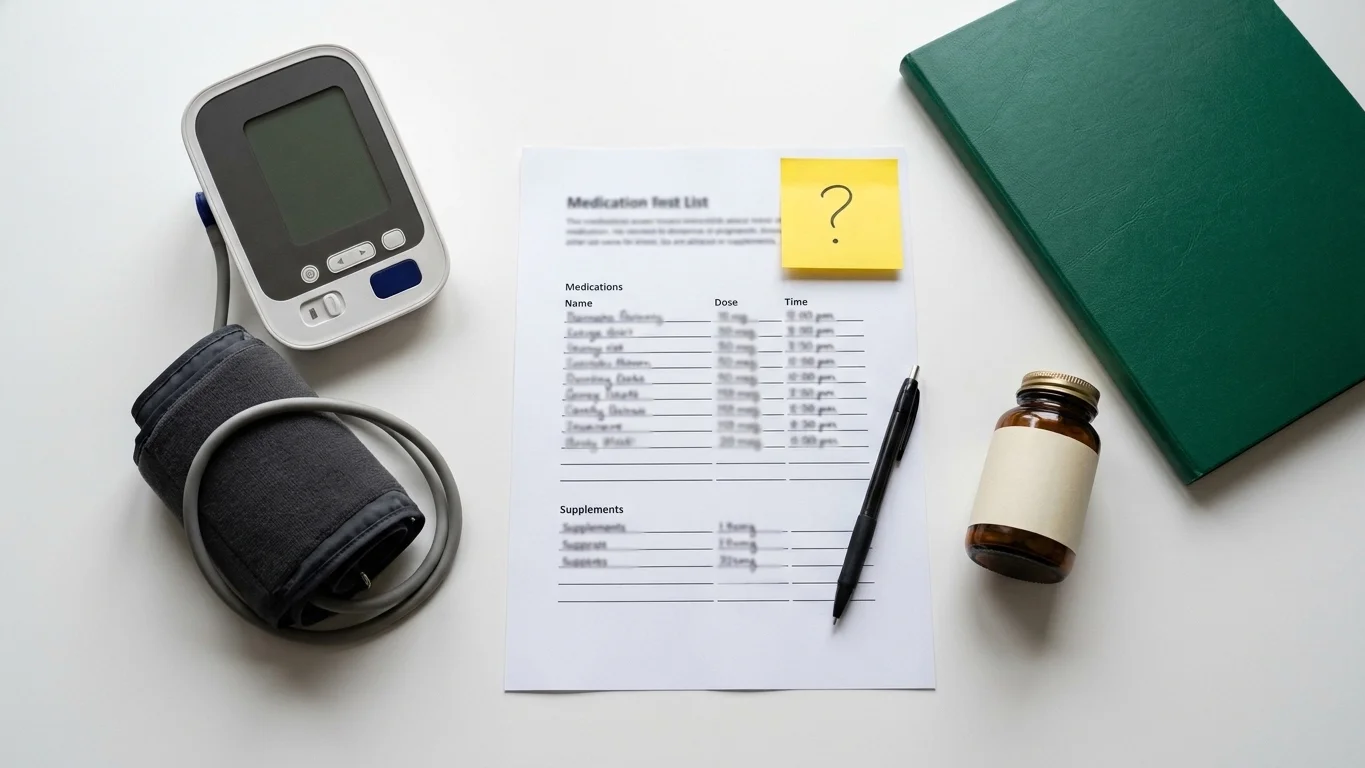
Other medicines can affect the choice because of possible interactions. Health conditions such as high blood pressure, liver problems, kidney problems, or heart conditions may also be relevant.
Patient Preferences and Treatment Goals
Your preferences matter too. Medication treatment is not only about the diagnosis. Your treatment goals, concerns, past experiences, and willingness to continue medication are important parts of the decision.
What Happens If an SSRI or SNRI Does Not Work?
Sometimes an antidepressant does not provide enough improvement. This does not necessarily mean that treatment has failed. The clinician may first check whether the medication has been taken long enough and whether the dose is appropriate. If needed, the clinician may adjust the dose or switch to another medication. A person taking an SSRI might switch to another SSRI, an SNRI, or another type of antidepressant.
Someone taking an SNRI may also be switched to another medication. In some cases, another treatment may be added. Psychotherapy is one option that may be used with medication. Depending on the condition, other forms of treatment may also be considered.
The important point is that medication changes should be supervised. Stopping one antidepressant and starting another without guidance can cause withdrawal symptoms, interactions, or other problems.
Conclusion
The main difference between SSRI and SNRI medications is the neurotransmitters they affect. SSRIs mainly affect serotonin, while SNRIs affect both serotonin and norepinephrine.
Both medication groups can be used to treat depression and anxiety. Some SNRIs also have uses for certain chronic pain conditions. However, individual medicines within each group can work differently and have different side effects.
There is no single antidepressant that is right for everyone. A clinician may consider your diagnosis, symptoms, previous treatment, other medicines, health conditions, side-effect concerns, and treatment goals when choosing between an SSRI and SNRI.
If your current medication is not helping enough or is causing difficult side effects, there may be other treatment options. Do not stop or change an antidepressant suddenly. Talk with your healthcare provider about the safest next step.
Get Professional Help for Medication Management
Finding the right antidepressant can take time. A psychiatric evaluation can help you understand your symptoms and discuss medication options based on your individual needs.
Placid Psychiatry in Fullerton, CA provides psychiatric evaluation and medication management for people who need professional support with mental health treatment. Telehealth services may also be available when appropriate.
If you have questions about starting an SSRI, SNRI, changing medication, or managing side effects, contact Placid Psychiatry to learn more about psychiatric evaluation and medication management.
Frequently Asked Questions
Are SNRIs stronger than SSRIs?
No. SNRIs affect both serotonin and norepinephrine, while SSRIs mainly affect serotonin. This difference does not mean SNRIs are automatically stronger. Research comparing the two classes has found that both can be effective for anxiety and depression.
Which has fewer side effects, SSRI or SNRI?
Neither class has fewer side effects for everyone. Both can cause nausea, sleep changes, sweating, and sexual problems. Some SNRIs can also increase blood pressure. The specific medicine and the person’s health history are important.
Can you switch from an SSRI to an SNRI?
A person may be able to switch from an SSRI to an SNRI, but the change should be planned by a healthcare professional. The correct method depends on the medicines, doses, treatment history, and risk of withdrawal or interactions.
Are SNRIs harder to stop than SSRIs?
Some SNRIs can cause noticeable discontinuation symptoms, especially venlafaxine. However, SSRIs can also cause discontinuation symptoms. The risk depends on the specific medication and how it is stopped.
Do SSRIs or SNRIs cause weight gain?
Weight changes can occur with antidepressants, but the effect varies between medications and people. Some people gain weight, some lose weight, and others have little change.
How long does it take for an SSRI or SNRI to work?
Some early changes can occur within the first few weeks, but the full benefit can take longer. If you do not notice improvement, speak with your prescriber before changing your dose or stopping the medication.
Can you take an SSRI and SNRI together?
Do not combine an SSRI and SNRI unless your healthcare provider specifically recommends it. Both affect serotonin, and combining medicines can increase the risk of serious interactions, including serotonin syndrome.