
Have you ever wondered why you cannot focus, feel restless, or have trouble calming your mind? You may ask yourself if the problem is ADHD or anxiety. The two conditions can share some symptoms, which can make it difficult to know what is really happening. Understanding ADHD vs anxiety can help you recognize the differences, understand overlapping symptoms, and know when professional support may be useful.
At Placid Psychiatry in Fullerton, CA, people can receive professional psychiatric evaluation and treatment for concerns such as ADHD and anxiety. Placid Psychiatry provides in-person care in Fullerton as well as telehealth services, making mental health support more accessible. A proper evaluation can help you understand your symptoms and find a treatment plan that fits your needs.
What Is ADHD?
Attention-deficit/hyperactivity disorder, commonly called ADHD, is a condition that can affect attention, activity level, impulse control, organization, and daily functioning. Although many people think of ADHD as a childhood condition, symptoms can continue into adulthood.
ADHD can look different from one person to another. Some people mainly struggle with attention and organization. Others experience more hyperactivity or impulsive behavior. Some people have a combination of symptoms.
ADHD is not simply a problem with motivation or effort. A person may genuinely want to finish a task but still struggle to stay focused, manage time, or follow through.
Common Symptoms of ADHD
Common ADHD symptoms can include:
- Trouble staying focused
- Easily becoming distracted
- Forgetting appointments or responsibilities
- Losing important items
- Difficulty organizing tasks
- Procrastinating
- Poor time management
- Trouble completing tasks
- Restlessness
- Interrupting conversations
- Acting without thinking
- Difficulty managing emotions
Adults with ADHD may also struggle with routines. They may start several tasks but have trouble finishing them. They may become deeply focused on something interesting while finding simple or repetitive tasks very difficult to complete.
How ADHD Can Affect Daily Life
ADHD can affect many parts of everyday life. At work, a person may miss deadlines, forget meetings, or have trouble completing long projects. At home, keeping up with chores, schedules, and responsibilities may become difficult.
ADHD can also affect relationships. Forgetting important details, interrupting, becoming distracted during conversations, or reacting quickly can create misunderstandings.
These challenges can become frustrating over time. Some people begin to believe they are lazy or careless when they are actually dealing with symptoms that deserve proper attention.
What Is Anxiety?
Anxiety is a feeling of fear, worry, nervousness, or uneasiness. Everyone experiences anxiety from time to time. Feeling nervous before an important event, interview, exam, or difficult conversation can be normal.
The concern becomes greater when anxiety is frequent, intense, difficult to control, or begins to interfere with daily life.
Anxiety can affect thoughts, emotions, behavior, and the body. A person may spend a lot of time thinking about what could go wrong or feel unable to relax even when there is no immediate danger.
Common Symptoms of Anxiety
Anxiety symptoms can include:
- Excessive worry
- Fear or nervousness
- Racing thoughts
- Difficulty relaxing
- Irritability
- Muscle tension
- Restlessness
- Trouble sleeping
- Difficulty concentrating
- Avoiding situations because of fear
- Rapid heartbeat
- Sweating or trembling
- Stomach discomfort
Not everyone experiences anxiety in the same way. Some people mainly notice worrying thoughts, while others notice strong physical symptoms.
How Anxiety Can Affect Daily Life
Anxiety can make ordinary situations feel much harder. A person may worry about work, health, relationships, finances, social situations, or future events. Some people begin avoiding things that make them anxious.
This may provide short-term relief, but avoiding situations can sometimes make anxiety stronger over time. Anxiety can also affect sleep and concentration. When your mind is focused on worry, it can be difficult to pay attention to the task in front of you.
ADHD vs Anxiety: What’s the Difference?
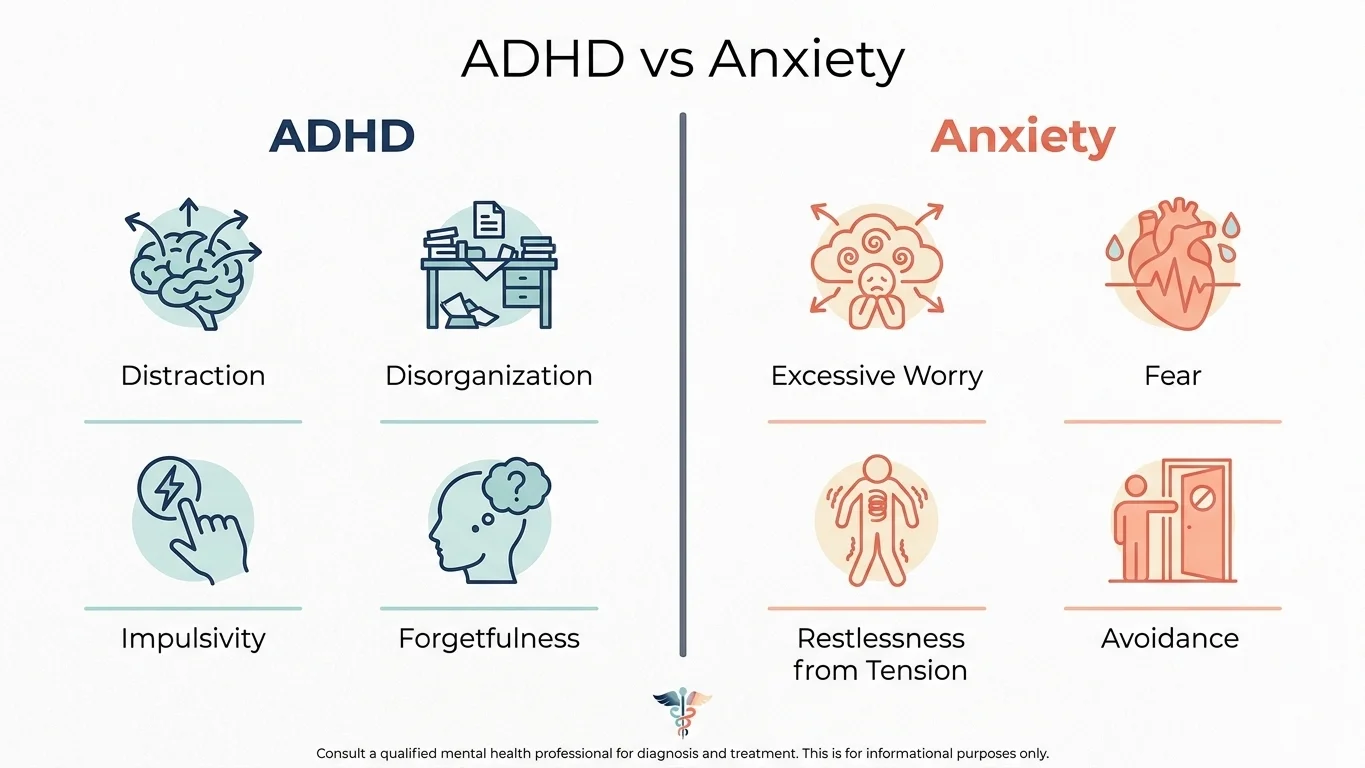
ADHD and anxiety can cause similar symptoms, especially difficulty focusing, restlessness, irritability, and sleep problems. However, the reason behind these symptoms is often different. ADHD is mainly related to ongoing difficulties with attention, organization, impulse control, and activity levels. Anxiety is more closely linked to excessive worry, fear, nervousness, and feeling on edge.
With ADHD, a person may struggle to focus because they become easily distracted, lose interest in a task, or have difficulty organizing their thoughts. They may also forget things, interrupt others, act without thinking, or have trouble managing time. With anxiety, concentration may become difficult because the person’s mind is focused on worries, fears, or possible problems. They may constantly think about what could go wrong, making it harder to stay focused on the present task.
Another key difference is how symptoms are triggered. ADHD symptoms can appear across many areas of life and are often present over a long period, including from childhood. Anxiety symptoms may become stronger during stressful or fearful situations, although anxiety can also be persistent. Because ADHD and anxiety can overlap and can occur together, a professional evaluation is often the best way to understand which condition may be contributing to your symptoms.
How ADHD and Anxiety Can Overlap
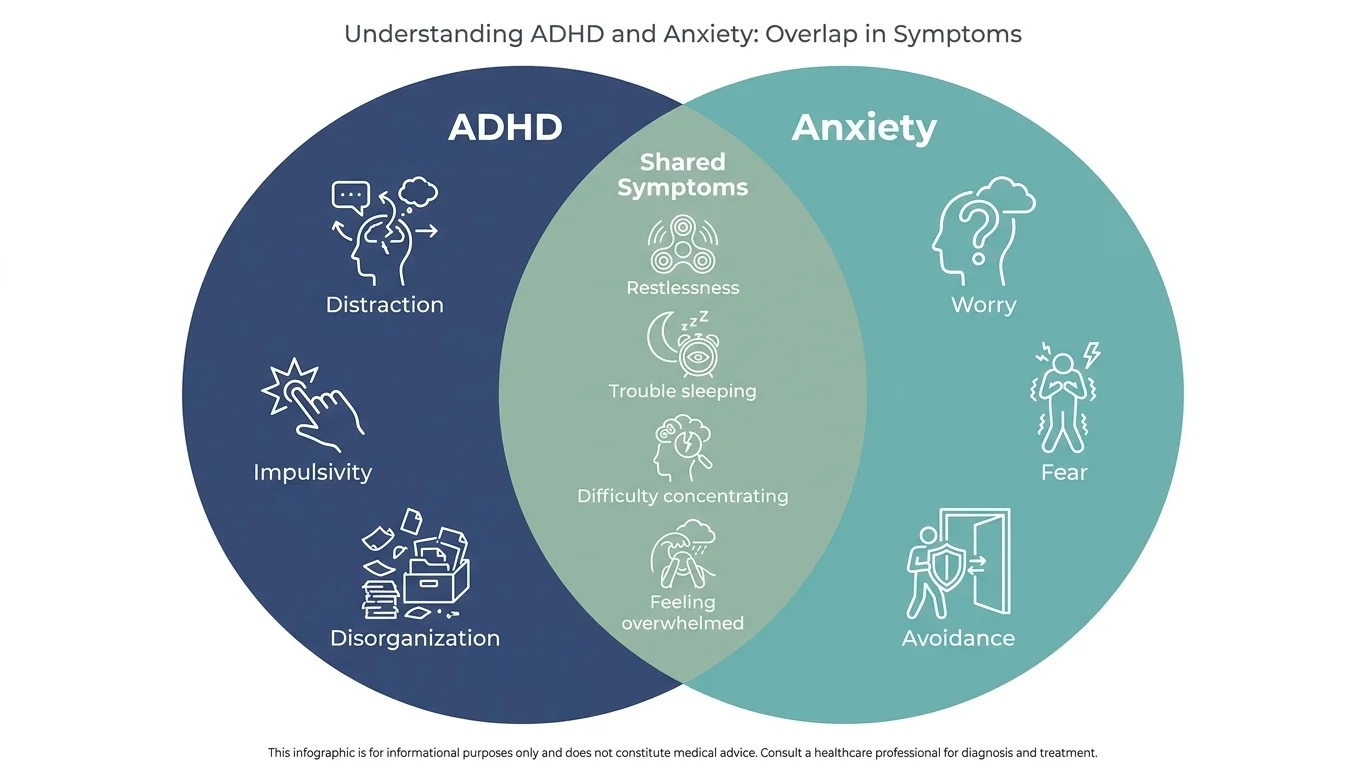
ADHD and anxiety can occur together. They can also create symptoms that look similar. For example, someone with ADHD may have trouble managing deadlines. After repeated difficulties, they may begin worrying about making mistakes or disappointing other people.
At the same time, anxiety can make it harder to concentrate. This can create a cycle in which worry affects attention and attention problems create more worry.
Difficulty Focusing
Both ADHD and anxiety can make it difficult to concentrate. The important question is why the person cannot focus. ADHD may cause attention to shift quickly, while anxiety may pull attention toward worries and fears. A professional can look at when concentration problems happen and what is happening around them.
Restlessness and Irritability
Restlessness and irritability can occur with both ADHD and anxiety. ADHD-related restlessness may involve a need for movement or stimulation. Anxiety-related restlessness may feel more like tension or nervous energy. Both can also make a person feel easily frustrated.
Sleep Problems
Sleep problems are another area of overlap. Someone with ADHD may have difficulty keeping a consistent sleep routine. Someone with anxiety may stay awake because of worry. In either case, poor sleep can make daytime symptoms worse.
Feeling Overwhelmed
People with ADHD may feel overwhelmed when they have too many tasks, deadlines, or decisions. People with anxiety may feel overwhelmed because they are thinking about possible negative outcomes. Someone can also experience both types of overwhelm at the same time.
Comparing ADHD and Anxiety
ADHD and anxiety can share several symptoms, but they are not the same condition. ADHD is often linked to problems with attention, organization, impulsivity, and managing daily tasks. Anxiety is more often connected to ongoing worry, fear, nervousness, and feeling on edge. For example, a person with ADHD may forget an appointment because they were distracted, while someone with anxiety may forget because their attention was focused on worrying about something else.
Looking at the overall pattern can make the difference easier to understand. ADHD symptoms can occur in different situations and often have roots in childhood, while anxiety symptoms may become stronger during stressful or fearful situations. However, some people experience both conditions at the same time. Because the symptoms can overlap, a mental health professional can look at your history, symptoms, and daily functioning to help determine whether ADHD, anxiety, or both may be affecting you.
Can You Have ADHD and Anxiety at the Same Time?
Yes. A person can have both ADHD and anxiety. When both conditions are present, they can affect each other. ADHD may make it harder to manage schedules, responsibilities, and deadlines. Those repeated difficulties can increase stress.
Anxiety can then make concentration and decision-making even harder. This may create a cycle where symptoms from one condition add to the challenges of the other.
Having both conditions does not mean that one automatically caused the other. It means that both may need to be considered during an evaluation.
How ADHD Can Contribute to Anxiety
ADHD-related challenges can sometimes lead to stress. Missing deadlines, forgetting responsibilities, struggling at work, or having relationship problems can cause a person to worry about what will happen next.
Over time, repeated stressful experiences may increase feelings of anxiety. This does not mean everyone with ADHD will develop an anxiety disorder. It simply shows why the two conditions can sometimes appear together.
How Anxiety Can Make ADHD Symptoms Harder to Manage
Anxiety can make it difficult to focus on the task in front of you. When your mind is busy worrying, there may be less attention available for work, conversations, or everyday responsibilities.
If someone already has ADHD, additional worry may make existing attention and organization problems feel even harder to manage.
How Can You Tell If It’s ADHD or Anxiety?
It is not always possible to tell the difference by looking at one symptom. A better approach is to consider the person’s history, patterns, triggers, and daily functioning.
Look at When the Symptoms Started
ADHD symptoms generally begin during childhood, even when a person is not diagnosed until adulthood. Some adults only recognize their symptoms later because increased responsibilities make the problems more noticeable.
Anxiety can begin at different points in life. It may develop after stressful experiences or changes, or it may develop without one clear event.
Consider What Triggers the Symptoms
Think about when the symptoms become stronger. If attention problems happen across many situations, ADHD may be worth discussing with a professional.
If concentration becomes much worse when a person is worried or afraid, anxiety may be playing a larger role.
Notice Whether Worry or Attention Problems Come First
The order of symptoms can provide useful information. For example, someone may struggle with organization and then become worried about falling behind. Another person may worry so much about a problem that they cannot focus on their work. These situations can look similar but may have different underlying causes.
Consider How Symptoms Affect Different Areas of Life
Look at work, school, relationships, sleep, home responsibilities, and social situations. ADHD symptoms may affect organization, attention, time management, and impulse control across different areas. Anxiety may be more noticeable around specific worries, fears, stressful situations, or uncertainty.
How ADHD and Anxiety Are Diagnosed
ADHD and anxiety require more than checking a list of symptoms. A professional needs to understand how long symptoms have been present, how severe they are, and how they affect daily life.
What an ADHD Evaluation May Involve
An ADHD evaluation may include questions about attention, impulsivity, organization, activity levels, childhood behavior, school history, work, and relationships. A clinician may also consider other possible causes of symptoms before making a diagnosis.
What an Anxiety Evaluation May Involve
An anxiety evaluation may look at worry, fear, avoidance, physical symptoms, sleep, stress, and the effect anxiety has on daily activities. The clinician may also consider what type of anxiety symptoms are present and whether another condition may be contributing.
Why Professional Assessment Matters
ADHD and anxiety can share symptoms with each other and with other mental health concerns. For this reason, self-diagnosis can be difficult. A professional evaluation looks at the bigger picture instead of focusing on one symptom. A proper assessment can help you understand what may be happening and what treatment options may be appropriate.
Treatment for ADHD and Anxiety
Treatment depends on the condition, symptoms, severity, and individual needs. Some people benefit from therapy, medication, lifestyle changes, or a combination of approaches.
Treatment Options for ADHD
ADHD treatment may include medication, therapy, behavioral strategies, and practical skills for managing daily responsibilities.
Treatment can focus on organization, time management, attention, emotional regulation, and creating routines that are easier to maintain. The goal is not simply to reduce symptoms. Good treatment should also help a person function better in everyday life.
Treatment Options for Anxiety
Anxiety treatment may include therapy, medication, coping strategies, and lifestyle changes. Therapy can help a person understand patterns that increase anxiety and develop healthier ways to respond to worry and fear. Treatment can also focus on improving sleep, reducing avoidance, managing stress, and building confidence.
When Treatment for Both Conditions May Be Needed
When ADHD and anxiety occur together, treatment may need to address both. For example, a person may need help with organization and attention while also learning how to manage excessive worry. A professional can consider both sets of symptoms and create a treatment plan based on the person’s needs.
When Should You Seek Professional Help?
Consider professional support when attention problems, worry, restlessness, sleep problems, or emotional difficulties begin interfering with everyday life.
You may want an evaluation if you regularly struggle at work or school, have problems in relationships, cannot control your worry, or feel that your symptoms are becoming difficult to manage. You do not need to wait until symptoms become severe. Getting an evaluation can help you understand what you are experiencing and what options may be available.
Conclusion
Understanding ADHD vs anxiety can be difficult because both conditions can affect concentration, sleep, restlessness, emotions, and daily functioning. However, the reasons behind these symptoms may be different.
ADHD is mainly linked to ongoing difficulties with attention, organization, impulse control, and activity regulation. Anxiety is more closely linked to excessive worry, fear, nervousness, and physical tension.
It is also possible to have both conditions at the same time. That is why looking at the full pattern of symptoms is important instead of trying to identify a condition based on one sign. If symptoms are affecting your work, relationships, sleep, or everyday life, a professional evaluation can help you get a clearer understanding of what you are experiencing.
Get Support for ADHD or Anxiety
You do not have to decide on your own whether your symptoms are related to ADHD, anxiety, or both. Placid Psychiatry in Fullerton, CA provides psychiatric assessment and treatment for ADHD and anxiety, with in-person care and telehealth options available.
If you are struggling with focus, worry, restlessness, or other symptoms that are affecting your daily life, reaching out for professional support can be a helpful first step.
Ready to understand your symptoms and explore your options? Contact Placid Psychiatry in Fullerton, CA to schedule an evaluation and discuss a personalized treatment plan.
Frequently Asked Questions
Can ADHD be mistaken for anxiety?
Yes. ADHD and anxiety can both cause difficulty focusing, restlessness, irritability, and sleep problems. A professional evaluation can help identify the pattern behind these symptoms.
What is the main difference between ADHD and anxiety?
ADHD mainly involves difficulties with attention, organization, impulse control, and activity regulation. Anxiety mainly involves excessive worry, fear, nervousness, and related physical or emotional symptoms.
Can anxiety cause ADHD-like symptoms?
Yes. Strong anxiety can affect concentration, memory, sleep, and attention. These symptoms may look similar to ADHD, which is why a complete evaluation is important.
Can you have ADHD and anxiety together?
Yes. ADHD and anxiety can occur at the same time. When they overlap, symptoms from one condition may make the other harder to manage.
How do doctors tell ADHD and anxiety apart?
A professional may consider when symptoms began, how they affect daily life, what triggers them, childhood history, and other possible causes. The overall pattern is more important than one symptom.
Does ADHD cause anxiety?
ADHD does not automatically cause anxiety. However, repeated challenges with organization, deadlines, relationships, or daily responsibilities may contribute to stress and anxiety for some people.
Can ADHD and anxiety be treated together?
Yes. When both conditions are present, treatment can address both. The right approach depends on the person’s symptoms, history, and individual treatment needs.