
Bipolar vs ADHD can be confusing because both conditions may cause problems with focus, impulsive behavior, restlessness, sleep, and emotions. A person with either condition may seem distracted, energetic, or quick to act without thinking. However, these conditions are different and can need different types of treatment.
At Placid Psychiatry in Fullerton, CA, we understand that these symptoms can affect work, school, relationships, and daily life. One of the biggest differences is the pattern of symptoms. ADHD usually causes ongoing problems with attention, hyperactivity, and impulsivity. Bipolar disorder involves distinct periods of major changes in mood, energy, and activity. These periods are called mood episodes. The National Institute of Mental Health’s information on bipolar disorder explains that these episodes can include mania, hypomania, and depression.
Only a qualified mental health professional can determine what is causing a person’s symptoms. Looking at when symptoms started, how long they last, and whether they happen in clear episodes can help a professional tell the difference.
What Is Bipolar Disorder?
Bipolar disorder is a mental health condition that causes major changes in mood, energy, activity, and behavior. These changes are more than the normal mood changes that everyone experiences.
A person with bipolar disorder may have periods of unusually high energy or activity and periods of depression. The high-energy periods may involve mania or hypomania. Depression can bring low mood, low energy, loss of interest, and problems with concentration.
Bipolar disorder does not look exactly the same in every person. Some people have more frequent mood episodes, while others may have long periods between episodes. The length and severity of episodes can also vary.
Manic and Hypomanic Episodes
Mania is a period of unusually high or irritable mood with a big increase in energy and activity. A person may feel unusually confident or powerful, have racing thoughts, talk very quickly, and sleep much less without feeling tired. They may also spend heavily, make risky decisions, or take on many projects at once. In severe cases, NIMH notes that mania can include psychosis, such as hallucinations or false beliefs, which does not occur with ADHD.
Hypomania has similar features but is milder. Friends or family often notice the change even when the person feels fine.
Depressive Episodes
During a depressive episode, a person may feel sad, empty, or hopeless and lose interest in things they usually enjoy. Energy drops, sleep and appetite change, and focusing or making decisions becomes harder. Some people also have thoughts of death or suicide, which should always be taken seriously. Because bipolar depression can look like depression on its own, a full mood history is key to an accurate diagnosis.
Types of Bipolar Disorder
There are a few types of bipolar disorder. They are based on the kind of mood episodes a person has had.
- Bipolar I disorder involves at least one manic episode. Many people with bipolar I also have depressive episodes, but they are not required for this diagnosis.
- Bipolar II disorder involves at least one hypomanic episode and at least one major depressive episode, but no full manic episodes. Because hypomania is milder, bipolar II is sometimes mistaken for depression alone or for ADHD.
- Cyclothymic disorder involves long-lasting periods of hypomanic and depressive symptoms that do not meet the full criteria for a mood episode.
What Is ADHD?
Attention-deficit/hyperactivity disorder, or ADHD, is a neurodevelopmental disorder. It affects attention, activity level, and impulse control.
ADHD symptoms begin during childhood, although some people are not diagnosed until their teenage years or adulthood. Symptoms can continue into adulthood and may change as a person gets older. The National Institute of Mental Health‘s ADHD guide notes that adults can still have ADHD even when the symptoms look different from childhood.
ADHD can mainly affect attention, mainly involve hyperactivity and impulsivity, or involve a combination of these symptoms.
Common ADHD Symptoms
A person with ADHD may have trouble staying focused, remembering tasks, keeping things organized, or finishing work. They may lose things often or struggle with time management. Hyperactivity can appear as restlessness or difficulty sitting still. Impulsivity may lead someone to interrupt others, make quick decisions, or act before thinking about the result.
These symptoms are usually part of an ongoing pattern. They can affect more than one area of life, such as work, school, home, and relationships. The CDC’s current information on ADHD symptoms explains that symptoms can involve inattention, hyperactivity, and impulsivity.
What Are the Similarities Between Bipolar Disorder and ADHD?
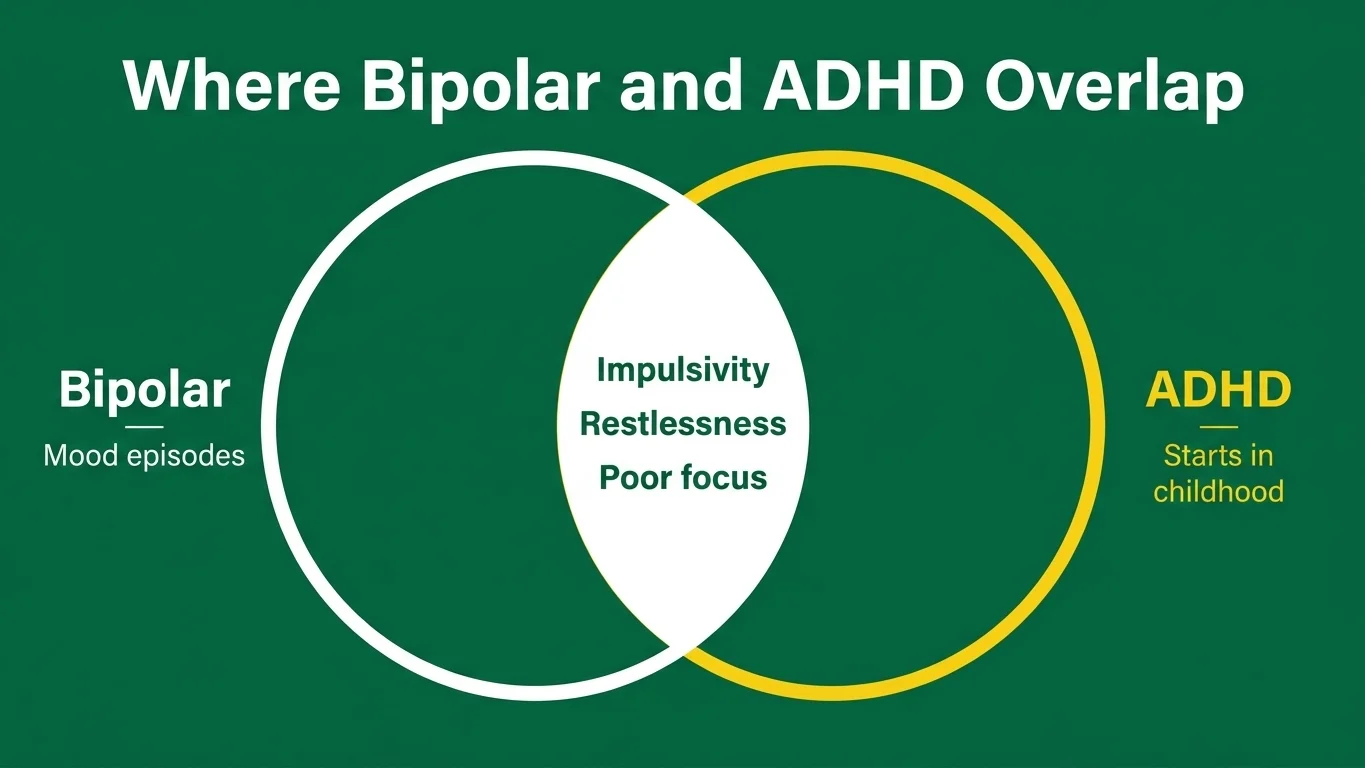
The two conditions can look similar in some situations. Both may involve trouble concentrating, impulsive behavior, restlessness, racing thoughts, sleep problems, and changes in energy. For example, someone with ADHD may talk a lot, interrupt others, or make quick decisions. Someone experiencing mania may also talk rapidly and act impulsively. Both people may appear more active than usual.
Emotional difficulties can also happen with both conditions. A person may become frustrated easily or have trouble managing strong emotions.
The important point is that one symptom does not tell you which condition a person has. The full pattern matters. Research also shows that ADHD and bipolar disorder can occur in the same person, which can make diagnosis more complex. A 2021 systematic review and meta-analysis of 71 studies found that the two conditions have a meaningful level of overlap in adults.
Bipolar vs ADHD: What Are the Main Differences?
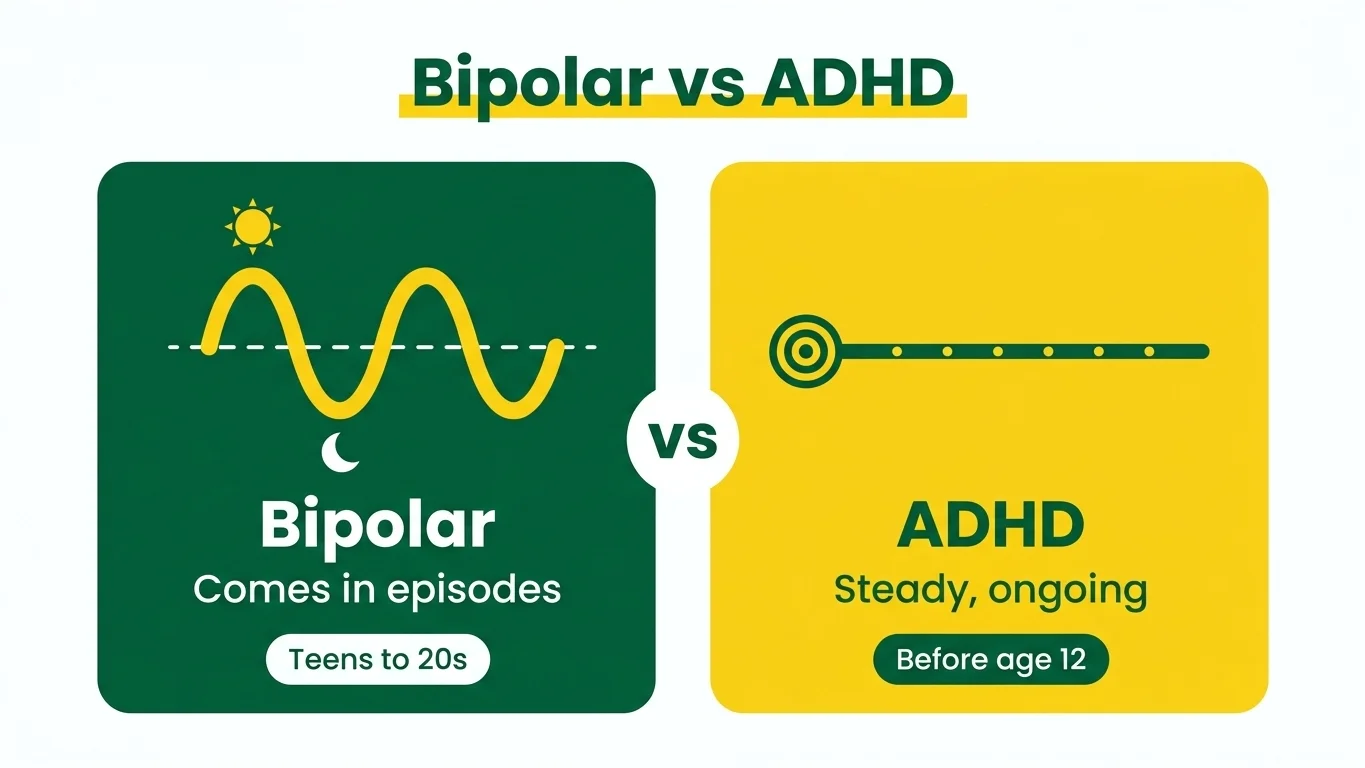
When comparing bipolar vs ADHD, the most useful question is often not whether a person has one specific symptom. Instead, it is how the symptoms develop and change over time.
| ADHD | Bipolar Disorder | |
| When symptoms start | In childhood, before age 12 | Often in the teen years or early adulthood, but can start earlier or later |
| How long symptoms last | At least 6 months, as an ongoing pattern | Mania lasts at least 7 days, hypomania at least 4 days, and depression at least 2 weeks |
| Overall pattern | Steady and present most of the time | Comes in distinct episodes, with periods of more usual mood in between |
| Mood | Quick emotional reactions linked to events that pass within minutes or hours | Long periods of high, irritable, or low mood that may have no clear trigger |
| Sleep | Trouble falling asleep or keeping a schedule, then feeling tired | Needing much less sleep during mania or hypomania without feeling tired |
| Energy | Restlessness is usually a constant part of daily life | Energy rises or drops sharply compared with the person’s usual level |
| Impulsivity | A regular part of everyday behavior | Increases noticeably during mood episodes |
| Treatment focus | Improving attention, organization, and impulse control | Stabilizing mood and preventing future episodes |
Bipolar vs ADHD in Adults
Both conditions can affect adults at work, at home, and in relationships. An adult with ADHD may have a long history of missed deadlines, unfinished tasks, forgetfulness, or poor time management. These problems often become more noticeable as adult responsibilities grow. Hyperactivity may also show up as inner restlessness rather than constant movement. The CDC’s information on ADHD in adults explains that symptoms begin in childhood but may look different later in life.
Bipolar disorder follows a different pattern in adults. It involves periods of unusually high energy and reduced need for sleep, which may alternate with periods of depression and low motivation. Adult symptoms can be harder to sort out because stress, anxiety, poor sleep, substance use, and other conditions can also affect attention and mood.
Bipolar vs ADHD in Children and Teens
ADHD is commonly identified during childhood. Children with ADHD may have trouble paying attention, sitting still, following directions, controlling impulses, or completing schoolwork. The symptoms can affect school, home, and friendships. The CDC’s information on ADHD in children explains that ADHD symptoms begin in childhood and often continue into adulthood.
Bipolar disorder can also occur in children and teenagers, but mood symptoms need careful evaluation. Children can naturally have changes in energy, emotions, and behavior. A mental health professional needs to consider the child’s age, development, history, and the severity and pattern of symptoms.
A child who is energetic or easily distracted does not automatically have ADHD. In the same way, a child who has strong emotions does not automatically have bipolar disorder. Looking at behavior across different settings and over time can help a professional understand what is happening.
Can You Have Both Bipolar Disorder and ADHD?
Yes. A person can have both ADHD and bipolar disorder. This can make diagnosis more difficult because some symptoms overlap. For example, both conditions may involve impulsivity, restlessness, and problems with concentration.
A 2021 systematic review and meta-analysis looked at 71 studies involving more than 646,000 participants. It estimated that about 7.95% of adults with ADHD also had bipolar disorder, while about 17.11% of adults with bipolar disorder had ADHD. The researchers also noted substantial differences between studies, so these numbers should not be treated as an exact rate for every population.
When both conditions are present, each one needs to be considered separately. Treating only one set of symptoms may not address all of the person’s difficulties.
How Are Bipolar Disorder and ADHD Diagnosed?
There is no single blood test, brain scan, or other test that can confirm ADHD or bipolar disorder. Instead, diagnosis usually involves a detailed evaluation. A professional may ask about current symptoms, childhood experiences, family history, medical history, medications, sleep, mood, and daily functioning.
For ADHD, the professional also needs to establish that symptoms began during childhood. The CDC’s ADHD diagnosis guidance explains that there is no single test for ADHD and that other conditions can cause similar symptoms. For bipolar disorder, the professional needs to understand whether the person has experienced manic, hypomanic, or depressive episodes and how these episodes have changed over time.
Why Your History Matters
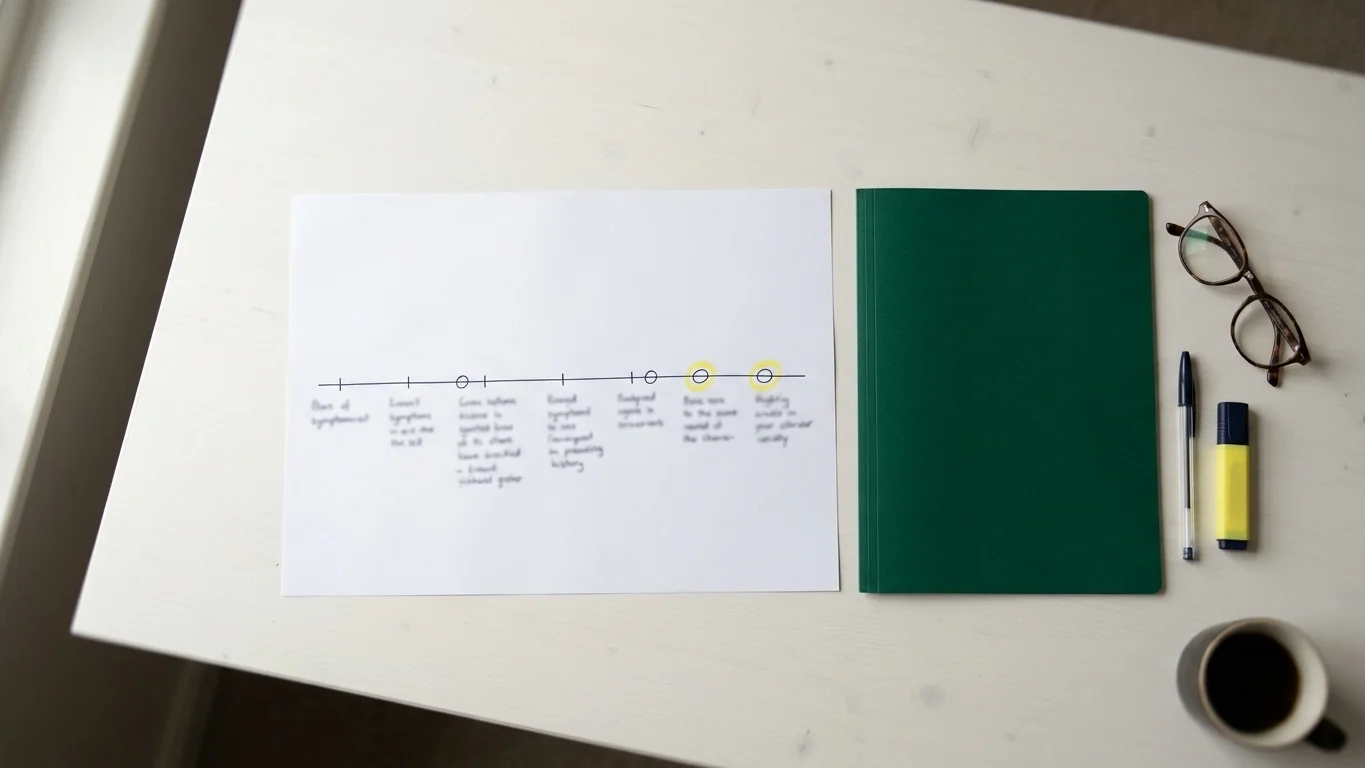
Your history can provide important information that cannot be seen from a single appointment. A professional may want to know when your symptoms first appeared, how long they last, and whether they happen every day or during specific periods.
They may also ask about childhood behavior, school performance, work problems, relationships, sleep patterns, mood changes, and times when your energy was much higher or lower than usual.
For adult ADHD, childhood history is especially important. ADHD symptoms must have started before age 12, even if the person was not diagnosed at that time.
What a Mental Health Evaluation May Include
An evaluation may include a conversation about current symptoms and past experiences. A provider may also use symptom checklists or rating scales. The professional may ask about family history, medications, sleep, mood, substance use, and other health conditions.
They may also ask for information from a partner, parent, family member, or other person who has known you for a long time. This information can help show whether symptoms have been present for years or whether they appeared during specific mood episodes.
Bipolar vs ADHD Treatment
Treatment depends on the diagnosis, symptoms, medical history, and personal needs. Bipolar disorder and ADHD are treated differently, so getting an accurate diagnosis is an important part of care.
Treatment for Bipolar Disorder
Treatment for bipolar disorder may include medication, psychotherapy, sleep support, and regular monitoring. Medication can help manage mood symptoms and reduce the risk of future episodes.
Psychotherapy can help a person understand mood changes, manage stress, develop healthy routines, and notice warning signs. Treatment often continues even when symptoms improve because ongoing care can help manage a condition that may return over time.
Treatment for ADHD
ADHD treatment may include medication, behavioral strategies, psychotherapy, or a combination of approaches. Treatment can focus on attention, organization, time management, impulse control, and daily routines.
Adults may also benefit from practical strategies that make work and home responsibilities easier to manage. The right approach depends on the person’s symptoms, age, health history, and personal needs.
Treatment When Someone Has Both Conditions
When someone has both bipolar disorder and ADHD, treatment may need to address both conditions. This can require careful planning because mood symptoms, attention problems, sleep, and medications all need to be considered together.
A psychiatrist or other qualified professional can help decide which symptoms should be addressed first and how treatment should be monitored. Do not start, stop, or change psychiatric medication without talking with your prescribing professional.
When Should You Seek Professional Help?
Consider speaking with a mental health professional when symptoms are affecting your everyday life. You may want to seek help if:
- Attention problems are affecting work, school, or daily tasks.
- Major changes in mood or energy are happening.
- You are sleeping much less than usual but do not feel tired.
- Depression is making normal activities difficult.
- Impulsive behavior is causing problems.
- Relationships are being affected by changes in mood or behavior.
- You are unsure whether your symptoms may be related to ADHD, bipolar disorder, or another condition.
You do not have to figure out the diagnosis on your own. A professional can look at the full pattern and help you understand what may be happening.
Conclusion
Bipolar vs ADHD can be confusing because both may cause impulsivity, restlessness, and concentration problems. However, they have different patterns.
ADHD usually causes ongoing attention and impulse-control problems that begin in childhood. Bipolar disorder involves distinct changes in mood, energy, and activity, including manic, hypomanic, or depressive episodes.
If you are unsure about your symptoms, a professional evaluation can help you understand the cause and find the right care..
Get Support for Bipolar Disorder or ADHD
If you are unsure whether your symptoms are related to ADHD, bipolar disorder, or another mental health condition, Placid Psychiatry in Fullerton, CA can help you take the next step.
Placid Psychiatry provides psychiatric evaluation, diagnosis, medication management, and treatment support based on individual needs. Telehealth services can also make psychiatric care more accessible from home.
Contact Placid Psychiatry to learn more about psychiatric evaluation and treatment options for ADHD, bipolar disorder, and other mental health concerns.
Frequently Asked Questions
Can ADHD be mistaken for bipolar disorder?
ADHD and bipolar disorder can share symptoms such as impulsivity, restlessness, racing thoughts, and difficulty concentrating. The main difference is often the pattern over time. ADHD usually involves an ongoing pattern of symptoms, while bipolar disorder involves distinct mood episodes.
Can someone have both ADHD and bipolar disorder?
Yes. Both conditions can occur in the same person. Research has found that ADHD and bipolar disorder have a meaningful level of co-occurrence in adults. When both conditions are present, a detailed evaluation can help separate the symptoms of each condition.
How do doctors tell the difference between ADHD and bipolar disorder?
Doctors look at the person’s full history. They may consider when symptoms started, how long they last, whether they happen in episodes, childhood behavior, sleep changes, mood changes, and how symptoms affect daily life.
Does ADHD cause mood swings?
People with ADHD can experience frustration, irritability, and strong emotional reactions. However, these changes are not the same as the manic, hypomanic, or depressive episodes associated with bipolar disorder. A professional can help determine what is causing a person’s mood changes.
At what age does bipolar disorder usually start compared with ADHD?
ADHD symptoms must begin during childhood, before age 12, although the condition may not be diagnosed until adulthood. Bipolar disorder can occur at different ages and often first becomes noticeable during adolescence or early adulthood. Bipolar symptoms can also occur in younger people, so age alone cannot determine a diagnosis.
Can ADHD turn into bipolar disorder?
No. ADHD does not turn into bipolar disorder. They are separate conditions. However, a person can have both ADHD and bipolar disorder. This is why a complete evaluation is important when symptoms change or new symptoms appear.