
Some people try therapy and many different pills, but they still feel stuck. If that sounds like you, you may have heard of ketamine-assisted psychotherapy. Ketamine-assisted psychotherapy, or KAP, uses a small, safe dose of ketamine along with talk therapy. The goal is to help you feel better and work through hard feelings. It is not a quick fix, and it is not for everyone. But for some people, it can help when nothing else has.
At Placid Psychiatry in Fullerton, CA, many patients ask us about ketamine. They want to know how it feels, if it is safe, and if it could help them. In this blog, we answer these questions in simple words. You will learn how KAP works, who it may help, and what risks you should know about.
What Is Ketamine-Assisted Psychotherapy?
Before you think about trying KAP, it helps to know what it really is. Here is a simple look at what KAP means and how it is different from other ketamine care.
Definition of KAP
KAP is a treatment that mixes a medicine called ketamine with therapy. Doctors first used ketamine to put people to sleep for surgery. Later, they found that small doses could help some people feel less sad, and fast.
How KAP Combines Ketamine With Psychotherapy
In KAP, the medicine and the therapy work together. Ketamine can help you feel more open and less stuck in the same old thoughts. Therapy then helps you understand what you felt and use it in your daily life. You can think of ketamine as loosening hard soil. Therapy is what helps new things grow.
Difference Between KAP and Ketamine Treatment
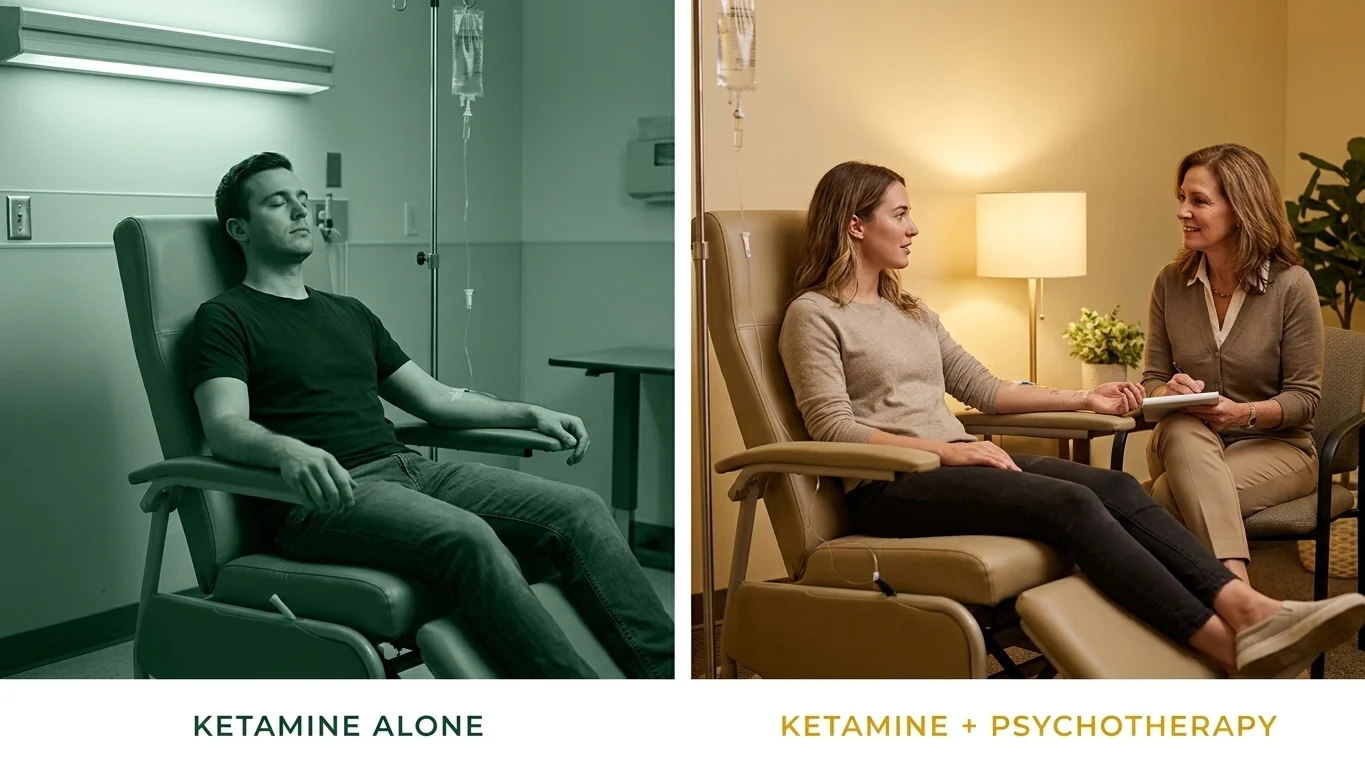
Plain ketamine treatment, like an IV drip at a clinic, gives you the medicine with little or no therapy. KAP is different because therapy is a main part of the plan, before, during, and after each dose. In fact, one well-known study pointed out that when ketamine was given by IV without therapy, its dreamy effects were often treated as unwanted side effects. In KAP, those same feelings are something you talk about with your therapist.
How Does Ketamine-Assisted Psychotherapy Work?
KAP works in two ways at once. The medicine acts on your brain, and the therapy helps you make sense of what you feel. Let’s look at each part.
How Ketamine May Affect Mood, Thoughts, and Emotional Processing
Most depression medicines work on a brain chemical called serotonin. Ketamine works on a different one, called glutamate. Scientists think this may help the brain form new connections. For a short time, the brain may be more open to change.
During a session, many people feel a little outside of their body or their normal thoughts. Some say they can look at painful memories without feeling so hurt by them. This can make it easier to face hard things.
Why Psychotherapy Is Included in the Treatment
The good feeling from ketamine alone often does not last long. Researchers say this is one reason they began testing ketamine with therapy, to help the good effects last longer. Therapy helps turn a short change into a lasting one.
Role of Preparation and Integration
KAP has two key parts around the medicine. Preparation comes first. You and your therapist talk about your goals and what to expect. Integration comes after. This is where you talk about what came up and how to use it. One review found that better and longer results were linked to having prep sessions, guided medicine sessions, and follow-up talks afterward.
What Happens During a KAP Session?
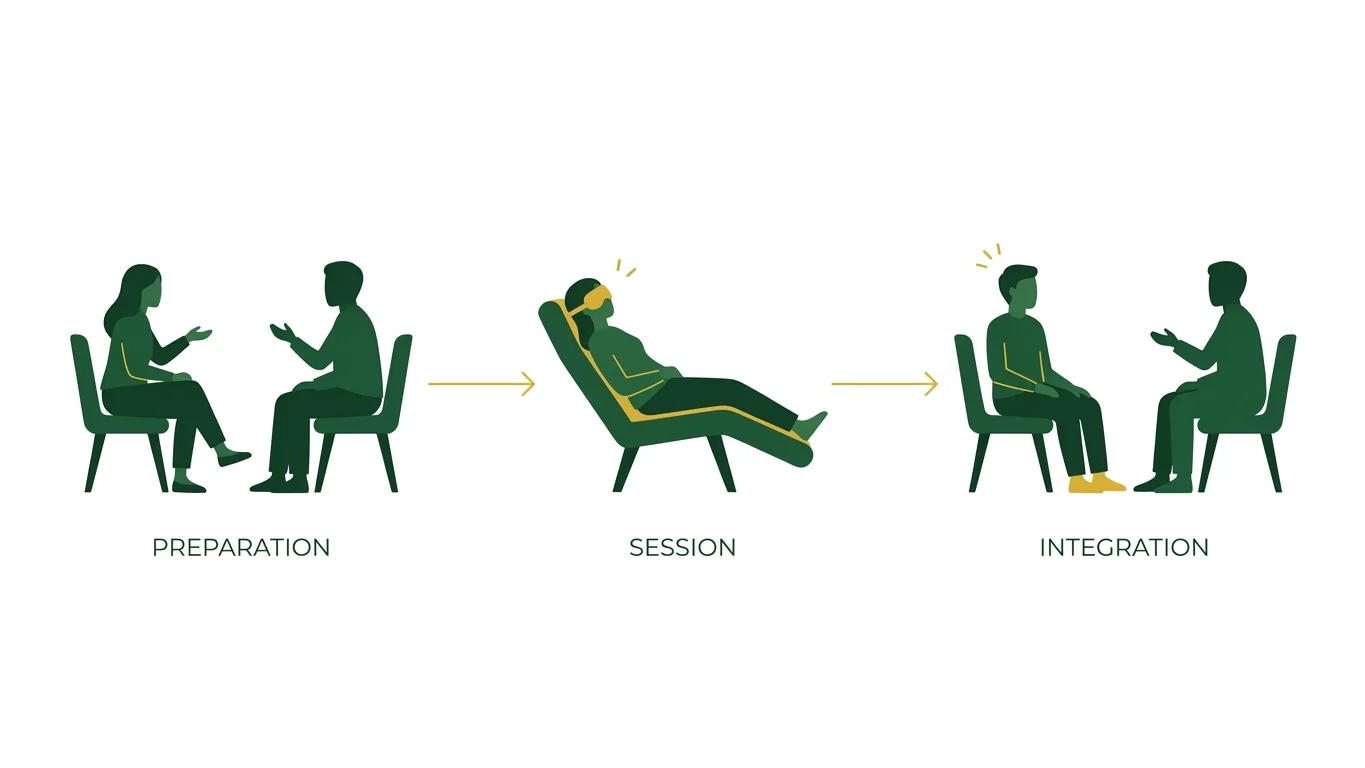
Knowing what to expect can make you feel calmer about treatment. A KAP plan has a few clear steps, from your first check-up to the days after a session.
Preparing for Treatment
First, you meet with a medical provider for a full check. They ask about your health, your medicines, and your mental health. They also check your blood pressure. Then you have one or more therapy visits to set goals and build trust. You may be told not to eat for a few hours before a session, since ketamine can upset your stomach.
During the Ketamine Session
On treatment day, you sit or lie down in a calm, quiet room. The ketamine may be given as a shot, an IV, a nose spray, or a tablet that melts in your mouth. Many people wear an eye mask and listen to soft music. The strongest effects usually last less than an hour. A trained staff member stays with you the whole time and checks your blood pressure.
Psychotherapy and Integration
As the effects fade, your therapist may gently ask how you feel. You can talk or stay quiet. In later visits, you talk about the pictures, memories, or feelings that came up and what they mean for your life.
After the Session
You rest until you feel steady and your provider says you can go. You cannot drive for the rest of the day, so you need a ride home. Many people feel tired. It is best to plan a quiet evening.
What Conditions May KAP Help Treat?
KAP is still being studied, but early research points to a few mental health problems where it may help. Here are the main ones.
Depression
Depression is the most studied use of KAP. It is often used for depression that has not gotten better after trying at least two depression medicines. A 2026 review of 11 studies found ketamine-assisted psychotherapy reduced depression symptoms, with stronger benefits in more severe cases.
Anxiety
Many people with depression also have anxiety. A study of 235 patients at three clinics found that KAP lowered both depression and anxiety, and worked best for older patients and those with more severe symptoms.
Trauma and PTSD
Trauma can leave people feeling stuck in fear. Ketamine may help some people look back at painful events with less pain. Early research shows KAP may also help with PTSD, anxiety, and long-term pain, but more studies are needed.
Other Conditions Being Studied
Researchers are also testing KAP for drug and alcohol problems, long-term pain, and OCD. One two-year review found that people with substance use problems who had one to six KAP sessions had better anxiety and depression scores. These studies are small, so the results are still early.
Potential Benefits of Ketamine-Assisted Psychotherapy

People try KAP for different reasons. Below are some of the ways it may help, based on what patients and researchers have seen so far.
Possible Changes in Mood and Emotional Distress
Most depression pills take weeks to work. Ketamine may lift mood in hours or days for some people. This early relief can give you the energy to put more effort into therapy.
Potential Support for Processing Difficult Experiences
Many people say KAP helps them see their problems in a new way. A painful memory may feel less sharp. Mean thoughts about yourself may feel weaker. A 2022 review also found that KAP may help patients feel closer to their therapist and stay with their treatment.
Possible Benefits When Other Treatments Have Not Helped
If you have tried many treatments without much luck, KAP may give you a new option. It does not replace your other care. It adds to it. Still, it does not work for everyone.
Risks and Side Effects of KAP
Like any medicine, ketamine has side effects. Most are mild and short, but some need close watching. Here is what you should know.
Common Short-Term Side Effects
Most side effects happen during or right after a session. They may include:
- Feeling sick to your stomach
- Dizziness
- Blurry vision
- Feeling sleepy
- Headache
- A short rise in blood pressure
These usually go away within a few hours.
Psychological Effects
Ketamine can make you feel cut off from your body or the room around you. For some, this feels calm. For others, it can feel strange or scary. The FDA says ketamine can cause sleepiness, this “outside your body” feeling, and in some cases can make mental health symptoms worse. Having a trained person with you helps you feel safe.
Medication and Substance Interactions
Mixing ketamine with the wrong medicines or substances can be risky, as listed in the section above. Your provider may change when you take some of your medicines on session days.
Long-Term Considerations
The FDA also warns about misuse, high blood pressure, slow breathing, and bladder problems. Bladder problems are mostly seen in people who use ketamine heavily and often, not in medical care. The FDA also says using ketamine at home is riskier because no health worker is there to watch you. This is why care in a clinic matters.
What Does the Research Say About KAP?
KAP is getting more attention from doctors and scientists. Here is what the studies show so far, and what we still need to learn.
Current Evidence
Research on KAP is growing fast. A 2022 review looked at 17 studies with 603 people. It found that in some cases, ketamine plus therapy could lower pain, anxiety, and depression, and help those changes last longer.
What Studies Suggest About Its Potential Benefits
Studies suggest KAP may help with depression, anxiety, trauma, and addiction. A newer review found short-term benefits for these problems. Many experts also believe the therapy part helps results last.
Current Research Limitations
There is still a lot we do not know. Many studies are small, and each clinic does KAP a little differently. Another review said KAP has not been tested enough and still needs a clear, shared definition.
Also, the FDA has not approved ketamine itself to treat mental health problems. A related medicine called esketamine, sold as Spravato, is FDA-approved for depression that has not improved with other treatments.
How Long Does Ketamine-Assisted Psychotherapy Take?
Every plan is different, but here is a simple look at what many KAP programs include:
| Part of Treatment | What Happens | How Long It Lasts | How Many |
| Medical check | Health review, blood pressure, medicine list | About 1 hour | 1 visit |
| Prep therapy | Set goals and learn what to expect | 50 to 90 minutes | 1 to 3 visits |
| Ketamine session | Take the medicine in a calm room with staff watching | 2 to 3 hours total | Often 1 to 6 sessions |
| Integration therapy | Talk about what came up and how to use it | 50 to 90 minutes | Usually after each ketamine session |
| Follow-up care | Check on progress, add booster sessions if needed | Varies | Weeks to months |
Your provider will change the plan based on how you respond. Some people need more sessions, and some need fewer.
Conclusion
Ketamine-assisted psychotherapy is a newer way to treat mental health problems. It uses ketamine and talk therapy together. It may help some people with depression, anxiety, or trauma, especially when other treatments have not worked. The research looks hopeful, but it is still early, and there are real risks. The best first step is an honest talk with a trained provider who knows your full health story.
Start Ketamine Therapy in Fullerton, CA Today
Taking the first step doesn’t have to feel overwhelming, and you don’t have to figure it all out alone. Our psychiatric team at Placid Psychiatry takes real time to understand your history: your symptoms, what you’ve already tried, and what hasn’t worked. From there, we talk through your options honestly, whether that’s ketamine-assisted psychotherapy or an FDA-approved option like Spravato (esketamine), so you understand exactly how each one could support your recovery.
Reaching out is often the hardest part, and we get that. You deserve a provider who listens first and explains things clearly along the way. When you’re ready, call Placid Psychiatry at 562-354-0002 or book your appointment online, whichever feels easier for you.
Frequently Asked Questions
Is ketamine-assisted psychotherapy the same as ketamine therapy?
No. Ketamine therapy often means the medicine alone. KAP always includes therapy as part of the plan.
How quickly can KAP work?
Some people feel better within a day or two. Others need a few sessions before they notice a change.
Can KAP help with anxiety or trauma?
Early studies say it may. More large studies are still needed.
Is ketamine-assisted psychotherapy safe?
It is generally safe for the right person when done in a clinic with trained staff, good screening, and close watching. It still has risks, so a full check first is a must.
How many KAP sessions are needed?
There is no set number. Many people have a few ketamine sessions plus therapy before and after. See the table above for a general idea.
Is KAP covered by insurance?
It depends on your plan. Since ketamine is not FDA-approved for mental health, many plans do not pay for the medicine. Some may pay for the check-up or therapy visits. Spravato is more often covered. Call your insurance company, and ask your provider’s office to help you check.