
Bipolar 1 vs bipolar 2 disorder can be hard to tell apart. Both conditions cause big changes in mood, sleep, energy, and behavior. Both can include depression. Both can make daily life harder. But they are not the same, and knowing the difference matters.
The main difference is the type of “high” mood a person has. Bipolar 1 includes at least one full manic episode. Bipolar 2 includes hypomania (a milder high mood) along with major depression, but never full mania. Bipolar 2 is not just a lighter version of bipolar 1. It is a different condition with its own pattern, risks, and treatment needs.
At Placid Psychiatry in Fullerton, CA, a careful psychiatric evaluation can help find out which type a person has. This helps make sure the treatment fits the real condition. This guide explains both types in simple terms.
What Is Bipolar Disorder?
Bipolar disorder is a long-term mental health condition. It causes shifts between high mood states and low mood states. The high state can be mania or hypomania. The low state is depression.
About 2.8% of U.S. adults had bipolar disorder in the past year, and around 4.4% will have it at some point in their life. It often starts in the late teens or early twenties, but it can begin earlier or later.
Doctors use a book called the DSM-5-TR to diagnose bipolar disorder. It lists a few forms of the illness. The two most common are bipolar 1 and bipolar 2. A third form, called cyclothymic disorder, causes milder mood swings that do not fully meet the rules for bipolar 1 or bipolar 2. There are also unspecified types that don’t fit the main groups. This guide focuses on bipolar 1 and bipolar 2 because they are the most common.
What Is Bipolar 1 Disorder?
A person is diagnosed with bipolar 1 when they have had at least one manic episode. Depression can also happen, but it is not needed for the diagnosis.
What mania looks like
Mania is a period of very high energy or an unusually happy, excited, or angry mood. During mania, a person may sleep very little but still feel full of energy. They may talk fast. They may jump from one idea to another. They may feel very sure of themselves. They may take big risks, like spending too much money or doing unsafe things. Mania lasts at least one week.
Severe mania and psychosis
Sometimes mania is so strong that it needs hospital care. In severe cases, a person may also have psychosis. This means they may see or hear things that are not real, or believe things that are not true. People with bipolar 1 have psychosis and hospital stays much more often than people with bipolar 2.
Depression in bipolar 1
Most people with bipolar 1 also go through depression at some point. During a depressive episode, they may feel very sad, tired, or hopeless. They may lose interest in things they used to enjoy. Sleep, appetite, and focus can also change. Depression in bipolar 1 can be serious and may last two weeks or longer.
What Is Bipolar 2 Disorder?
A person is diagnosed with bipolar 2 when they have had at least one hypomanic episode and at least one major depressive episode. They must never have had full mania. Bipolar 2 is its own condition, not a milder version of bipolar 1.
What hypomania looks like
Hypomania has the same kind of symptoms as mania. A person may feel more energetic, sleep less, talk faster, or feel more confident. But hypomania is shorter and less severe. It lasts at least four days. It does not cause serious problems at work or in relationships, does not need hospital care, and does not include psychosis.
Why hypomania is often missed
Because hypomania can feel good, many people don’t see it as a problem. They may feel more productive or creative and think this is a normal good mood. This is one reason bipolar 2 is often diagnosed later in life than bipolar 1.
Depression in bipolar 2
Depression is the main feature of bipolar 2. People with bipolar 2 spend much more time in depression than people with bipolar 1, and their depressive episodes tend to last longer. Most of the person’s time being ill is spent feeling low, not high.
Depression in bipolar 2 can bring lasting sadness, low energy, loss of interest, sleep problems, guilt, anxiety, and thoughts of suicide. Older thinking said bipolar 2 was less serious than bipolar 1. Newer research shows this is not true. Bipolar 2 carries a similar risk of suicide and long-term problems.
Bipolar 1 vs Bipolar 2 Disorder: Key Differences
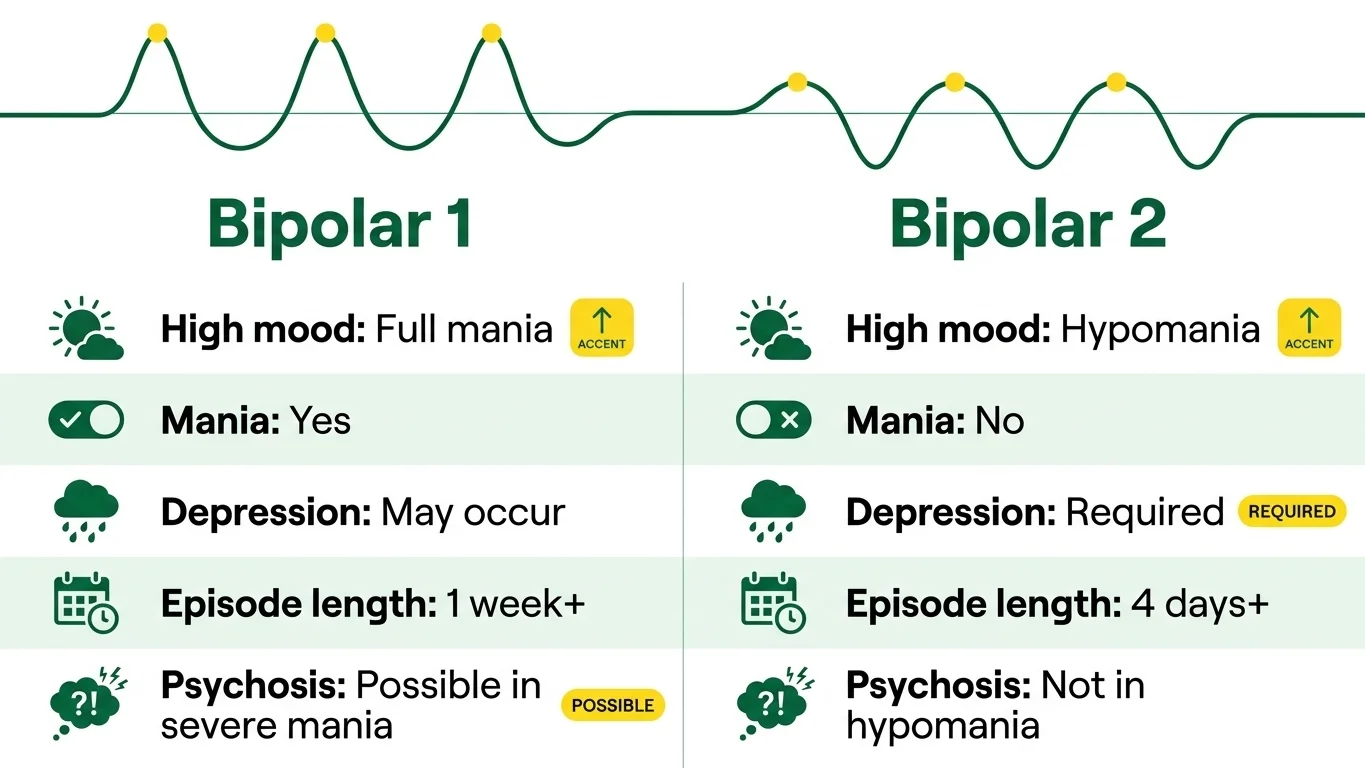
The table below shows the main differences between the two conditions.
| Feature | Bipolar 1 | Bipolar 2 |
| Required episode | At least one manic episode | At least one hypomanic and one depressive episode |
| Mania | Yes (at least 7 days or hospital care) | No |
| Hypomania | Can happen | Yes (at least 4 days) |
| Major depression | Common but not needed for diagnosis | Required |
| Psychosis | Can happen during severe mania | Rare, and not during hypomania |
| Hospital care | Often needed during mania | Less common |
| Main mood pattern | Balanced or leaning toward mania | Depression-predominant |
| Age of onset | Late teens to early 20s | Mid-20s to early 30s |
| Biggest impact on life | During mania | During depression |
| Suicide risk | High | Similarly high, more suicidal thoughts |
| Common treatment | Lithium, antipsychotics, mood stabilizers | Mood stabilizers, antidepressants (careful use), therapy |
Symptoms in Simple Terms
Bipolar disorder shows up in different kinds of episodes. Each one has its own signs. Knowing them helps people spot changes early.
Manic episode (bipolar 1):
- Very high, confident, or angry mood
- Sleeps very little but feels full of energy
- Talks fast and jumps between ideas
- Takes big risks like overspending or unsafe choices
- May lose touch with reality in severe cases
- Lasts at least one week
Hypomanic episode (bipolar 2):
- More energy or creativity than usual
- Needs less sleep
- Talks faster
- Family may notice, but daily life still works
- No psychosis
- Lasts at least four days
Major depressive episode (both types):
- Feels deeply sad or empty
- Loses interest in things they used to enjoy
- Very tired, with sleep and appetite changes
- Trouble with focus and memory
- Some feel worthless or think about suicide
- Lasts at least two weeks
Mixed features and rapid cycling:
- Mixed features: signs of high and low mood at the same time
- Rapid cycling: four or more mood episodes in one year
- Both can happen in either type of bipolar
What Causes Bipolar Disorder?
Bipolar disorder does not have one single cause. It usually comes from a mix of genes, brain chemistry, and life events.
Family history and brain chemistry
Bipolar disorder often runs in families. Having a parent or sibling with the condition raises the risk by two to three times. Bipolar 1 shares more genetic links with schizophrenia. Bipolar 2 shares more links with major depression. Brain chemistry also matters. Small changes in brain chemicals like dopamine and serotonin can play a role. Changes in the parts of the brain that control mood can matter too.
Common triggers
Some things can start a mood episode in someone who is already at risk. The most common triggers are lack of sleep, high stress, big life changes, season changes, and stopping medicine too soon. Alcohol, cannabis, and stimulant drugs can also start an episode.
Even one or two nights of poor sleep can push a person into mania or hypomania. Big changes like starting a new job, moving, or having a baby can also throw off mood, even when the change is a happy one. Knowing your own triggers is one of the best ways to stay ahead of an episode.
Health problems and medicines
Some health problems can bring on mood changes too. These include thyroid problems and certain medicines like steroids. When the thyroid is too active or too slow, it can look a lot like mania or depression. Medicines for asthma, allergies, or autoimmune conditions can also change mood in some people. This is why doctors often run blood tests and go over all current medicines before making a bipolar diagnosis.
Other Conditions That Often Come With Bipolar Disorder
Many people with bipolar disorder also have other mental health conditions at the same time. This is called a comorbid condition. Knowing about them helps make sure the full picture is treated, not just one part.
Anxiety disorders: Anxiety disorders are the most common. About half of people with bipolar disorder also deal with anxiety, panic attacks, or constant worry.
ADHD: ADHD is also common, especially in people with bipolar 1. It can make focus and mood harder to manage.
Substance use: Substance use is another concern. Alcohol and drugs are sometimes used to cope with mood swings, but they often make the mood swings worse over time.
Other conditions: Some people also have eating disorders, PTSD, or ongoing sleep problems. A good psychiatric evaluation looks for all of these, because treating them together works better than treating them one at a time.
How Doctors Diagnose Bipolar 1 and Bipolar 2
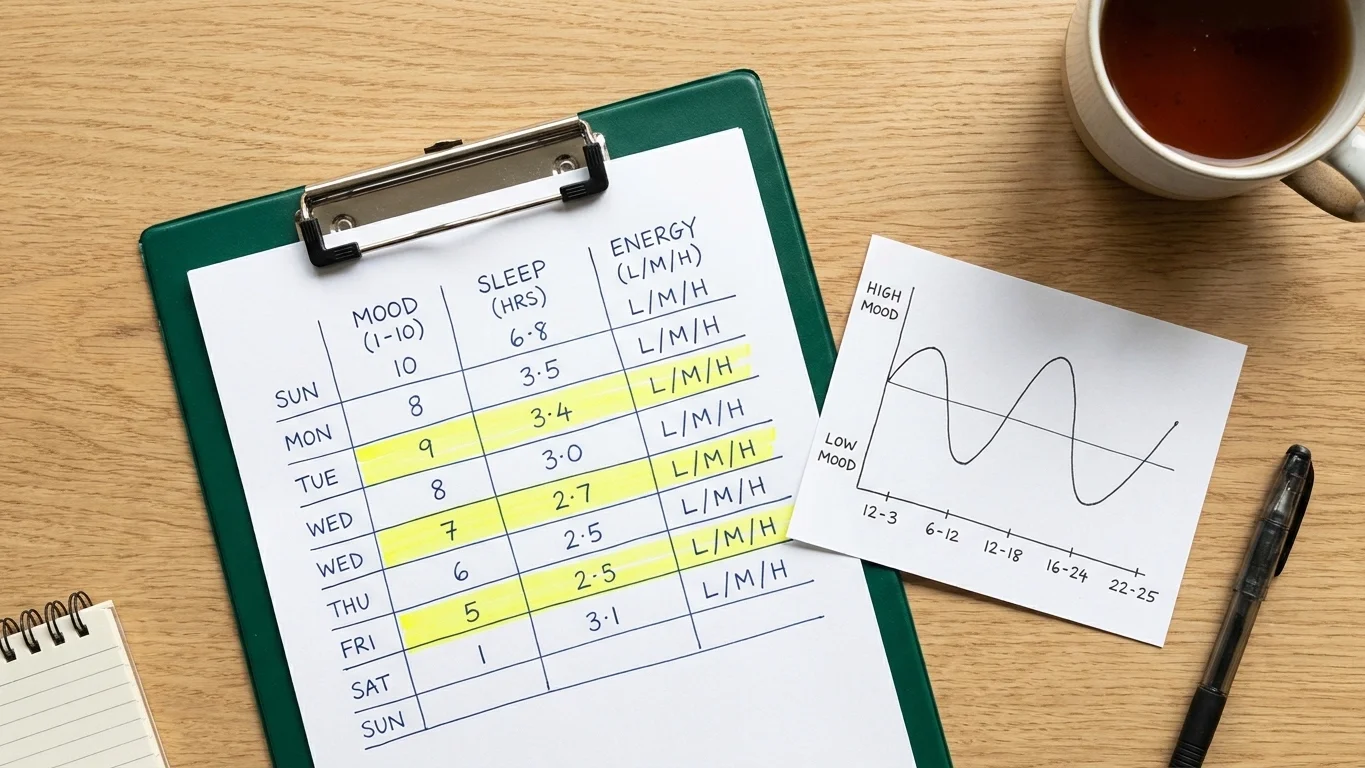
There is no blood test or brain scan that can find bipolar disorder. A trained mental health provider makes the diagnosis by talking with the person and reviewing their history. A full psychiatric evaluation covers many areas.
The provider asks about mood changes over the years, how long each episode lasted, and how it affected daily life. A full manic episode lasting a week or more points to bipolar 1. Hypomania lasting four to six days without serious daily problems points to bipolar 2. Family history matters too, since bipolar disorder often runs in families and relatives may notice mood changes the person missed. The provider also rules out other causes like thyroid problems, substance use, ADHD, or major depression on its own.
Bipolar 2 is often missed because many people come in during a depressive episode and don’t remember past hypomanic times. This is why an experienced evaluation matters so much.
How Bipolar 1 and Bipolar 2 Are Treated
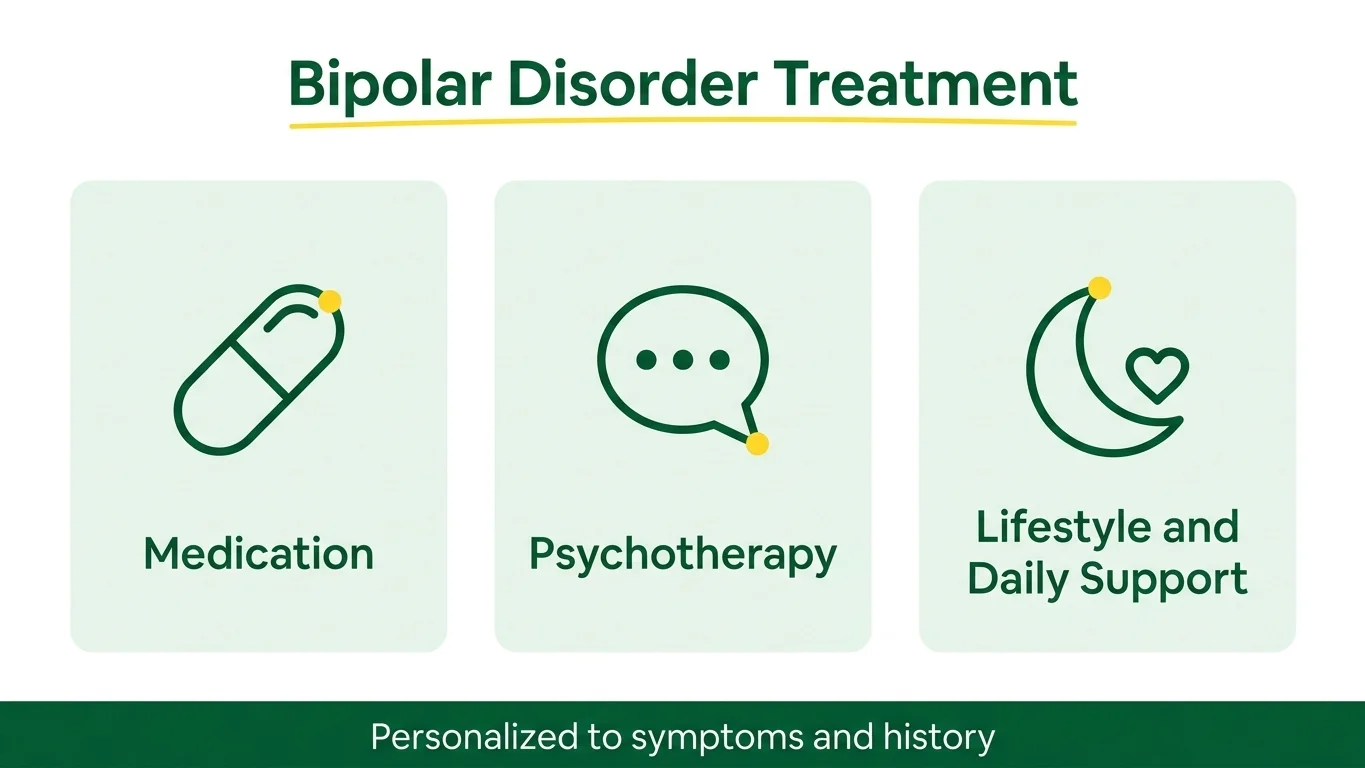
Treatment usually includes medicine, therapy, and healthy daily habits. The main medicines used for each type are different.
Medicine for bipolar 1
For bipolar 1, doctors often start with a mood stabilizer like lithium. Lithium works well for mania and for stopping future episodes. Second-generation antipsychotic medicines such as quetiapine, olanzapine, risperidone, or aripiprazole are also common. They help with acute mania and long-term care. Some doctors use anticonvulsant medicines like valproate or carbamazepine, especially when a person has mixed features or rapid cycling. People with bipolar 1 are much more likely to be prescribed lithium and antipsychotics than people with bipolar 2.
Medicine for bipolar 2
For bipolar 2, doctors often use lamotrigine because it helps prevent depression. Quetiapine is also common because it works well for bipolar depression. Lithium can still be used, especially when suicide risk is a concern. Antidepressants are used with care. In people with bipolar, antidepressants alone can sometimes trigger hypomania or make mood swings worse. So doctors often pair them with a mood stabilizer.
Therapy
Therapy is also very important for both types. Cognitive Behavioral Therapy (CBT) helps the person notice unhelpful thoughts and manage low mood. Interpersonal and Social Rhythm Therapy (IPSRT) helps keep sleep and daily routines steady, which protects against mood episodes.
Family-Focused Therapy (FFT) helps families communicate better and spot early warning signs. Psychoeducation teaches the person and their family about the condition so they can respond early to changes.
Daily habits
Daily habits also make a real difference. Keeping a steady sleep schedule is one of the most important protectors, because lost sleep can trigger episodes. Limiting alcohol, cannabis, and stimulants also helps. Regular exercise, balanced meals, stress management, and a strong support system all support recovery.
Advanced treatment options
For people who do not improve with standard care, other options are available. These include electroconvulsive therapy (ECT), transcranial magnetic stimulation (TMS), and Spravato (esketamine) for hard-to-treat depression.
Suicide Risk and When to Get Help
Both bipolar 1 and bipolar 2 carry a much higher risk of suicide than the general population. People with bipolar 1 are more likely to act on suicidal thoughts in serious ways, while people with bipolar 2 are more likely to have frequent suicidal thoughts. Neither type is safer than the other.
It is time to see a mental health provider if mood changes are affecting work, school, relationships, sleep, or daily life. Repeated periods of very high energy, very little sleep, risky behavior, or deep depression are all signs that professional help is needed. If someone is having thoughts of suicide or feels unable to stay safe, help is urgent. In the U.S., call or text 988 to reach the Suicide and Crisis Lifeline. In an emergency, call 911 or go to the nearest emergency department.
Conclusion
Bipolar 1 and bipolar 2 are related but different conditions. Bipolar 1 includes at least one full manic episode and can also include depression. Bipolar 2 includes hypomania and major depression, but never full mania. Bipolar 1 often shows severe manic episodes, and bipolar 2 often shows long periods of depression. Neither one is worse than the other. They are different, and each one needs its own treatment approach.
Because past hypomanic episodes are easy to miss, both types are often misdiagnosed at first. A careful evaluation with a psychiatric provider is the best way to find the right diagnosis and build the right care plan.
Get Expert Bipolar Disorder Treatment in Fullerton, CA
If mood changes are getting in the way of your life, or if you are not sure whether you have bipolar 1, bipolar 2, or something else, a proper evaluation is the first step. Placid Psychiatry offers full bipolar disorder treatment in Fullerton, CA and telehealth psychiatric care across the country. Schedule Your Appointment Today or call (562) 354-0002 to speak with our team.
Frequently Asked Questions
Is bipolar 1 worse than bipolar 2?
Not really. Bipolar 1 has more severe mania and a higher chance of psychosis and hospital care. Bipolar 2 usually has more time spent in depression and a similar risk of suicide. Research now sees them as two different conditions rather than one being milder than the other.
Can bipolar 2 turn into bipolar 1?
Yes. If a person with bipolar 2 later has a full manic episode, the diagnosis changes to bipolar 1. Just one manic episode is enough to change it.
Can you have bipolar without depression?
For bipolar 1, yes. Depression is common but not needed for the diagnosis. For bipolar 2, no. A major depressive episode is required.
What is the best medicine for bipolar 2?
There is no single best medicine. Lamotrigine and quetiapine are common because they help with the depression side, which is the main feature of bipolar 2. Lithium can also help, especially when suicide risk is a concern. The right choice depends on your history and how you respond.
How is bipolar disorder different from major depression?
Major depression only has low mood episodes. Bipolar disorder also includes at least one high mood episode, which is mania in bipolar 1 or hypomania in bipolar 2. This is important because antidepressants alone can make bipolar disorder worse without a mood stabilizer.
Can bipolar disorder be cured?
Bipolar disorder is a long-term condition, but it can be managed well. With the right medicine, therapy, and daily habits, most people can control their symptoms and live full lives.