
Functional depression, also called high-functioning depression, describes a person who keeps up with work, school, family, or other daily duties while dealing with ongoing depression symptoms. A person may look fine to others but still feel tired, empty, hopeless, or emotionally drained.
How to treat functional depression depends on the person’s symptoms, diagnosis, and needs. Treatment may include therapy, medication, behavioral changes, healthy routines, and support from others. Depression treatment commonly includes psychotherapy, medication, or a combination of both.
If you are dealing with these symptoms in Fullerton, CA, Placid Psychiatry can help you understand what you are experiencing and find treatment that fits your needs.
What Is Functional Depression?
Functional depression is a term used to describe depression symptoms that are present while a person continues to manage many parts of daily life. A person may look fine on the outside but still struggle with their mood, energy, or emotions.
Functioning While Feeling Depressed

Someone may go to work, take care of children, attend school, keep up with friends, or handle other responsibilities. At the same time, they may feel low, tired, disconnected, or unhappy inside. For example, a person may finish their work every day but feel completely drained once they get home. They may continue meeting their responsibilities while losing interest in things they once enjoyed. Looking functional does not mean a person is not struggling.
Is Functional Depression a Diagnosis?
“Functional depression” or “high-functioning depression” is not a formal medical diagnosis. Instead, it is a term often used to describe people who have depression symptoms but continue to manage important parts of daily life. A mental health professional looks at the person’s symptoms, how long they have lasted, and how they affect daily life when deciding whether a depressive disorder may be present.
Functional Depression and Persistent Depressive Disorder
Persistent depressive disorder is a formal diagnosis that involves long-lasting depression symptoms. According to the National Institute of Mental Health’s information on depression, persistent depressive disorder usually involves less severe depression symptoms that last for at least two years.
Functional depression should not be treated as another name for persistent depressive disorder. A person who uses the term “functional depression” may have a different depressive disorder, or they may need a professional evaluation to understand what is causing their symptoms.
How Depression Affects Daily Life
Depression can affect more than a person’s mood. It may also affect work, relationships, thinking, motivation, and quality of life.
A review on functional recovery from depression explains that recovery involves more than reducing depression symptoms. Depression can affect important areas of daily functioning even when a person is still able to work or manage basic responsibilities.
This is why someone can appear successful or “fine” to others while still needing support for depression.
Can You Have Depression and Still Function Well?
Yes. A person can have depression and still meet many daily responsibilities. Someone may continue working, getting good grades, caring for family, or appearing social while privately struggling with depression. This can make the problem harder to notice. Some people also put a lot of pressure on themselves.
They may feel that asking for help means they are weak or that they should be able to handle everything alone. This can create a gap between how a person looks on the outside and how they actually feel inside. Being able to work or complete daily tasks does not mean that a person cannot have depression. Depression can affect mood, energy, concentration, sleep, relationships, and quality of life.
Signs and Symptoms of Functional Depression
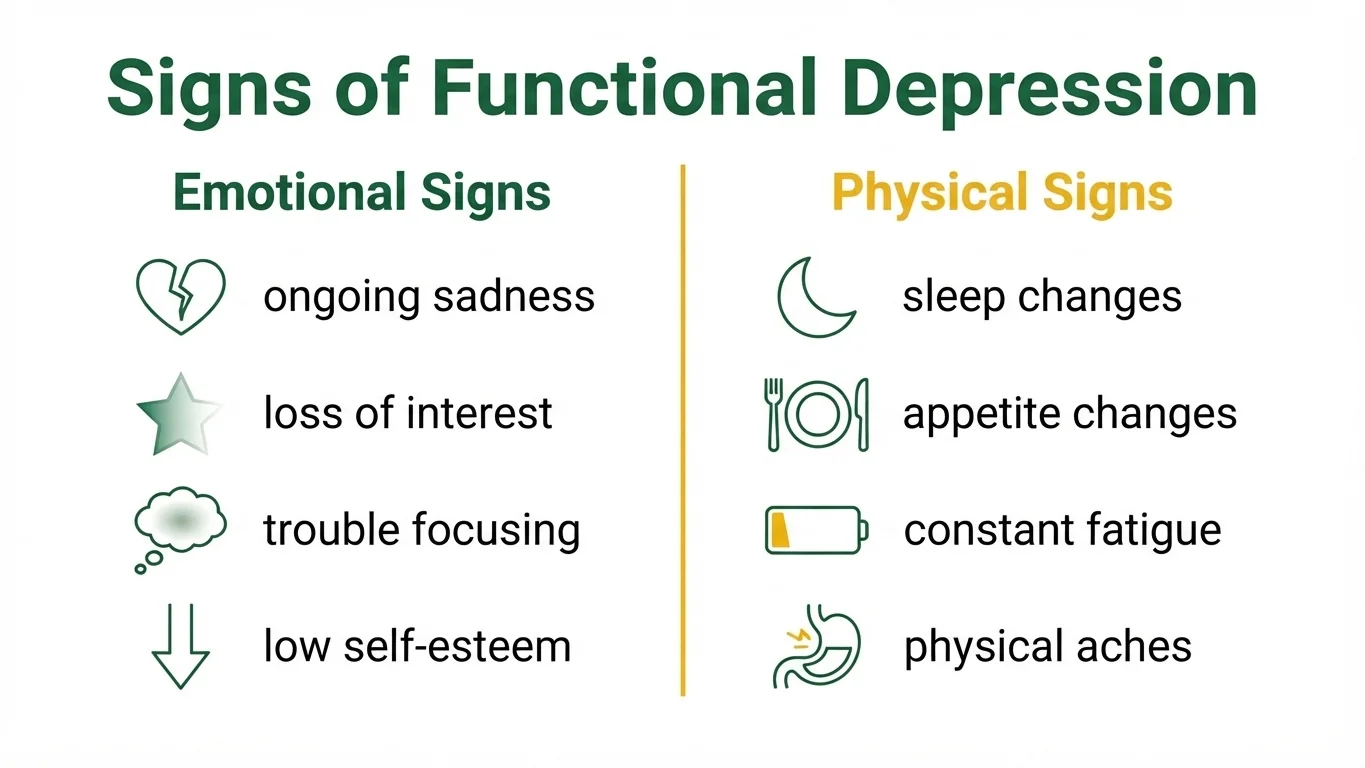
The symptoms can be easy to overlook because the person may continue doing what is expected of them.
Common symptoms can include:
- Ongoing sadness or emptiness
- Loss of interest or pleasure
- Low energy or constant tiredness
- Trouble focusing or making decisions
- Feelings of guilt, worthlessness, or hopelessness
- Irritability or frustration
- Changes in sleep
- Changes in appetite or weight
- Low self-esteem
- Pulling away from friends or family
- Feeling emotionally numb or disconnected
- Physical aches, headaches, or stomach problems
These symptoms are also seen in depression more generally. Not everyone has every symptom, and symptoms can vary from person to person.
Emotional Signs
A person may feel sad, empty, hopeless, or unhappy for much of the day. They may also lose interest in things they once enjoyed. Some people become more self-critical. They may constantly feel that they are not doing enough, even when they are meeting many of their responsibilities.
Others may become more irritable instead of openly sad. These changes can be easy to hide when someone has learned to keep working and acting normally around other people.
Physical Signs
Depression can affect the body as well as mood. A person may feel tired even after sleeping. Sleep may become harder, or they may sleep much more than usual. Changes in appetite, headaches, stomach problems, and other physical discomfort can also occur.
Physical symptoms should not automatically be assumed to be depression. Some medical conditions and medicines can cause symptoms that look similar to depression, so a health professional can help rule out other causes.
Changes in Work and Daily Life
Functional depression does not always cause a person to stop working or caring for responsibilities. Instead, everyday tasks may start to feel much harder. For example, a person may still finish work but need much more effort to do it.
They may stop enjoying their job, avoid social activities after work, or spend most of their free time recovering from the effort of getting through the day. Research on functional recovery from depression highlights the effect depression can have on work, relationships, thinking, and other areas of daily life.
Why Do People Hide Their Depression?
People may hide depression for many reasons. Some worry that others will judge them. Others fear losing respect at work or being seen as weak. A person may also believe that their problems are not serious enough to deserve help.
High achievers may have another barrier. They may use their productivity as proof that they are doing fine. Cultural expectations, family pressure, work demands, and fear of disappointing others can also make it harder to speak openly about mental health.
Hiding symptoms may allow a person to keep functioning for a while, but it can also delay treatment and support.
What Can Cause These Depression Symptoms?
There is usually not one single cause of depression. Different factors can work together.
The National Institute of Mental Health explains that genetic, biological, environmental, and psychological factors can all play a role in depression.
Stress and Life Pressure
Long-term stress can affect mood and daily functioning. Work pressure, financial problems, family responsibilities, relationship problems, loss, or major life changes may contribute to depression. Stress is not the only cause, though. Depression can develop even when life looks stable from the outside.
Family and Biological Factors
A family history of depression can increase a person’s risk. Medical conditions and some medicines can also cause symptoms that look like depression. This is one reason a professional evaluation can be helpful. Depression is not simply a problem of being weak or not trying hard enough. It can involve many factors that a person cannot control.
Perfectionism and Self-Criticism
Some people place very high expectations on themselves. They may feel that mistakes are unacceptable or that they must always perform well. Constant self-criticism can make it harder to notice emotional needs and ask for help. Perfectionism alone does not mean a person will develop depression, but it can become part of a pattern that makes stress and low mood harder to manage.
Relationship and Social Problems
Conflict, loneliness, isolation, or a lack of emotional support can also affect mental health. A person who is struggling may withdraw from others, which can then leave them with even less support.
Relationship problems can also be part of treatment. Treatment guidelines from NICE on depression in adults include approaches that can address relationship difficulties when they are connected to depression.
How Is This Type of Depression Treated?
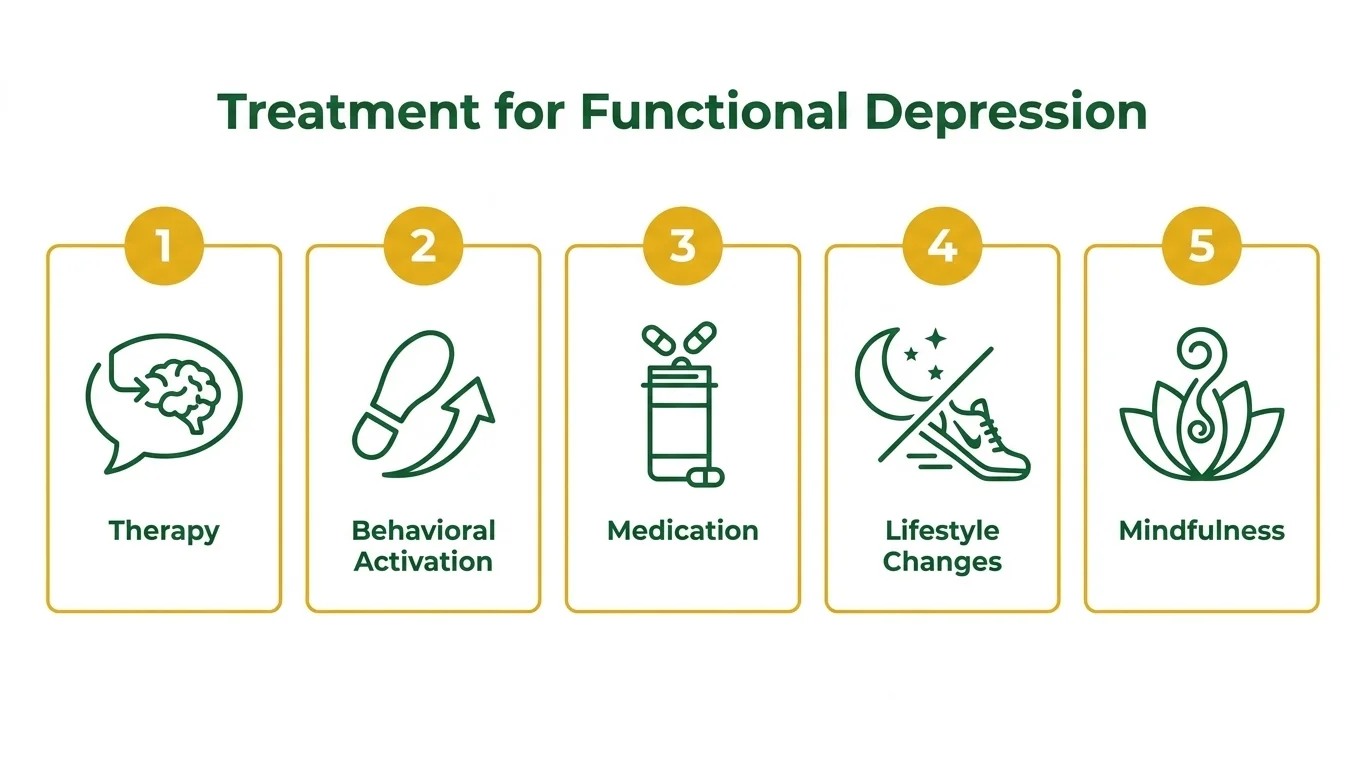
Treatment depends on the person’s symptoms and diagnosis. Common options include psychotherapy, medication, lifestyle changes, behavioral approaches, or a combination of these methods. There is no single treatment that works for everyone. A mental health professional can help decide which approach makes sense for your symptoms, preferences, and medical needs.
Which Types of Therapy Work Best for Depression?
Psychotherapy, also called talk therapy, is a common treatment for depression. Therapy can help a person understand negative thought patterns, change behaviors that keep depression going, improve relationships, and learn better ways to handle stress.
Cognitive behavioral therapy, or CBT, is one evidence-based approach used for depression. Interpersonal therapy and some forms of psychodynamic therapy may also help.
Research has also explored ways to strengthen cognitive therapy by focusing more closely on the relationship between the therapist and client. A 2002 study examined Functional Analytic Psychotherapy-enhanced cognitive therapy for depression and found the approach promising for improving treatment and interpersonal functioning.
Behavioral Activation
Behavioral activation focuses on helping people become more involved in meaningful and enjoyable activities. Depression can lead people to withdraw from activities and relationships. Over time, this can make low mood harder to manage.
Behavioral activation helps break this pattern by building useful activities back into daily life. NICE guidance on depression treatment includes behavioral activation as an evidence-based treatment option. It focuses on the link between activities and mood and helps people make practical changes that reduce avoidance and inactivity.
Medication
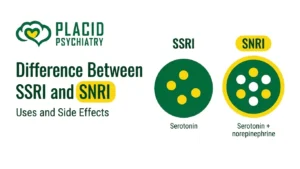
Antidepressants may be part of treatment for some people. Common types include SSRIs and SNRIs. Other antidepressants may also be used depending on a person’s symptoms and medical history. Antidepressants do not work the same way for everyone.
According to NIMH information on mental health medications, antidepressants often take several weeks to work, and it may take some time to find a medication that works well with manageable side effects. NIMH notes that antidepressants often take about 4 to 8 weeks to work. Medication should not be started, stopped, or changed without guidance from the prescribing professional.
Lifestyle Changes
Healthy daily habits can support depression treatment.
Helpful areas may include:
- Regular physical activity
- A steady sleep schedule
- Regular meals
- Time with supportive people
- Stress management
- Activities that provide meaning or enjoyment
These habits are not a replacement for professional treatment when depression symptoms are significant. They can be used alongside treatment to support overall well-being. NIMH recommends healthy habits such as regular exercise, healthy eating, enough sleep, and spending time with loved ones as helpful steps for people with milder symptoms.
Mindfulness and Relaxation
Mindfulness, breathing exercises, meditation, and other relaxation practices may help some people manage stress and become more aware of their thoughts and emotions. They should be viewed as supportive tools rather than a cure for depression.
The goal is not to force negative thoughts away. Instead, these practices can help a person notice thoughts and feelings without automatically reacting to them.
What If Treatment Does Not Help Enough?
Sometimes depression symptoms do not improve enough with the first treatment. This does not mean that recovery is impossible. A provider may review the diagnosis, medication, therapy approach, other health conditions, or factors that may be affecting recovery. Treatment may need to be changed or combined with another approach.
The JAMA article on when and how to treat subthreshold depression discusses treatment considerations for people who have depressive symptoms that do not meet the full criteria for major depression. This is useful when thinking about people with meaningful symptoms that may not fit neatly into one diagnosis.
For people whose depression does not improve enough with standard treatments, brain stimulation treatments may sometimes be considered. NIMH lists repetitive transcranial magnetic stimulation, or rTMS, among brain stimulation options for depression.
These treatments should be discussed with a qualified health professional to determine whether they are appropriate.
How to Manage Symptoms Day to Day
Treatment works best when it also fits into everyday life.
Build a Simple Routine
A basic routine can make daily tasks easier when motivation is low. Try keeping regular times for waking, eating, working, sleeping, and relaxing. Small steps are often easier to maintain than trying to change everything at once.
Stay Connected
Depression can make people want to pull away from others. Try to stay connected with people you trust. You do not have to explain everything at once. Even a short conversation or simple activity together can help reduce isolation. NIMH includes spending time with loved ones among the self-care steps that may help people with milder symptoms.
Make Time for Things You Enjoy
Depression can make enjoyable activities feel less rewarding. Still, keeping some meaningful activities in your routine can be useful. This may include spending time outside, listening to music, exercising, reading, spending time with family, or working on a hobby. You may not feel motivated at first. The goal is to take small steps rather than wait until you feel completely ready.
Take Sleep Seriously
Poor sleep and depression can affect each other. Keeping a regular sleep schedule and giving yourself enough time to rest can support recovery. If sleep problems continue, mention them to your health care provider.
How Can You Help Someone Who Is Depressed?
Functional depression can be difficult to notice because the person may continue doing well at work or handling daily responsibilities. If you are worried about someone, start with a calm and caring conversation.
You can say that you have noticed they seem tired, withdrawn, or different lately. Listen without judging them or telling them to simply “think positive.” You can also encourage them to speak with a mental health professional. Offering to help them find a provider, arrange an appointment, or get to an appointment may make the first step easier.
NIMH recommends encouraging people with persistent depression symptoms to talk with a health care provider or mental health professional. It is also important to take care of yourself if you are supporting someone who is struggling.
Functional Depression vs. Clinical Depression
“Functional depression” is not a separate clinical diagnosis. It is commonly used to describe a person who has depression symptoms while continuing to function in important areas of life. Clinical depression refers to diagnosed depressive disorders, such as major depressive disorder or persistent depressive disorder.
According to NIMH’s depression information, major depression involves symptoms such as depressed mood or loss of interest that interfere with daily activities. Persistent depressive disorder involves less severe depression symptoms that last much longer, usually at least two years. A person does not have to completely stop working or caring for responsibilities to have a depressive disorder.
Research on functional recovery from depression also shows why symptom relief is not the only part of recovery. Work, relationships, thinking, and quality of life can also be affected by depression. That is why an evaluation matters more than how “functional” someone appears.
Why Can Depression Go Untreated ?
Functional depression can go untreated because the symptoms are easy to dismiss. A person may think, “I am still working, so I cannot be depressed,” or “I should be able to handle this.” They may have family duties, work demands, or other responsibilities that make their symptoms feel less important. Over time, they may get used to feeling tired, low, or disconnected and stop noticing how much their mood has changed.
When depression lasts for a long time, it can become part of a person’s normal routine. They may forget what it feels like to have more energy or enjoy daily life. Research on functional recovery from depression shows that depression can affect areas such as daily functioning and quality of life, even when a person continues to manage work and other responsibilities. This is why depression should not be judged only by whether someone is still able to function.
Can Therapy Help With Long-Term Depression?
Therapy can help people understand and change patterns that may keep depression going. An older paper called Active Treatment of Depression discussed an active and educational approach to depression treatment. The approach included tools such as a mood journal and encouraged people to take an active role in understanding how depression affects their daily lives.
This is older research, so it should be viewed as background rather than current treatment guidance. Current sources such as NIMH and NICE provide more up-to-date information about evidence-based depression treatment.
When Should You Get Help for Functional Depression?
Consider speaking with a health care or mental health professional if low mood, loss of interest, fatigue, sleep problems, hopelessness, or other symptoms continue and do not improve.
You should not wait until you can no longer work or manage daily responsibilities. A professional can ask about your symptoms, how long they have been present, how they affect your life, and whether another medical or mental health condition could be involved.
Some medical conditions and medicines can cause symptoms similar to depression, which is another reason an evaluation can be useful. If symptoms are persistent, getting an evaluation can help you understand what is happening and what treatment options may be available.
If you have thoughts of suicide or self-harm, seek immediate help. In the United States, you can call or text 988 for the Suicide & Crisis Lifeline. In a life-threatening emergency, call 911.
Get Support for Functional Depression at Placid Psychiatry
If you are struggling with low mood, emotional exhaustion, loss of interest, or other signs of depression, you do not have to keep pushing through on your own.
Placid Psychiatry in Fullerton, CA provides personalized psychiatric care for adults and teenagers dealing with depression and other mental health concerns. Treatment can be tailored to your symptoms, needs, and goals.
Placid Psychiatry also offers telehealth care, making it easier to get support when attending an in-person appointment is difficult. Schedule an appointment with Placid Psychiatry to discuss your symptoms and learn what treatment options may be right for you.
Conclusion
Functional depression describes a pattern where a person may continue meeting daily responsibilities while struggling with depression symptoms inside. It can involve low mood, fatigue, loss of interest, poor concentration, sleep changes, low self-esteem, and feelings of hopelessness.
The most important thing to remember is that being able to work or take care of responsibilities does not mean you cannot have depression. Depression can still affect your energy, relationships, thinking, work, and quality of life. Treatment may include therapy, medication, behavioral activation, healthy routines, social support, and other options based on your needs.
There is no single treatment that works for everyone, so a professional evaluation can help identify the right approach. You do not need to wait until life falls apart before asking for help. If something has felt wrong for a long time, getting support can be an important first step toward feeling better.
Frequently Asked Questions
What is functional depression?
Functional depression is a commonly used term for experiencing depression symptoms while continuing to manage many daily responsibilities. It is not a formal diagnosis. A professional may diagnose a condition such as major depression or persistent depressive disorder based on the person’s symptoms and history.
What are the signs of functional depression?
Common signs include ongoing sadness or emptiness, low energy, loss of interest, sleep changes, appetite changes, low self-esteem, trouble concentrating, irritability, hopelessness, and social withdrawal.
How is functional depression treated?
Treatment may include psychotherapy, medication, behavioral activation, lifestyle changes, or a combination of these options. The right approach depends on the person’s symptoms, diagnosis, preferences, and medical needs.
Can functional depression go away on its own?
Some depressive symptoms may improve over time, but ongoing or worsening symptoms should not simply be ignored. If symptoms continue, affect your quality of life, or become more severe, speaking with a health professional is recommended.
When should I see a doctor for functional depression?
Consider getting professional help when symptoms such as low mood, loss of interest, fatigue, sleep problems, or hopelessness continue or interfere with your life.
You do not need to wait until you can no longer meet your daily responsibilities before seeking help. A professional can assess your symptoms and help determine whether depression or another condition may be involved.