
Abandonment fears can make relationships feel unsafe even when there is no clear sign that someone is leaving. A delayed text, a change in tone, or a request for space may quickly trigger worry, anger, or panic. CBT for abandonment issues can help people notice these reactions, question fear-based thoughts, and respond in healthier ways.
Cognitive behavioral therapy can help with abandonment fears by identifying unhelpful thoughts, testing whether those thoughts are accurate, changing behaviors that keep the fear going, and building healthier ways to handle uncertainty in relationships.
At Placid Psychiatry in Fullerton, CA, mental health care can help people understand how past experiences may be shaping present thoughts, emotions, and relationships. Abandonment fears can feel very real, but they do not have to control every decision you make. With the right support, it is possible to build more balanced thinking, stronger coping skills, and a greater sense of emotional safety.
What Are Abandonment Issues?
Abandonment issues describe a strong fear of being rejected, left, replaced, or emotionally disconnected from someone important. Abandonment issues are not a mental health diagnosis on their own. However, these fears may appear alongside anxiety, trauma, relationship problems, or other emotional concerns.
People experience abandonment fears in different ways. One person may constantly seek reassurance, while another may avoid becoming close to anyone. Understanding how fear appears in your own life can help you recognize patterns that may need attention.
| Area | What Abandonment Issues Can Look Like |
| Fear of abandonment | Feeling anxious when someone becomes quiet, distant, busy, or less available than usual. |
| Reassurance-seeking | Frequently asking whether someone still loves you, cares about you, or plans to stay. |
| Fear of rejection | Assuming that a small disagreement or change in behavior means a relationship is ending. |
| Clingy behavior | Feeling a strong need to stay close to someone or becoming upset when they spend time away. |
| Avoiding closeness | Keeping emotional distance because becoming attached feels too risky. |
| Jealousy | Feeling threatened by another person’s friendships, activities, or relationships. |
| Testing relationships | Starting arguments, pulling away, or creating situations to see whether someone will come back. |
| Low self-worth | Believing you are not lovable enough, valuable enough, or worthy of a stable relationship. |
| Relationship problems | Repeated conflict, difficulty trusting, poor boundaries, or staying in unhealthy relationships because being alone feels frightening. |
Abandonment fears can create a cycle. A person becomes afraid of losing someone, reacts strongly, and then experiences more tension in the relationship. That tension may then seem like proof that the original fear was true.
What Causes Abandonment Issues?
There is no single cause of abandonment issues. They can develop because of childhood experiences, painful relationships, trauma, major loss, or repeated rejection. In many cases, several experiences may influence how a person thinks about closeness, trust, and emotional safety.
Childhood Abandonment and Emotional Neglect
Childhood experiences can have a strong effect on how adults understand relationships. A child may experience abandonment when a parent dies, leaves the family, becomes emotionally unavailable, or is not consistently present.
Emotional neglect may also play a role. A child can have food, clothing, and shelter but still feel emotionally unsupported. If comfort, attention, or affection was unpredictable, the child may learn that important people cannot always be trusted to stay emotionally available.
Loss, Rejection, or Relationship Breakups
Abandonment fears do not always begin in childhood. A painful breakup, divorce, betrayal, death, or sudden loss can change the way a person sees future relationships.
For example, someone who was unexpectedly left by a long-term partner may become highly alert to signs of rejection in a new relationship. Even normal changes in communication may feel threatening because they remind the person of what happened before.
Trauma, Chronic Stress, and Difficult Relationships
Trauma can affect how the brain and body respond to possible danger. A person who has experienced abuse, unstable relationships, or long periods of emotional stress may become more sensitive to changes in other people’s behavior.
This can make relationship uncertainty feel more dangerous than it really is. A small disagreement may trigger a much stronger emotional response because the current situation reminds the person of an earlier painful experience.
How Past Experiences Shape Core Beliefs
Core beliefs are deep ideas that people develop about themselves, relationships, and the world. These beliefs often form over many years.
A person with abandonment fears may believe, “People always leave me,” “I am difficult to love,” or “I have to make people happy or they will go away.” These beliefs can influence how a person interprets everyday situations, even when the belief does not match what is actually happening.
How Cognitive Behavioral Therapy Helps With Abandonment Issues
Cognitive behavioral therapy focuses on the connection between thoughts, emotions, and behaviors. When someone fears abandonment, the mind may quickly create a negative explanation for an uncertain situation. For example, if a partner does not respond to a message, the automatic thought may be, “They are losing interest in me.”
That thought can create anxiety, which may then lead to repeated texting, checking, or arguing. CBT helps slow down this process so the person can examine what is happening before reacting. CBT also helps people replace unhelpful patterns with more balanced ones. A person may learn to ask what evidence supports a fearful thought, what other explanations are possible, and whether an old experience is affecting the current situation.
Treatment can also focus on reducing reassurance-seeking, improving communication, setting healthier boundaries, and learning how to handle uncertainty. Over time, these skills may help a person feel more secure without needing constant proof that a relationship is safe.
Identifying Negative Thoughts About Rejection and Abandonment
Many abandonment reactions begin with an automatic thought. These thoughts often happen so quickly that a person accepts them as facts. CBT helps you slow down and identify the thought behind the emotion. Instead of only noticing anxiety, you may recognize the thought, “They have not replied because they do not want me anymore.” Once the thought is clear, it becomes easier to examine.
Challenging Fear-Based Thoughts
A therapist may encourage you to ask simple questions about a fearful thought. What evidence supports it? What evidence does not? Is there another possible explanation?
Someone may not answer a message because they are working, driving, sleeping, or busy. Considering other explanations does not mean ignoring real relationship problems. It means avoiding a conclusion before you have enough information.
Reframing Core Beliefs About Worth and Rejection
Deep beliefs can take longer to change than everyday thoughts. A person who believes, “Everyone leaves me,” may notice that belief appearing in many different relationships.
Extreme beliefs like this can be replaced with more balanced ones over time. A healthier belief might be, “Some relationships may end, but I can still build strong relationships and cope if something changes.”
Changing Behaviors That Reinforce Abandonment Fears
Some behaviors provide short-term relief but make anxiety stronger over time. Repeatedly asking for reassurance may calm fear for a few minutes. However, the person may soon need reassurance again.
Identifying these patterns is the first step toward practicing different responses. This may include waiting before sending another message, allowing healthy space, or talking directly about a concern instead of testing the relationship.
CBT Techniques for Abandonment Issues
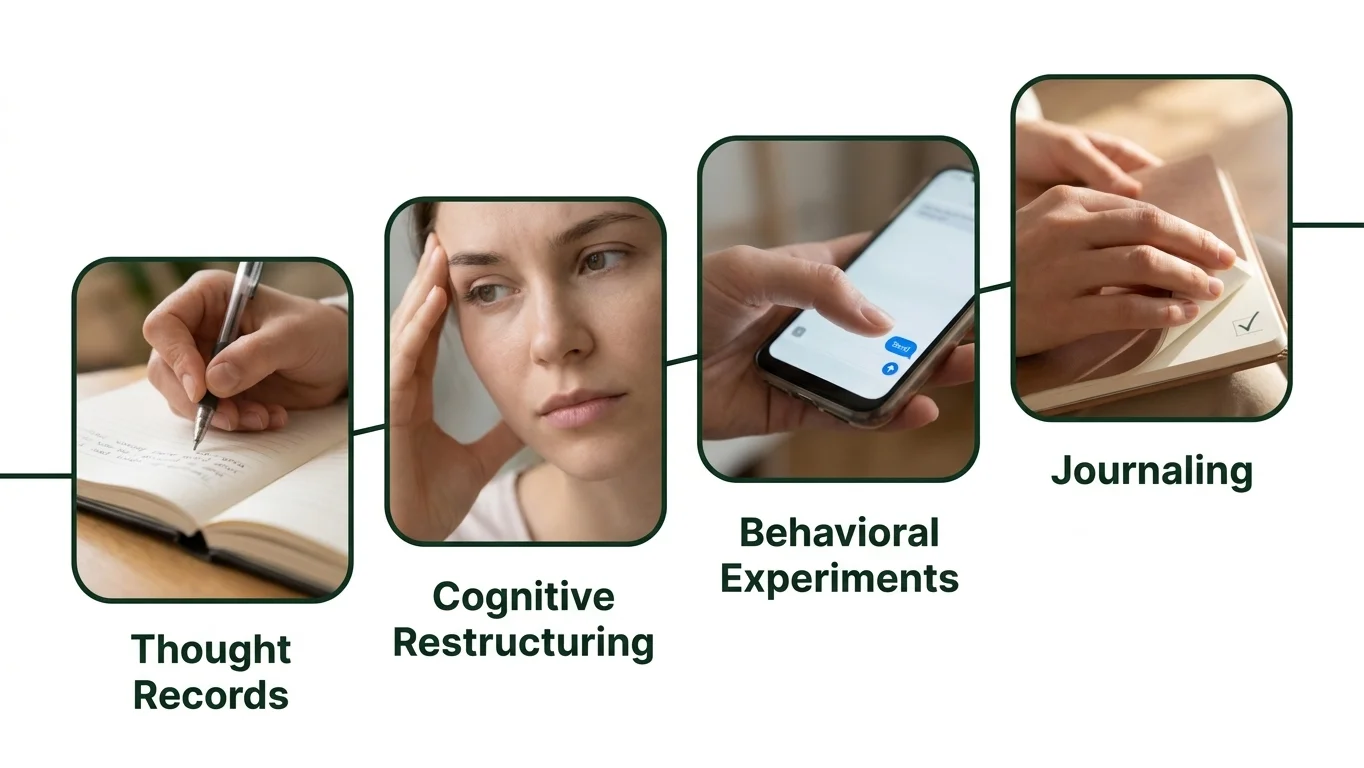
CBT includes practical tools that can help people understand their thoughts and change their reactions. A therapist may use different techniques depending on the person’s symptoms, history, and goals.
| CBT Technique | How It May Help With Abandonment Fears |
| Thought records | Write down the situation, automatic thought, emotion, evidence, and a more balanced thought. This can help separate assumptions from facts. |
| Cognitive restructuring | Examine negative beliefs and replace extreme or inaccurate thoughts with more realistic ones. |
| Identifying cognitive distortions | Notice thinking habits such as mind reading, catastrophizing, emotional reasoning, and all-or-nothing thinking. |
| Behavioral experiments | Safely test a fear instead of automatically believing it. For example, wait before asking for reassurance and notice what actually happens. |
| Gradual exposure | Slowly practice facing situations that create relationship anxiety, such as spending time apart or allowing uncertainty without immediately reacting. |
| Journaling | Track triggers, thoughts, emotions, and behaviors to identify repeated patterns. |
| Balanced self-talk | Replace statements such as “I know they are leaving” with thoughts such as “I feel afraid, but I do not know what will happen yet.” |
| Problem-solving skills | Separate problems that require action from fears that are based mainly on assumptions. |
These techniques usually become more useful with practice. The goal is not to remove every uncomfortable thought. Instead, the goal is to respond to thoughts in a more thoughtful and controlled way.
How CBT Can Help With Fear of Abandonment in Relationships
Romantic relationships can be a major trigger for abandonment fears because they involve emotional closeness and uncertainty. Changes in communication, conflict, or time apart may cause strong anxiety. CBT can help a person understand that feeling afraid does not always mean something bad is happening.
Managing Anxiety When Someone Becomes Distant
When someone seems distant, a person with abandonment fears may immediately expect rejection. CBT teaches you to separate what you know from what you are assuming. You may know that your partner has been quieter today. You may not know why. Waiting for more information before reaching a conclusion can reduce unnecessary conflict.
Reducing Reassurance-Seeking and Clingy Behaviors
It is normal to want reassurance sometimes, but problems can develop when it becomes the main way a person manages anxiety. The goal is not to stop caring about how someone feels, but to build tolerance for not knowing right away. This means sitting with uncertainty a little longer each time instead of reaching for your phone the moment worry shows up. Over time, this builds emotional independence and takes pressure off both people in the relationship.
Setting Healthier Relationship Boundaries
Healthy boundaries allow people to stay connected while still having separate needs, friendships, interests, and responsibilities. For someone with abandonment fears, another person’s need for space may feel like rejection. Therapy can help change this interpretation and teach the difference between healthy independence and emotional withdrawal.
Communicating Fears Without Pushing Others Away
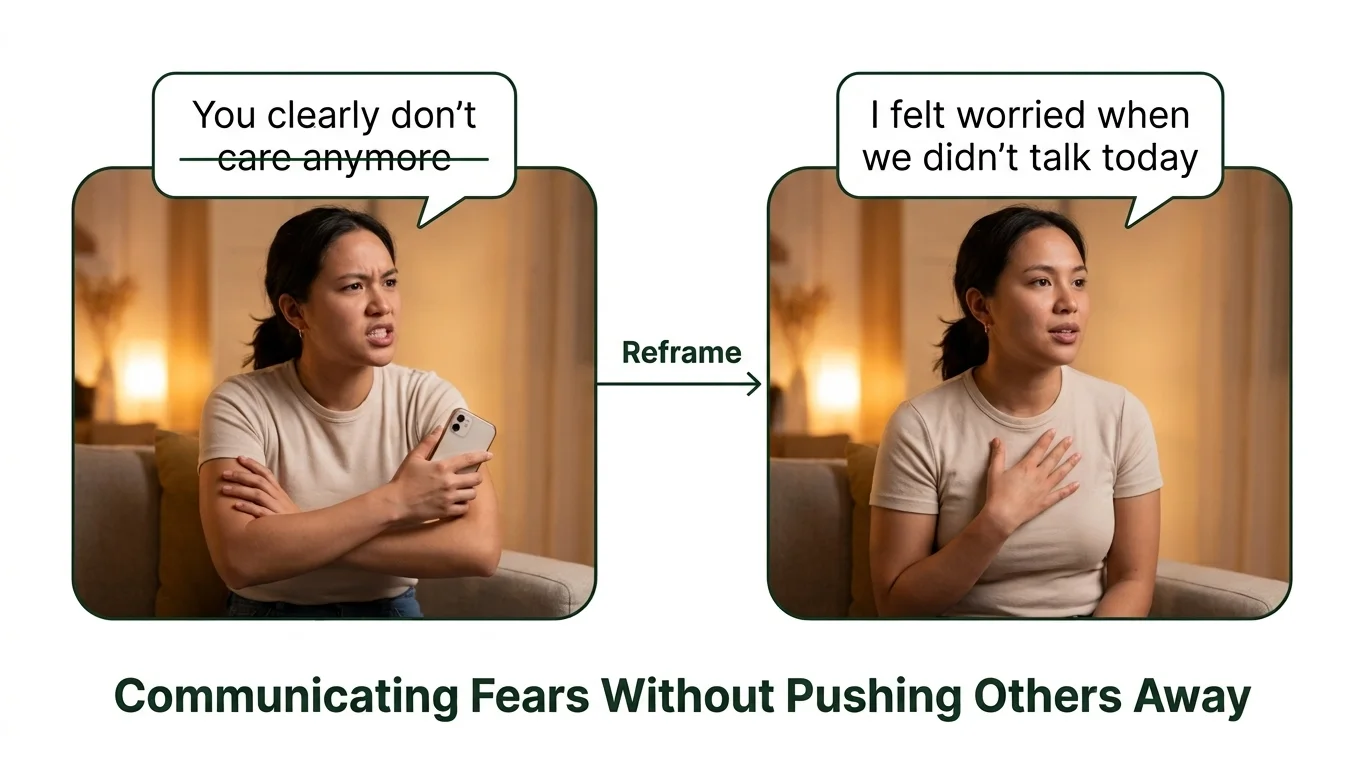
Fear can sometimes come out as anger or blame. Instead of saying, “You clearly do not care about me anymore,” a healthier response may be, “I noticed that I felt worried when we did not talk today. Can we talk about it?” Saying what you feel, instead of accusing the other person, gives them room to respond without becoming defensive. It also shifts the conversation from a fight to a moment of honesty, which tends to bring people closer instead of pushing them away.
CBT for Childhood Abandonment Issues
Childhood abandonment can continue to affect adult thoughts and relationships. A person may understand that they are no longer a child but still react to certain situations with the same fear they experienced years earlier. CBT can help connect past experiences with present reactions.
Recognizing Early Experiences That Still Affect You
Some reactions in adulthood trace straight back to childhood, even when it doesn’t feel that way in the moment. Being ignored by a partner, for instance, can stir up the same feeling as being ignored by a parent who wasn’t consistently there. Once that connection is spotted, the intensity of the reaction often starts to make more sense. It’s not that the present situation is small, it’s that it’s carrying weight from something much older.
Challenging Beliefs Learned in Childhood
Children often create simple explanations for difficult events. A child may think, “My parents left because I was not good enough.”
That belief may continue into adulthood even though the person now understands the situation differently. CBT can help examine the belief from an adult point of view and develop a healthier understanding of what happened.
Developing Emotional Regulation Skills
Strong emotions can make it difficult to think clearly. Emotional regulation skills can help a person pause before reacting. This may involve slow breathing, grounding, naming the emotion, taking a short break, or waiting until the emotional intensity decreases before starting a difficult conversation.
Building a Greater Sense of Safety and Self-Worth
Healing abandonment fears often involves learning that your value does not depend completely on whether another person stays. Building confidence, personal goals, friendships, routines, and coping skills can create a stronger sense of stability. Relationships can still matter deeply without becoming the only source of emotional safety.
Exercises and Coping Strategies for Abandonment Fears
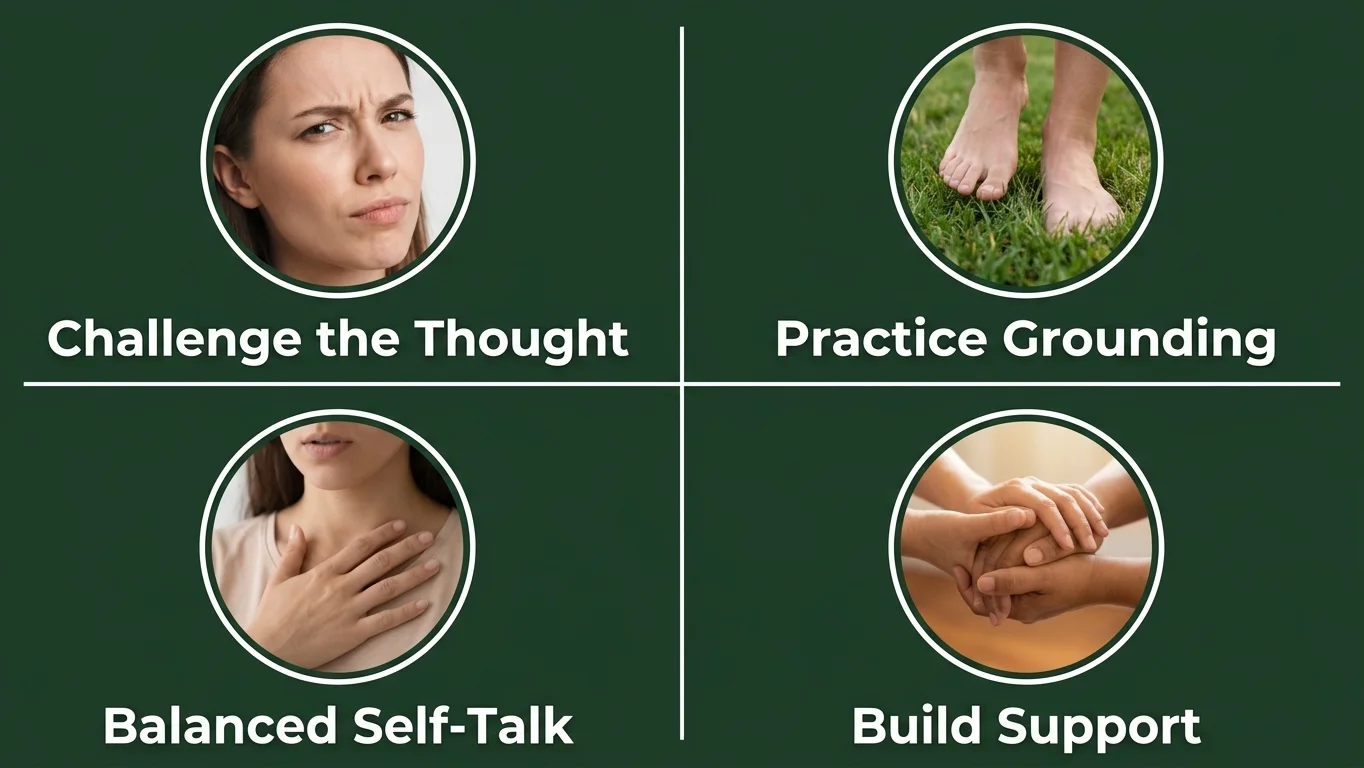
Simple coping skills can help you slow down when abandonment fears become intense. They can be used on their own for mild concerns or alongside professional treatment.
- Challenge the thought before reacting: Ask yourself what actually happened and what you are assuming. A delayed reply is a fact. “They are leaving me” is an interpretation.
- Wait before seeking reassurance: Give yourself a set amount of time before asking someone to confirm that everything is okay. This can help you learn that anxiety may decrease without immediate reassurance.
- Practice grounding: Pay attention to what you can see, hear, touch, smell, and feel around you. Grounding can bring your attention back to the present instead of staying focused on a feared future.
- Name the emotion: Saying, “I feel anxious and afraid of being rejected,” can help create some distance between you and the emotion.
- Separate fear from facts: Write two short lists. One can be called “What my fear says.” The other can be called “What I actually know.”
- Use balanced self-talk: Try saying, “I am worried right now, but worry does not prove that something bad is happening.”
- Build a wider support system: Friendships, family relationships, hobbies, community activities, and personal goals can reduce the pressure placed on one relationship.
- Strengthen self-trust: Remind yourself that even if a relationship changes, you have the ability to ask for help, make decisions, and cope with difficult emotions.
These exercises are not meant to force you to ignore real problems. If someone is treating you poorly or a relationship is unhealthy, your concerns should be taken seriously. The goal is to tell the difference between a real problem and a fear-based assumption.
How to Know When You Need Professional Help
Some abandonment fears can be managed through self-awareness and healthy coping skills. Professional help may be useful when the fear becomes difficult to control or begins affecting important parts of life.
When Abandonment Fears Begin Affecting Daily Life
Consider seeking support if fear and anxiety interfere with sleep, work, school, concentration, social activities, or your ability to enjoy daily life. Constantly thinking about whether someone will leave can take a great deal of emotional energy.
When Fear Is Repeatedly Affecting Relationships
Therapy may help when similar problems happen in several relationships. Examples include repeated jealousy, frequent arguments, testing partners, extreme reassurance-seeking, avoiding closeness, or staying in harmful relationships because being alone feels frightening. Repeated patterns may be a sign that deeper beliefs or past experiences still need attention.
When Self-Help Strategies Are Not Enough
Self-help tools can be useful, but they do not work for every situation. Professional support may be especially important if abandonment fears are connected to trauma, severe anxiety, depression, or other mental health concerns. A mental health professional can evaluate the full picture instead of focusing on one symptom.
Conclusion
Fear of abandonment can affect thoughts, emotions, self-esteem, and relationships. Small changes in communication can feel much bigger when past experiences have taught you to expect rejection or loss. These fears can also lead to reassurance-seeking, withdrawal, jealousy, or other behaviors that create more stress.
CBT for abandonment issues can help you recognize these patterns and respond in healthier ways. By challenging fear-based thoughts, building emotional regulation skills, and changing unhelpful behaviors, you can develop a stronger sense of security and self-trust. Progress can take time, especially when abandonment fears are connected to childhood experiences or trauma, but the right support can make these patterns easier to understand and manage.
Ready to Start Working Through Abandonment Fears?
If abandonment fears are affecting your relationships, emotional well-being, or daily life, professional support may help. Therapy can give you a safe place to understand your triggers, challenge negative beliefs, and develop healthier ways to manage fear and uncertainty.
At Placid Psychiatry in Fullerton, CA, our team provides personalized mental health support based on your needs and goals. Contact Placid Psychiatry today to schedule an appointment and take the next step toward healthier relationships, stronger self-trust, and better emotional well-being.
Frequently Asked Questions
Can CBT Help With Fear of Abandonment?
Yes, CBT can help many people change the thoughts and behaviors that keep abandonment fears active. It can teach you to question assumptions, manage anxiety, and respond more calmly in relationships.
What Is the Best Therapy for Abandonment Issues?
There is no single best therapy for everyone. CBT, DBT, attachment-based therapy, trauma-focused therapy, EMDR, and couples therapy may all be useful depending on the person’s needs.
What Is the Root Cause of Fear of Abandonment?
Possible causes include childhood loss, emotional neglect, trauma, rejection, unstable relationships, or painful breakups. Some people have more than one cause.
Does Fear of Abandonment Ever Go Away?
It can become much easier to manage. Many people learn to recognize triggers, challenge old beliefs, and build healthier relationships. Progress may take time, especially when the fear is linked to trauma or long-standing patterns.
How Long Does CBT Take to Help With Abandonment Issues?
There is no fixed timeline. CBT is often a structured, time-limited therapy, but the number of sessions depends on the person, the severity of symptoms, other mental health concerns, and treatment goals.
Can You Overcome Abandonment Issues Without Therapy?
Some people improve through self-awareness, healthy relationships, journaling, boundaries, and coping skills. Professional help may be more useful when fears are intense, repeated, linked to trauma, or damaging daily life.
Can CBT Help With Childhood Abandonment Issues?
Yes. CBT can help adults identify beliefs that may have formed during childhood and test whether those beliefs still fit their current life. Some people may also benefit from trauma-focused or attachment-based treatment.