

Yes, cognitive behavioral therapy, often called CBT, can help people manage avoidant personality disorder, known as AvPD. It is one of the most studied and widely used treatment approaches for this condition. CBT can help reduce avoidance, ease fear of rejection, and build more balanced thinking patterns over time.
At Placid Psychiatry in Fullerton, CA, we work with adults who struggle with these patterns every day, and CBT is often a central part of the care plan we build together. That said, progress is not the same for everyone. How much someone improves depends on things like how severe their symptoms are, whether they also deal with anxiety or depression, and how consistently they engage with treatment.
Our team at Placid Psychiatry sees this firsthand with the patients we support, and we tailor treatment based on each person’s specific needs rather than using a one size fits all plan. Much of what we know comes from studies on related conditions, like social anxiety disorder, so treatment often draws from a broader base of evidence.
What Is Avoidant Personality Disorder?
Avoidant personality disorder is a long-term pattern of feeling inadequate, fearing criticism, and avoiding social situations because of that fear. People with AvPD often want close relationships, but their fear of rejection or embarrassment gets in the way.
Common features include a strong fear of being judged or criticized, ongoing feelings of not being good enough, and a habit of staying away from social contact even when they wish they could connect with others. This mix of wanting connection while avoiding it is part of what makes AvPD difficult to live with, and it is also central to how treatment approaches the condition.
How Avoidant Thoughts and Behaviors Reinforce Each Other
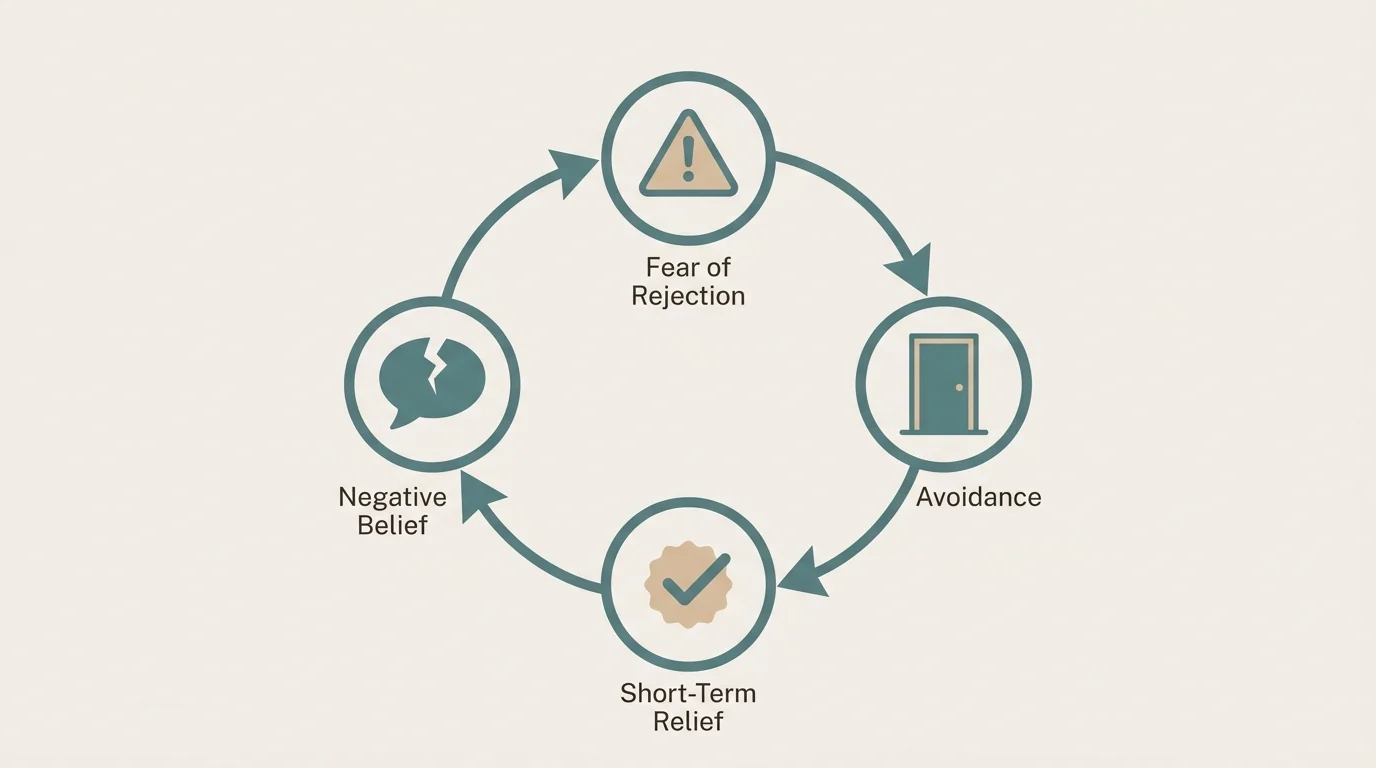
AvPD tends to work like a cycle rather than a set of separate symptoms. It often starts with negative beliefs about the self, like “I am not good enough,” which shape how a person reads everyday situations. These beliefs feed a strong fear of rejection and criticism, where even small moments can feel like proof that something is wrong. To cope with that fear, avoidance becomes the go to response, whether that means skipping events, staying quiet, or steering clear of new relationships.
The problem is that avoidance brings quick relief, since the feared situation never actually happens. But that relief is short lived, since it reinforces the belief that the situation truly was dangerous. Over time, this keeps the anxiety strong and makes avoidance feel even more necessary the next time. Understanding this loop matters, since CBT is built around interrupting it at several points, not just addressing one symptom on its own.
How Cognitive Behavioral Therapy Works for AvPD
CBT is a structured, goal oriented form of psychotherapy that looks at how thoughts, emotions, and behaviors influence one another. Rather than only talking about problems, CBT focuses on identifying patterns and building practical skills to change them.
Treatment usually starts with identifying automatic negative thoughts, the quick, often unconscious thoughts that pop up in triggering situations. From there, a therapist helps recognize the deeper core beliefs behind those thoughts, such as long held ideas about being unworthy or unlikeable. Sessions often involve examining the evidence for and against these beliefs, which helps a person see them more clearly instead of accepting them automatically.
As trust builds, treatment moves toward gradually changing avoidant behavior, usually in small, manageable steps. Practicing new responses outside of therapy is a key part of the process, since real change tends to happen through repeated practice in daily life, not just inside the therapy room.
A 2025 systematic review in the Journal of Cognitive Behavioral Psychotherapy and Research, which pooled findings across nine studies on CBT for AvPD, reported meaningful symptom reduction across groups, with some study samples showing recovery rates as high as 68%. The review’s authors were careful to note that research specifically on AvPD (as opposed to social anxiety disorder more broadly) is still limited, so these numbers should be read as promising rather than definitive.
CBT Techniques Used for Avoidant Personality Disorder
Several specific techniques are commonly used when treating AvPD with CBT.

Cognitive Restructuring This technique involves working with a therapist to challenge unhelpful beliefs, like “I will be rejected” or “I am socially inadequate.” Instead of accepting these thoughts as fact, the person learns to question them and consider more balanced alternatives.
Graduated Exposure Feared situations are approached step by step instead of all at once. This might mean starting with a low pressure interaction, like a short conversation with a cashier, before working up to something more challenging, like attending a social gathering.
Behavioral Experiments These are real world exercises designed to test negative predictions. For example, someone who believes “if I speak up, people will laugh at me” might test that belief directly and observe what actually happens, which often looks very different from what they expected.
Reducing Safety Behaviors Safety behaviors are small habits used to feel more protected in social situations, like avoiding eye contact, rehearsing every sentence in advance, speaking as little as possible, or leaving early. While these habits feel protective, they often keep anxiety going, so therapy works to gradually reduce them.
Social Skills Practice Some people benefit from practicing specific skills, like starting conversations, being assertive, setting boundaries, or giving and receiving feedback. This practice often happens in session before being tried out in real situations.
Self-Monitoring and Thought Records Writing down thoughts, emotions, and situations helps reveal patterns that might not be obvious otherwise. Over time, this can show a person their most common triggers and how their thinking shifts around them.
Homework Between Sessions Since CBT relies heavily on practice, homework is a normal part of treatment. This might include trying a specific skill, completing a thought record, or attempting a small exposure exercise before the next appointment.
What Happens During CBT Sessions for AvPD?
CBT sessions generally follow a clear structure, even though the details vary by therapist and patient.
Getting Started: Assessment and Goals
Treatment usually begins with an assessment and setting treatment goals, so both the patient and therapist understand what they are working toward from the start. The therapist asks about your history, current struggles, and what you hope to change, whether that means feeling more comfortable at work, building closer relationships, or simply reducing daily anxiety.
From there, sessions move into mapping personal triggers and avoidance patterns, looking closely at specific situations that cause fear and noticing what you tend to do to avoid them.
Ongoing Sessions: Practice and Progress
Much of the ongoing work involves learning and practicing CBT skills directly in session, often by walking through a recent uncomfortable situation and practicing a different way of responding before trying it in real life.
Sessions also include reviewing homework and exercises completed between appointments, like a thought record or a small exposure task, so the therapist can see what worked and what still feels difficult. Progress is tracked over time by looking at both symptom changes, like reduced anxiety in specific situations, and improvements in daily functioning, like attending more social events or speaking up more at work or school.
CBT for AvPD vs CBT for Social Anxiety Disorder
AvPD and social anxiety disorder overlap a lot, both involve fear of judgment and social avoidance, and many CBT techniques work for both. The difference is reach: AvPD tends to be more pervasive, touching a person’s broader identity and self-worth, not just specific social situations.
Because of this, AvPD treatment often needs to address shame and self-identity more directly. It is also possible to have both conditions at once, with AvPD adding broader struggles like negative self-concept and interpersonal sensitivity on top of social anxiety.
Individual CBT vs Group CBT for AvPD
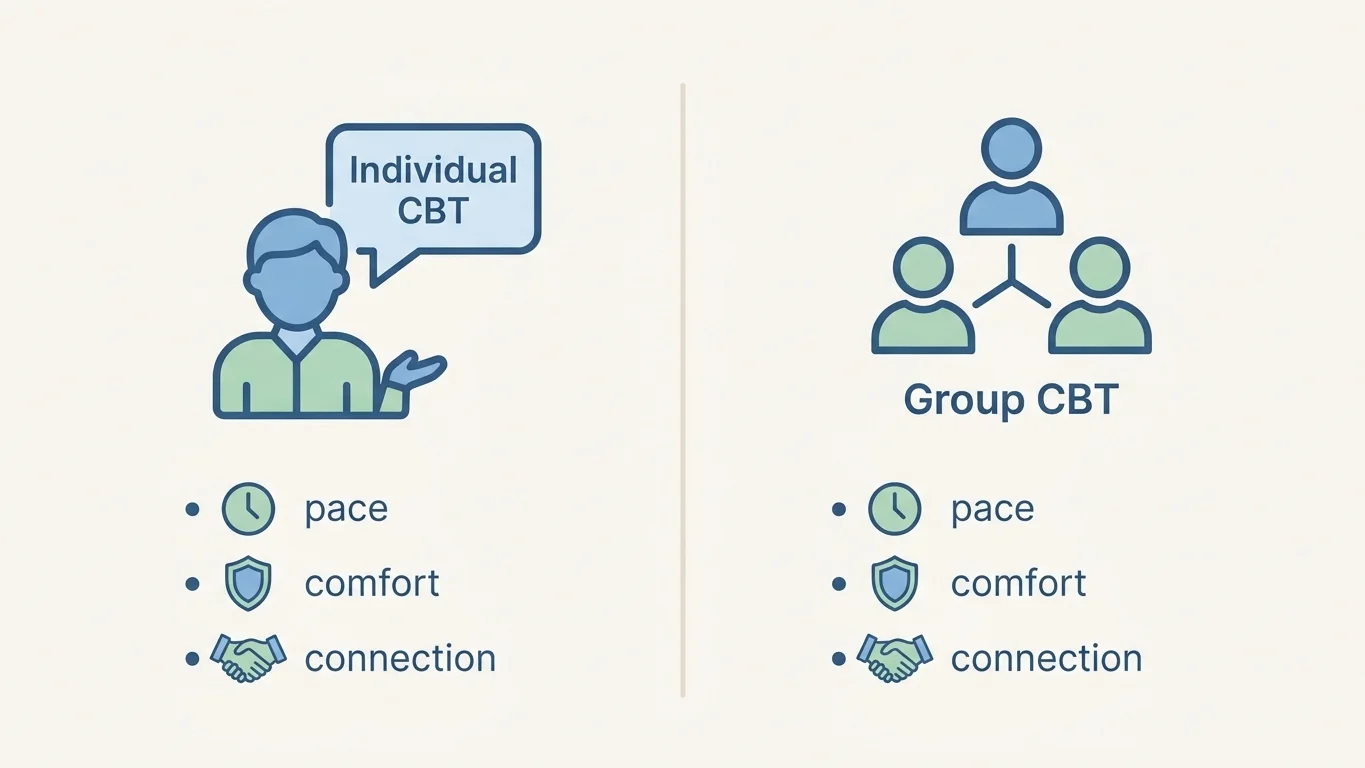
Both individual and group formats can be used to treat AvPD, and each comes with its own benefits.
| Aspect | Individual CBT | Group CBT |
| Main Benefit | Personalized pace, deeper focus on personal history and specific triggers | Real, live practice of social skills alongside others with similar struggles |
| Comfort Level | Feels safer and less exposing early in treatment | Can feel intimidating at first, since it involves direct social exposure |
| Sense of Connection | Limited to the one-on-one relationship with the therapist | Reduces isolation by showing patients that others share similar fears |
| Best Fit | Often chosen first, especially for higher symptom severity | Often introduced later, once a person feels more prepared |
| Research Note | A 2024 randomized controlled trial published in the Journal of Anxiety Disorders, comparing group schema therapy with group CBT in 154 patients with social anxiety disorder and comorbid AvPD, found both treatments led to meaningful improvement, with no significant difference in outcomes between the two approaches at one-year follow-up, though significantly more patients completed the full course of group schema therapy. |
Research Note: CBT vs Schema Therapy vs DBT: How Do They Compare?
Standard CBT is not the only structured therapy used for AvPD, and it helps to know how the main alternatives differ before choosing a path.
Approach |
Main Focus |
Best Suited For |
| CBT | Identifying and challenging current negative thoughts, gradual exposure to feared situations | People who want a structured, present-focused approach and are ready to practice new behaviors fairly early on |
| Schema Therapy | Exploring long-standing patterns and beliefs formed in childhood, often through a warmer, more relational style | People whose avoidance feels tied to deep-rooted early experiences, or who haven’t responded fully to standard CBT |
| DBT (Dialectical Behavior Therapy) | Building distress tolerance, emotional regulation, and mindfulness skills alongside social skills work | People who also struggle with intense emotional reactivity or difficulty tolerating discomfort during exposure work |
In practice, many therapists blend elements of these approaches rather than sticking rigidly to one, and it’s worth asking a prospective therapist directly which framework they lean on and why.
What Results Can You Expect From CBT?
CBT can lead to meaningful changes over time, though the pace and shape of that progress looks different for everyone.
Many people experience reduced avoidance, meaning they are able to participate in situations they used to skip entirely. Thinking patterns often become more flexible, replacing rigid, negative assumptions with more balanced ones. Confidence in social situations tends to grow gradually, along with improvements in relationships and daily functioning.
It is worth noting that CBT usually leads to better management of fear rather than a complete elimination of it, and progress is often gradual or uneven rather than steady in a straight line.
Common Challenges During CBT for AvPD
Treatment is not always a smooth process, and a few common challenges tend to come up.
Difficulty trusting the therapist is common at first, especially since trust issues are often part of the condition itself. Fear of judgment during sessions can also show up, even though the therapy space is meant to be supportive. Some people avoid homework or exposure exercises because they feel too uncomfortable, and setting goals that feel too large can lead to frustration or early setbacks.
Occasionally, someone may consider leaving therapy altogether when discomfort increases, which is a normal part of the process rather than a sign that treatment is not working. A strong therapeutic relationship, built on patience and consistency, often helps patients push through these moments and stay engaged with treatment.
What If Standard CBT Is Not Enough?
For some people, standard CBT alone may not fully address their needs, and other approaches or adjustments may be considered.
This can include adapting the pace and intensity of treatment to better match a person’s comfort level. Some patients benefit from schema therapy, which focuses more deeply on long standing patterns formed early in life. Others may explore psychodynamic therapy, social skills training, or group based treatment as additional support. Treating co-occurring anxiety or depression is also often part of a more complete treatment plan. Research describes CBT and schema therapy as promising treatment options, while also noting that more AvPD-specific studies are still needed to fully understand long-term outcomes.
Does Medication Treat Avoidant Personality Disorder?
Medication does not directly treat or cure avoidant personality disorder itself. However, it may be considered when someone also experiences co-occurring anxiety or depression, since these conditions can make AvPD symptoms feel more intense.
Any decision about medication should involve a full professional assessment and be part of a broader, combined treatment plan. Psychotherapy is generally considered the main treatment approach for AvPD, while medication is typically used to address associated conditions rather than AvPD itself.
How to Find a Therapist Who Treats AvPD With CBT
Finding the right therapist can make a real difference in how effective treatment feels.
Look for someone with experience treating personality disorders specifically, not just general anxiety or mood concerns. It also helps to ask directly about their use of CBT and exposure based methods, since not every therapist uses the same techniques. Discussing whether individual or group treatment options are available can help you understand what a realistic plan might look like. Asking how progress will be measured gives you a clearer sense of what to expect along the way. Finally, consider the importance of trust and therapeutic fit, since feeling safe and understood with your therapist is often just as important as their specific training.
What About Cost and Insurance?
CBT for AvPD is typically billed like any other psychotherapy session, and cost varies widely depending on location, provider type, and format. Individual sessions with a licensed therapist commonly range from around $100 to $250 per session in the U.S. without insurance, while group CBT sessions are often less expensive per person.
Many insurance plans, including Medicaid and Medicare in certain cases, cover psychotherapy for a diagnosed mental health condition, though coverage details, session limits, and required copays vary by plan. It’s worth calling your insurance provider directly to ask about mental health or behavioral health benefits, and to ask any prospective therapist whether they’re in-network or offer a sliding scale fee.
How to Support Someone Receiving CBT for AvPD
If someone you care about is going through CBT for AvPD, your support can play a meaningful role in their progress.
Avoid forcing social exposure, since pushing too hard can backfire and increase resistance. Encourage treatment without criticism, focusing on effort rather than perfect results. Try to recognize gradual progress, even when it is small, since these steps matter more than they might seem. Maintain clear and respectful boundaries, since consistency helps build trust. Finally, avoid reinforcing complete withdrawal, even when it might feel easier in the moment, since gentle encouragement toward connection supports the goals of treatment rather than working against them.
Schedule an Appointment With Placid Psychiatry
If avoidance and fear of judgment have been holding you back, Placid Psychiatry in Fullerton, CA is here to help. Our team offers thoughtful, personalized psychiatric care, including CBT based approaches for avoidant personality disorder, whether you prefer in-person visits or secure telehealth appointments. Reach out today to schedule an evaluation and take the first step toward feeling more confident in your daily life.
Conclusion
Avoidant personality disorder can make even simple moments, like a conversation or a social invite, feel overwhelming. But this pattern is not permanent. CBT gives people practical tools to slowly break the cycle of fear and avoidance, replacing it with more balanced thoughts and steady confidence.
Change does not happen overnight, and that is okay. What matters most is taking that first step toward understanding your own patterns and getting support that is built around your specific needs, not a generic plan.
Frequently Asked Questions
Is CBT effective for avoidant personality disorder?
Yes, CBT is considered one of the more effective and well studied approaches for AvPD. It can help reduce avoidance, challenge negative beliefs, and build practical skills for social situations, though results vary based on symptom severity and how consistently someone engages with treatment.
Can avoidant personality disorder be completely cured?
AvPD is generally understood as a long-term pattern rather than something that disappears completely. That said, many people see significant improvement in symptoms, confidence, and daily functioning through consistent treatment, even if some traits remain present at a lower intensity over time.
How long does CBT for AvPD usually take?
There is no set timeline, since it depends on the person’s symptoms, goals, and how consistently they engage with therapy. Some people notice changes within a few months, while deeper personality patterns often take longer, sometimes a year or more, to shift meaningfully.
Can CBT make anxiety feel worse at first?
It is common for anxiety to feel slightly more noticeable in the early stages of treatment, especially during exposure exercises. This usually happens because avoidance is being reduced, which can feel uncomfortable before it starts to feel more manageable.
What is the difference between AvPD and social anxiety?
Social anxiety disorder tends to focus specifically on fear in social or performance situations, while AvPD often involves broader, more deeply rooted feelings of inadequacy and shame that affect many areas of a person’s life, not just social settings.
Can CBT for AvPD be completed online?
Yes, many CBT techniques can be delivered effectively through telehealth. Online sessions can be especially helpful for people with AvPD, since starting treatment from a familiar, lower pressure environment may feel more approachable at first.
What does CBT for AvPD typically cost, and is it covered by insurance?
Costs vary by provider and location, but individual sessions often fall somewhere between $100 and $250 without insurance, with group sessions usually costing less per person. Many insurance plans cover psychotherapy for a diagnosed condition, so it’s worth checking your specific behavioral health benefits and asking a therapist about in-network status or sliding-scale options before starting.