
Anxiety is a normal feeling that many people experience during stressful or difficult situations. It can help you stay focused, prepare for important events, and react to challenges. However, if anxiety becomes very strong, lasts for a long time, or makes daily life harder, it may be a sign of an anxiety disorder. Anxiety disorders are common and can affect your work, relationships, and overall well-being.
There is a real line between anxiety that is part of life and anxiety that has taken over your life. Knowing where you stand on that line is the first step toward actually feeling better. If you are in Fullerton, CA and are not sure where that line is for you, our team can help you find out.
If your anxiety comes with thoughts of harming yourself or others, please seek help right away. Go to the nearest emergency room or call or text the 988 Suicide & Crisis Lifeline, available 24/7. This is a medical emergency, and support is available immediately.
What Is Anxiety?
Anxiety is your body’s built-in response to danger or pressure. Your heart speeds up, your muscles tighten, and your brain sharpens its focus. In the right situation, like before a job interview or a difficult conversation, that response is useful. It helps you prepare and stay alert.
The problem starts when the alarm keeps firing even when there is nothing dangerous happening. When worry shows up without a clear trigger, or stays long after the stressor is gone, something else is going on.
Types of Anxiety Disorders You Might Be Dealing With
“Anxiety” is not one condition. It’s a category, and where you fall in it changes what treatment usually looks like.
Generalized Anxiety Disorder (GAD) shows up as persistent, free-floating worry that isn’t tied to one specific thing. People with GAD often describe feeling like they’re “waiting for the other shoe to drop” even when nothing is actually wrong.
Panic Disorder involves recurrent, sudden panic attacks along with ongoing fear of having another one. The anticipatory fear is often more disruptive than the attacks themselves, since it can lead to avoiding anywhere an attack might happen.
Social Anxiety Disorder centers on fear of judgment or embarrassment in social or performance situations. It’s often mistaken for shyness, but the level of distress and avoidance involved goes well beyond typical introversion.
Specific Phobias are intense, focused fears of a particular object or situation (flying, needles, heights) that are disproportionate to the actual risk and lead to active avoidance.
Health Anxiety (sometimes called illness anxiety) involves persistent worry about having or developing a serious medical condition, often despite normal test results and medical reassurance.
Knowing which pattern fits you isn’t about self-diagnosing precisely. It’s about giving your provider a clearer starting point, since treatment approaches (particularly the balance of exposure therapy, medication, and pacing) can differ somewhat across these categories.
How Do I Know If I Need Anxiety Treatment?
Here are the clearest signs that anxiety has moved beyond something you can manage on your own.
Anxiety Is Affecting Your Daily Life
When anxiety starts cutting into your ability to get through a normal day, that is a significant signal. Missing work deadlines because you cannot concentrate, skipping social events because you feel too on edge, or struggling to do basic tasks because your mind is overwhelmed are not small things. They are signs that anxiety has grown larger than the space you can contain it in.
You Constantly Feel Worried or On Edge
Occasional worry is normal. Constant worry is not. If most of your waking hours are spent in a state of low-grade or high-grade dread, and you cannot identify a specific reason for it, your nervous system may be stuck in a pattern it cannot break without support. This kind of persistent tension is one of the core features of generalized anxiety disorder.
Your Anxiety Is Not Going Away
Situational anxiety fades when the situation ends. If your anxiety has been sitting with you for several weeks or longer without a clear cause or without improving, that duration matters. Clinicians often look at whether symptoms have been present for six months or more as a key marker for anxiety disorders, though seeking help before that point is always appropriate.
You Avoid Certain Places or Activities
Avoidance is one of the most telling behavioral signs of anxiety that needs treatment. When you start organizing your life around avoiding things that make you anxious, the anxiety wins. You stop going to crowded places, skip family gatherings, avoid driving certain routes, or turn down opportunities at work. Each time you avoid something, the fear around it grows stronger.
Anxiety Is Affecting Work, School, or Relationships
Anxiety that spills into your professional or personal life is anxiety that has crossed a line. Difficulty concentrating at work, tension in close relationships, conflict caused by irritability or withdrawal, and falling behind on responsibilities are all signs that anxiety is running more of your life than it should be.
This is also one of the hardest signs to self-diagnose, because many people are still “functioning” on paper, showing up, meeting deadlines, getting through the day, while doing it at an unsustainable cost of dread, overpreparation, and exhaustion. The relevant question isn’t just how anxious you feel. It’s what anxiety is costing you.
You Have Frequent Panic Attacks
A panic attack is a sudden surge of intense physical and emotional symptoms: pounding heart, shortness of breath, sweating, dizziness, and a sense of overwhelming fear. Occasional panic attacks can happen to anyone. Repeated panic attacks, especially ones that seem to come out of nowhere, are a strong signal that professional support is needed. Living in fear of the next panic attack is itself an anxiety disorder.
Physical Symptoms Are Becoming More Noticeable
Anxiety lives in the body as much as it lives in the mind. If you are dealing with frequent headaches, chronic muscle tension in your neck and shoulders, stomach problems that have no clear medical cause, persistent sleep issues, or a heart that races when you are not physically active, anxiety may be the driving force behind all of it.
It’s worth getting these symptoms medically evaluated first, chest tightness, a racing heart, or GI distress deserve a look from your primary care doctor to rule out other causes. But if the workup comes back clear and the symptoms keep returning, especially around stress, anticipation, or poor sleep, that pattern is itself clinically meaningful. It’s a sign your nervous system may be staying “switched on” longer than it should.
You Have a Family History of Anxiety or Mood Disorders
Anxiety often runs in families, and a history of anxiety, panic disorder, depression, or bipolar disorder in a parent, sibling, or close relative is a real piece of clinical context, not just background trivia. It doesn’t mean treatment is automatically necessary, but it does mean symptoms should be taken seriously, especially if your anxiety started early in life, shows up across many different settings, or feels bigger than the stress in front of you actually warrants.
A family history of a strong response (or a bad reaction) to a particular medication can also be useful information to bring to an evaluation, since it can help guide a safer starting plan.
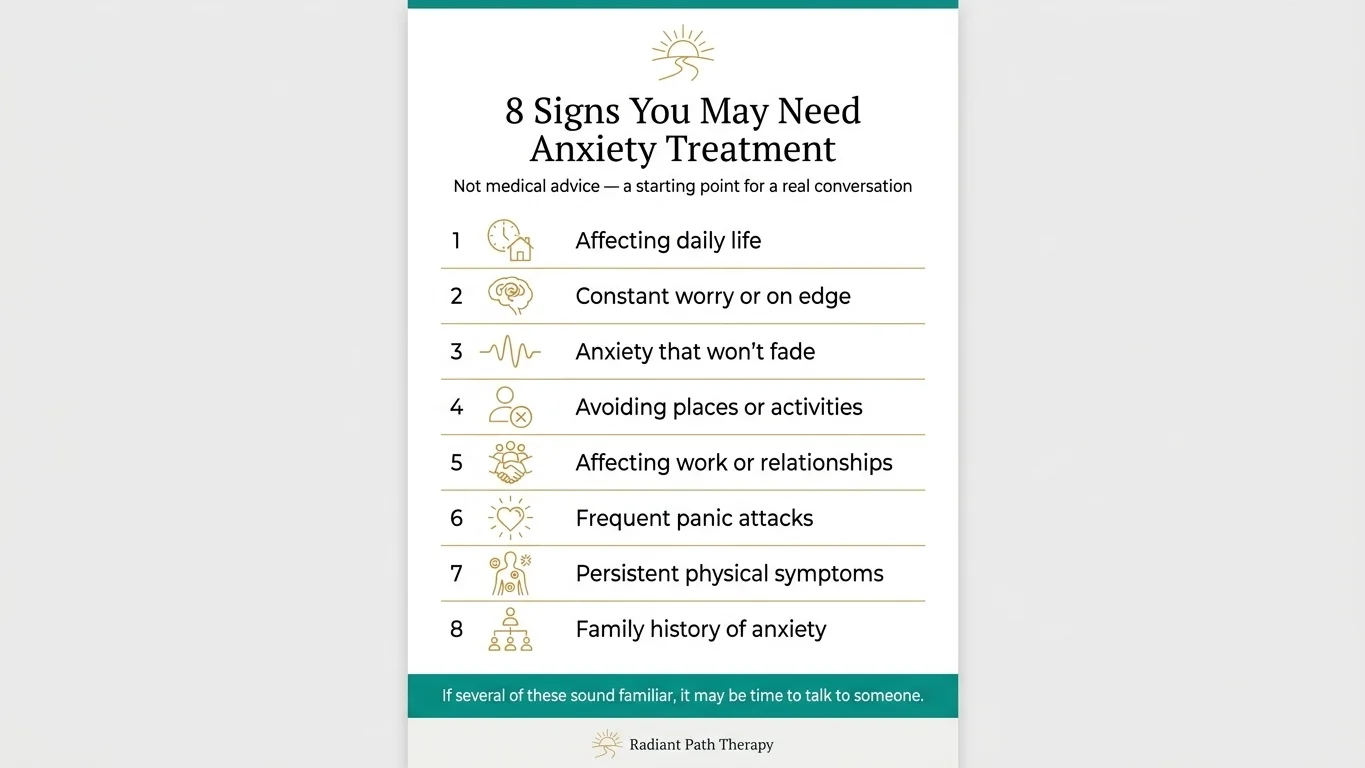
Quick Reference: 8 Signs You May Need Anxiety Treatment
If you want the short version before reading further, here is how these signs compare at a glance.
| Sign | What It Looks Like | Why It Matters | What Can Help |
|---|---|---|---|
| Daily life impairment | Missed deadlines, skipped events, struggling with basic tasks | Anxiety has outgrown what you can manage alone | Therapy (CBT), possible medication if severe |
| Constant worry or on-edge feeling | Low or high-grade dread most of the day, no clear reason | Core feature of generalized anxiety disorder | Evaluation for GAD, therapy, lifestyle changes |
| Anxiety that won’t fade | Symptoms present most days for weeks or months | Duration is a key clinical marker, not just intensity | Professional evaluation sooner rather than later |
| Avoidance of places or activities | Skipping crowds, driving certain routes, turning down opportunities | Avoidance reinforces and grows the fear over time | Exposure-based CBT, sometimes medication to make exposure tolerable |
| Impact on work, school, or relationships | Difficulty concentrating, irritability, conflict, falling behind | Function, not just feelings, is the clearest clinical signal | Combined therapy and medication for faster functional gains |
| Frequent panic attacks | Racing heart, shortness of breath, sense of losing control | Repeated attacks often lead to broader avoidance patterns | Medication to lower baseline reactivity, plus exposure therapy |
| Persistent physical symptoms | Headaches, muscle tension, GI issues, racing heart with no medical cause | A body that stays “switched on” needs more than reassurance | Medical rule-out first, then medication and/or therapy |
| Family history of anxiety or mood disorders | A parent, sibling, or close relative with similar patterns | Raises the likelihood of a biological component to your symptoms | Mention it at your evaluation; it can help guide treatment choice |
Signs Medication May Be Part of Your Treatment
Not everyone with anxiety needs medication, and treatment doesn’t automatically start there. But medication is often worth discussing when:
- Symptoms are moderate to severe rather than mild
- Therapy alone hasn’t brought meaningful relief after a reasonable trial
- Physical symptoms like a racing heart, chronic muscle tension, or sleep disruption are frequent and intense
- Panic attacks are frequent enough that you’re also anxious about having another one
- Daily functioning, meaning work, sleep, or relationships, is significantly impaired
If several of these apply, it’s worth raising the question directly at your evaluation rather than waiting to see if things improve on their own.
Signs Your Anxiety May Be More Than Normal Stress
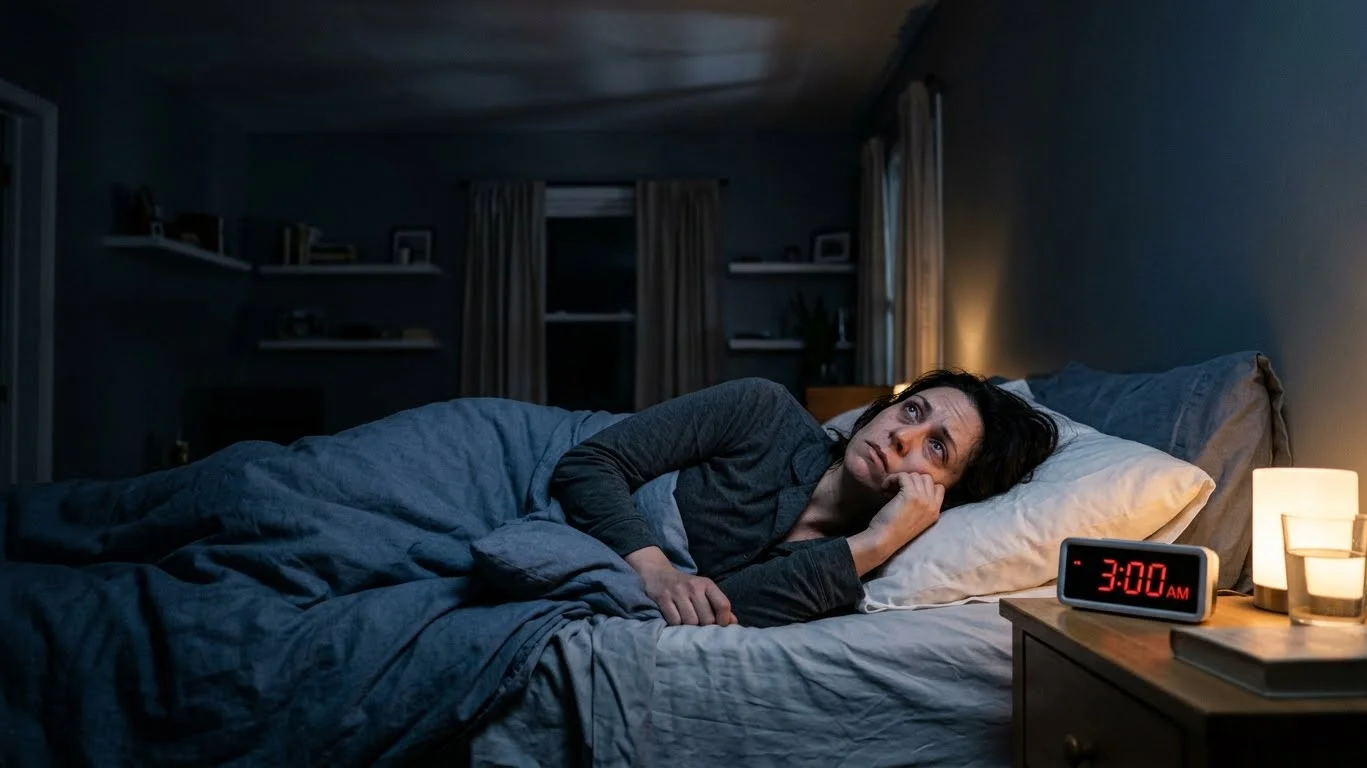
There is a difference between feeling stressed about a hard situation and feeling anxious about everything all at once. Stress usually has a clear source. Anxiety often does not, or it feels wildly out of proportion to whatever the actual situation is.
If you find yourself worrying about small things as though they were catastrophic, struggling to control your thoughts even when you want to, or feeling like fear is limiting choices you want to make in your own life, those are signs that what you are dealing with is more than everyday stress.
Common Physical Symptoms That May Signal a Need for Treatment
Physical symptoms of anxiety are often dismissed or attributed to other causes. They are worth paying attention to.
Racing thoughts at night, difficulty falling asleep, or waking up in the middle of the night with worry already running are all common. Chronic fatigue and low energy follow, because a nervous system that is always running at high alert exhausts the body. Headaches and muscle tension, particularly in the neck, jaw, and shoulders, show up regularly in people with untreated anxiety.
Stomach problems like nausea, cramping, or irritable bowel symptoms are also closely connected to anxiety through the gut-brain relationship. A rapid heartbeat or shortness of breath that has no cardiac explanation is worth discussing with a professional.
When Anxiety Overlaps With Depression, Trauma, or ADHD
Anxiety rarely shows up alone, and it doesn’t always look like anxiety. If low mood, loss of interest in things you used to enjoy, or hopelessness are part of the picture alongside your worry, depression may be layered in as well. The two conditions overlap in roughly half of cases and often need to be addressed together, since treating one while ignoring the other tends to produce incomplete results.
Anxiety following a specific event, or hypervigilance and a sense of unsafety that persists even when you’re logically safe, can point toward trauma-related symptoms rather than (or in addition to) a primary anxiety disorder. Trauma-focused therapy approaches differ somewhat from standard CBT for generalized anxiety.
Difficulty concentrating, restlessness, and disorganization can look like anxiety, but in some people they’re actually rooted in undiagnosed ADHD, with anxiety developing secondarily from years of struggling to keep up. Treating the anxiety without addressing the underlying ADHD often leaves the core problem in place.
This is one of the main reasons a proper evaluation matters more than a self-assessment. Symptoms that look identical on the surface can call for different treatment plans depending on what’s actually driving them.
Who Can Diagnose and Treat Anxiety?
A common point of confusion is who you’re actually supposed to see. In practice, a few different professionals can be involved, often at different stages:
- Primary care physicians: often the first stop, and a reasonable one. Your PCP can rule out medical causes (thyroid issues, cardiac symptoms, vitamin deficiencies) that can mimic anxiety, and can prescribe first-line medication or refer you onward.
- Psychiatrists and psychiatric nurse practitioners: can diagnose anxiety disorders, prescribe and manage medication, and coordinate care with a therapist.
- Psychologists and licensed therapists: diagnose anxiety and provide psychotherapy (such as CBT) but generally do not prescribe medication.
None of these professionals will prescribe medication to anyone who simply asks for it. A proper evaluation looks at your symptoms, how long they’ve lasted, your medical and family history, and any substance use, before deciding whether medication, therapy, or a combination of both makes sense.
Treatment Options for Anxiety
The good news is that anxiety responds well to treatment. Most people who get proper support experience real, lasting improvement.
Cognitive Behavioral Therapy (CBT)
CBT is the most well-researched treatment for anxiety disorders. CBT also teaches practical coping strategies and gradual exposure to feared situations in a controlled way. Most people complete a course of CBT in 12 to 16 sessions, and the results tend to stick because the skills become part of how you think.
Medication for Anxiety

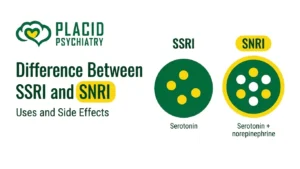
SSRIs and SNRIs are the most commonly prescribed medications for anxiety. They work by adjusting brain chemistry involved in stress and mood regulation, and while they don’t produce immediate relief, many people notice a meaningful difference within a few weeks. Medication tends to work best when paired with therapy rather than used as a standalone approach.
Anxiety medication is not a single thing. It’s an umbrella term for a few different types of medication, each with a different role:
- SSRIs and SNRIs: typically the first choice for ongoing anxiety. They’re taken daily, don’t carry a dependency risk, and are effective for most anxiety disorders, though they can take several weeks to reach full effect and may cause initial side effects like nausea or headaches.
- Benzodiazepines: fast-acting and effective for acute panic or severe worry, but they carry a real risk of dependency and are generally intended for short-term or occasional use rather than daily long-term treatment.
- Beta blockers: primarily a heart medication, but sometimes used to control the physical symptoms of anxiety (racing heart, trembling, sweating) around a specific triggering event, such as public speaking.
- Buspirone: an anti-anxiety medication that isn’t habit-forming, sometimes used as an alternative or addition to SSRIs/SNRIs.
Every medication comes with trade-offs in side effects, timeline, and fit for your specific symptoms and health history. This is a decision to make with a prescriber, not from a blog post, but understanding the categories makes that conversation easier to have.
When Anxiety Doesn’t Respond to Therapy Alone
Sometimes people do the work: they attend sessions consistently, practice the skills, challenge anxious thoughts, and still don’t get enough relief. That doesn’t mean therapy failed or that you’re doing it wrong. It often means anxiety has a physiological intensity that insight and skills alone can’t fully override.
A common pattern looks like this: you can name your triggers, you understand your thought distortions, you know exactly what your therapist would tell you to do, and your body still reacts with panic, tension, or dread before your thinking brain can catch up. That gap between understanding and functioning is a clinical signal, not a personal failing.
In that situation, medication isn’t a fallback for people who “couldn’t cope” without it. It’s often the piece that lowers the baseline intensity of anxiety enough for therapy skills to actually be usable in the moment they’re needed. Many people describe it as being able to access what they already learned in therapy, rather than getting flooded before they can use it.
A useful marker for this conversation: if you’ve had eight to twelve weeks of consistent therapy with real effort on your part and the improvement is minimal or partial, that’s a reasonable point to bring medication into the discussion rather than waiting longer.
Lifestyle Changes and Self-Care
Sleep, exercise, nutrition, and stress management all have a measurable impact on anxiety levels. It burns off stress hormones and releases mood-improving chemicals that help the nervous system regulate itself. Cutting back on caffeine and alcohol, building a consistent sleep schedule, and staying connected to people you trust all support recovery..
Stress Management Techniques
Mindfulness meditation, deep breathing exercises, progressive muscle relaxation, and structured journaling all help manage anxiety symptoms. They do not replace therapy for moderate to severe anxiety, but they add meaningful support alongside professional treatment.
How Long Does Anxiety Treatment Actually Take to Work?
This is one of the most common questions people don’t ask out loud, and it deserves a straight answer instead of vague reassurance.
Therapy timeline: CBT typically runs 12 to 16 weekly sessions for a full course. Some people notice a shift in how they relate to anxious thoughts within the first four to six sessions, but the deeper, more durable change (especially with exposure-based work) usually builds over the full course rather than arriving early.
Medication timeline: Daily medications like SSRIs and SNRIs are not fast-acting. Most people notice partial improvement around two to four weeks and fuller effect by six to eight weeks. Some initial side effects (nausea, mild jitteriness, sleep changes) tend to show up before the benefits do and often settle within the first couple of weeks. Benzodiazepines and beta blockers work much faster, within an hour, which is part of why they’re used differently (situationally, rather than as a long-term daily foundation).
Combined treatment: When therapy and medication are used together, many people notice medication taking the edge off symptoms within three to four weeks, which in turn makes the therapy sessions happening at the same time more productive.
The practical takeaway: if you’re several weeks into treatment and feel like nothing is happening yet, that’s not necessarily a sign it isn’t working. It’s worth a check-in with your provider before assuming a treatment has failed.
What Happens During an Anxiety Evaluation?
If you decide to see a professional, knowing what to expect can make the process feel less overwhelming. A healthcare provider or therapist will ask about your symptoms, when they started, how long they have been happening, and how they are affecting your daily life.
They may also ask about your sleep, your physical health, your family history, and any major life events. It is a way of getting enough information to understand what you are dealing with and what kind of support would help most. From there, a treatment plan is put together around your specific situation.
A few things can make that first conversation more productive:
- Track your symptoms for a week or two before your appointment: note what triggers them, how long they last, and what (if anything) helps.
- Bring your full symptom list, not just “I’m stressed”: palpitations, sleep problems, GI issues, and muscle tension are all relevant, even if they seem unrelated to anxiety at first glance.
- Know your family’s mental health history if you can: even a rough picture is useful clinical context.
- Come with questions: What are the treatment options? What are the realistic timelines? What’s the plan if the first approach doesn’t work well?
Can Anxiety Improve Without Treatment?
Situational anxiety and mild nervousness often do resolve on their own once the triggering situation passes. But anxiety disorders rarely go away without some form of support. Without treatment, anxiety tends to grow. The avoidance patterns get stronger, the physical symptoms become more noticeable, and the areas of life that anxiety affects get wider. Waiting it out is not a neutral choice. It usually means more time spent struggling before things get better.
When Should You Seek Professional Help?
A lot of people wait until anxiety has significantly damaged their work, their relationships, or their health before they reach out. The earlier you seek support, the more options you have and the less ground anxiety has to take from you. Warning signs include ongoing anxiety, frequent panic attacks, unexplained physical symptoms, avoiding people or activities, and relying on substances to cope.
When self-help tools like breathing exercises, journaling, or lifestyle changes are not making a meaningful dent in your symptoms, that is a clear signal that professional treatment is the appropriate next step.
Benefits of Getting Anxiety Treatment Early
People who seek help early recover faster and more fully. Symptoms become easier to manage before they have had time to become deeply established patterns. Sleep improves, which gives the whole nervous system a chance to recover. Relationships stop bearing the weight of unmanaged anxiety. 
And the ability to make choices based on what you actually want rather than what fear allows expands significantly. Treatment does not remove anxiety from your life. It gives you the tools to stop letting anxiety run it.
Ready to stop guessing and start getting actual support?
At Placid Psychiatry in Fullerton, CA, our team works with you to understand what is actually going on and build a treatment plan around your specific situation. If you’re ready to take the next step, book your appointment and the right support is available. Whether you are dealing with constant worry, panic attacks, or physical symptoms that will not go away, we provide care tailored to your needs.
Conclusion
Anxiety that needs treatment usually announces itself the same few ways: worry that won’t shut off, panic attacks that keep coming back, sleep that won’t settle, and physical symptoms your doctor can’t otherwise explain. When to seek help isn’t about hitting some extreme breaking point. It’s about noticing that anxiety has started running more of your day than you’d like, for longer than it should.
If self-help tools and time haven’t moved the needle, that’s your answer: it’s time for professional support, not more waiting. Treatment might mean therapy, medication, or both. Most people who eventually get help spend months or years managing symptoms alone before reaching out, and nearly all of them say they wish they hadn’t waited. If you’re ready to find out what kind of treatment is right for you, book an evaluation with our team at Placid Psychiatry in Fullerton, CA today.
Frequently Asked Questions
How do I know if my anxiety is serious?
If anxiety is affecting your sleep, your work, your relationships, or your ability to do things you want to do, it is serious enough to talk to someone about. Severity is not just about how intense the feeling is. It is about how much it is limiting your life.
How long should anxiety last before seeking help?
If anxiety symptoms have been present most days for two weeks or longer without improving, that is a good time to reach out to a professional. You do not need to wait until things fall apart to get support.
Can anxiety go away on its own?
Situational anxiety often does. Anxiety disorders and chronic anxiety rarely resolve without some form of treatment. Waiting without support usually means more time in the cycle rather than less.
What are the first signs that I need anxiety treatment?
Persistent worry that will not turn off, physical symptoms like sleep problems or muscle tension, avoidance of situations, and anxiety that is getting in the way of daily responsibilities are all early signals worth taking seriously.
Do I need therapy, medication, or both?
It depends on the severity of your anxiety and your personal situation. Many people benefit from therapy alone, particularly CBT. Others do best with a combination of therapy and medication. A healthcare professional can help you figure out what makes sense for you.
Is medication required for anxiety treatment, or is therapy enough?
Medication isn’t required for everyone. Many people manage anxiety fully with therapy alone, particularly CBT. Others, especially with moderate to severe symptoms or limited progress from therapy, benefit from adding medication. The right combination depends on your individual symptoms and history, which is why an evaluation matters.
Who can actually prescribe anxiety medication?
Anxiety medication must be prescribed by a licensed medical professional, typically a psychiatrist, a psychiatric nurse practitioner, or a primary care physician. A psychologist or therapist can diagnose anxiety and provide therapy but generally cannot prescribe medication in most states.
What’s the difference between an SSRI and a benzodiazepine for anxiety?
SSRIs are taken daily, aren’t habit-forming, and work gradually over several weeks to lower baseline anxiety. Benzodiazepines work within minutes to hours for acute anxiety or panic, but carry a real risk of dependency, so they’re typically used short-term or situationally rather than as a long-term daily treatment.