
Complex PTSD (CPTSD) is a mental health condition that develops after repeated or long-term trauma rather than a single traumatic event. It includes the core symptoms of PTSD, such as flashbacks, avoiding reminders, and feeling constantly on alert, along with ongoing problems managing emotions, maintaining relationships, and having a healthy sense of self. While the DSM-5 lists PTSD using 20 specific symptoms, Complex PTSD is defined by the World Health Organization’s ICD-11.
If you are near Fullerton, CA and recognize some of these symptoms in yourself or someone you love, Placid Psychiatry offers compassionate, personalized care to help you understand what you are experiencing and start the path toward healing.
Who Is Most at Risk for Complex PTSD?
People who experienced prolonged childhood abuse or neglect, domestic violence, captivity, or repeated exposure to trauma over an extended period are at higher risk. The lack of escape or support during the traumatic period plays a significant role in how the condition develops.
How Complex PTSD Develops
Complex PTSD typically develops when a person experiences ongoing trauma over months or years, especially in situations where escape feels impossible, such as during childhood abuse or long-term captivity. The repeated nature of the trauma affects how the brain and nervous system respond to stress over time.
Complex PTSD vs. PTSD: What Is the Difference?
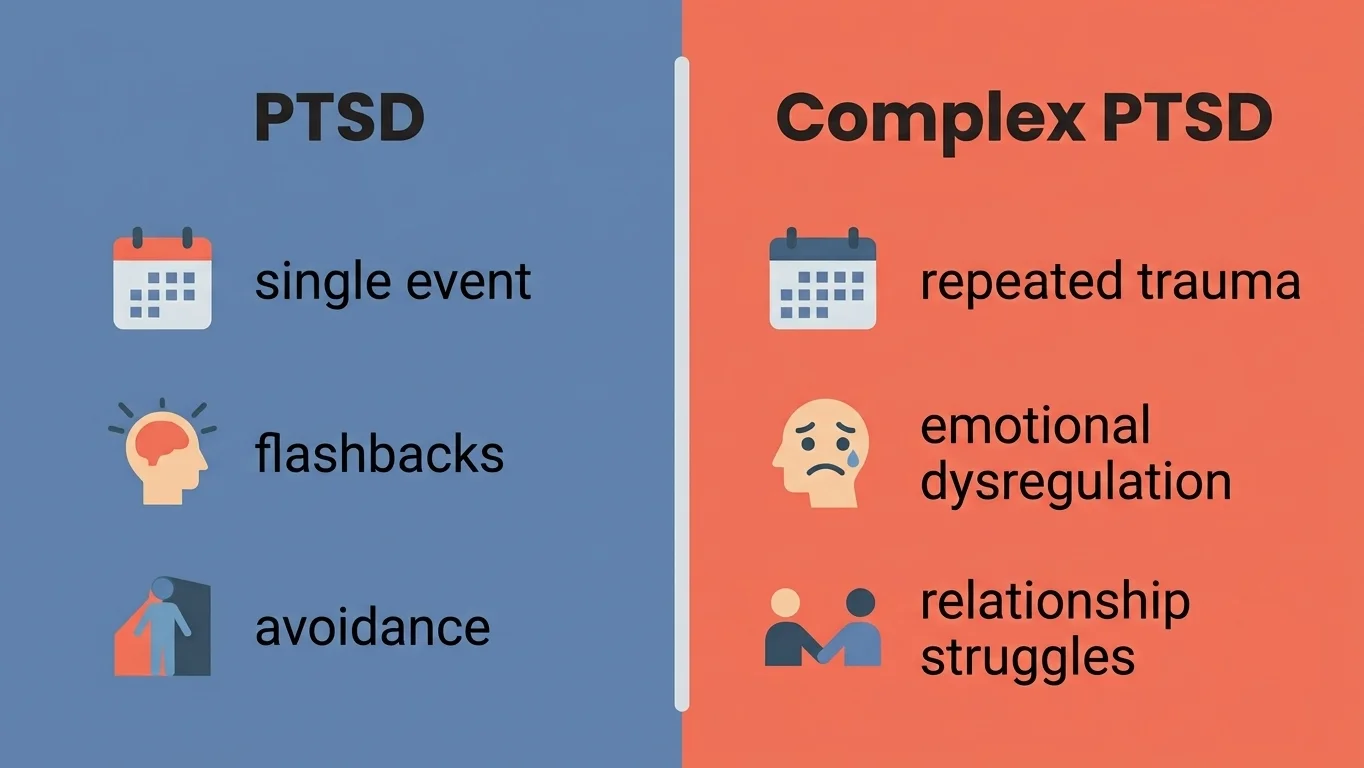
Standard PTSD often develops after a single traumatic event, like an accident or assault, and centers around fear-based symptoms like flashbacks and avoidance.
Complex PTSD includes these same symptoms but adds difficulties with emotional regulation, negative self-view, and relationship struggles, since the trauma is usually ongoing and often involves someone the person depended on or trusted.
Aspect |
PTSD |
Complex PTSD (CPTSD) |
|---|---|---|
| Typical Cause | Single traumatic event (accident, assault, disaster) | Repeated or prolonged trauma (childhood abuse, captivity, domestic violence) |
| Core Symptoms | Flashbacks, avoidance, hypervigilance | Same as PTSD, plus emotional and relational symptoms |
| Emotional Regulation | Not a defining feature | Persistent difficulty managing intense or unpredictable emotions |
| Self-Image | Generally intact | Persistent negative or shame-based self-view |
| Relationships | May be affected | Often significantly affected trust issues, fear of abandonment |
| Diagnostic Recognition | DSM-5 and ICD-11 | ICD-11 only (not a separate DSM-5 diagnosis) |
| Common Treatment | CBT, EMDR, medication | CBT, EMDR, medication, often longer-term trauma-focused therapy |
What Causes Complex PTSD?
Complex PTSD develops from prolonged or repeated exposure to traumatic experiences, often ones that feel inescapable at the time.
Childhood Abuse or Neglect Ongoing physical, emotional, or sexual abuse during childhood, especially by a caregiver, is one of the most common causes of Complex PTSD.
Domestic Violence and Ongoing Abuse Long-term abuse within a relationship, where escape feels difficult or dangerous, can lead to the development of Complex PTSD over time.
Human Trafficking, Captivity, or Torture Extended periods of captivity, exploitation, or torture involve intense, repeated trauma that often results in Complex PTSD.
War, Combat, or Refugee Experiences Extended exposure to combat, displacement, or the trauma of fleeing conflict can lead to Complex PTSD, particularly when the danger is prolonged rather than a single incident.
Repeated Medical or Other Traumatic Events Ongoing medical trauma, repeated hospitalizations, or other prolonged distressing experiences can also contribute to the development of Complex PTSD.
What Are the 17 Symptoms of Complex PTSD?
Complex PTSD symptoms can vary from person to person, but the following 17 are among the most commonly recognized. Not everyone with Complex PTSD experiences all 17 symptoms, and severity can range from mild to significantly disabling. The number and intensity of symptoms someone experiences often depends on the duration of the trauma, the person’s age when it occurred, and the support available to them at the time, this variation is normal and does not mean a person’s experience is any less valid.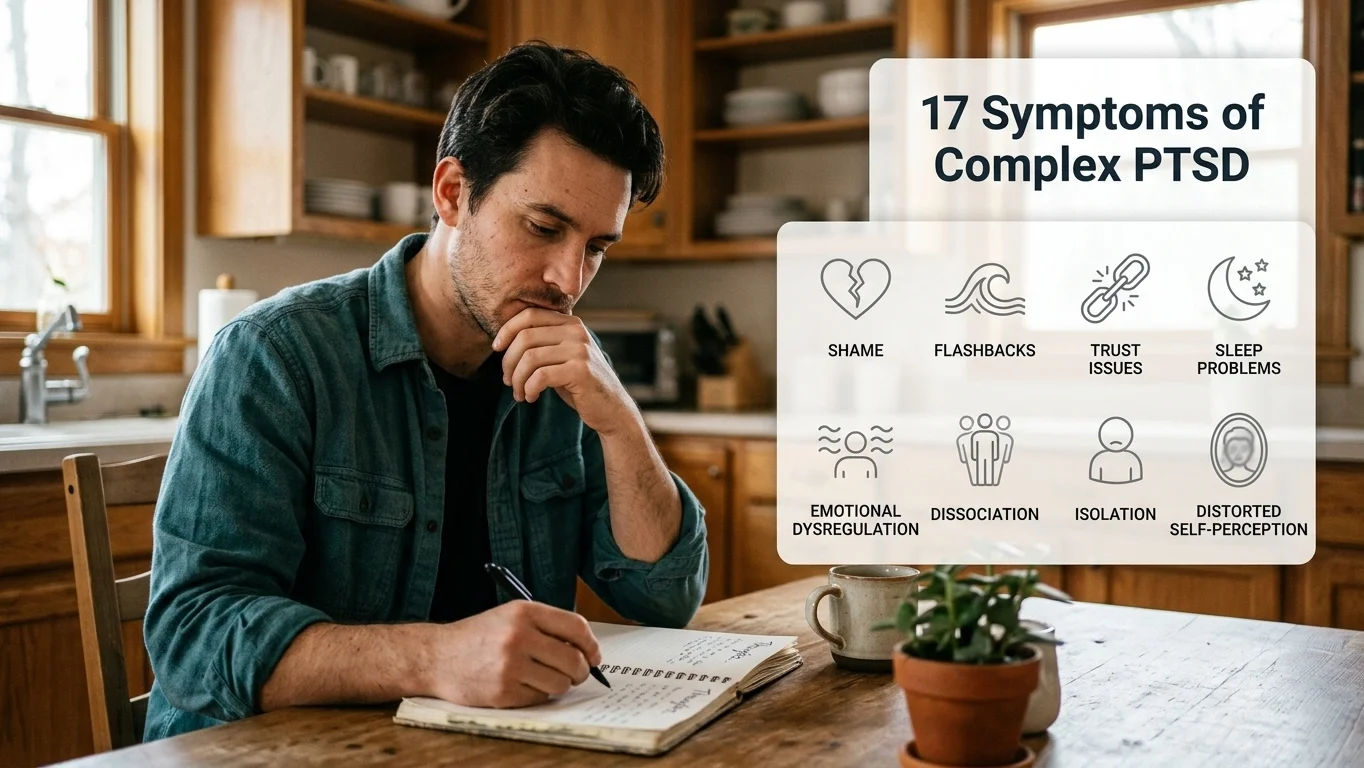
1. Emotional Flashbacks
Sudden, intense waves of emotion tied to past trauma, often without a clear visual memory attached, are a hallmark symptom of Complex PTSD. Unlike a typical flashback with a clear image or memory, this can feel like being suddenly flooded with fear, shame, or panic that seems to come out of nowhere, even though it is actually connected to something from the past.
2. Persistent Shame or Guilt
Many people with Complex PTSD carry a deep, ongoing sense of shame or guilt, even when the trauma was not their fault. This feeling can be so constant that it starts to feel like a core part of who someone is, rather than something tied to a specific event or memory.
3. Difficulty Regulating Emotions
Emotions can feel intense, unpredictable, or hard to manage, often shifting quickly between different states. A small stressor can sometimes trigger a reaction that feels much bigger than the situation calls for, which can be confusing and exhausting for the person experiencing it.
4. Chronic Anxiety and Hypervigilance
A constant sense of being on alert, expecting danger even in safe situations, is common in people with Complex PTSD. This can mean always scanning a room, noticing small changes in tone of voice, or feeling unable to fully relax, even at home or around trusted people.
5. Emotional Numbness
Some people cope by shutting down emotionally, which can make it difficult to feel joy, connection, or even sadness. This numbness is often a protective response the mind developed during the trauma, and it can make everyday life feel distant or flat, even during genuinely good moments.
6. Difficulty Trusting Others
Since trauma often involves someone the person trusted, difficulty trusting others, including in new and safe relationships, is very common. This can show up as constantly questioning people’s intentions or struggling to believe that someone truly means what they say, even when there is no clear reason for doubt.
7. Fear of Abandonment
An intense fear of being left or rejected can affect relationships and lead to anxious or clingy behaviors. This fear can be so strong that it sometimes leads to pulling away first, as a way to avoid the pain of being left, even when the other person has given no indication of leaving.
8. Relationship Problems
Trust issues, fear of abandonment, and emotional dysregulation often combine to make relationships feel difficult to navigate or maintain. Someone may want closeness deeply, but the same symptoms that create that desire can also make it hard to sustain relationships long term.
9. Negative Self-Image
Many people with Complex PTSD develop a persistently negative view of themselves, often feeling fundamentally flawed or unworthy. This is different from typical low self-esteem, since it often feels less like a passing thought and more like a deeply held belief about who they are.
10. Dissociation or Depersonalization
Feeling disconnected from one’s body, emotions, or surroundings is a common way the mind copes with overwhelming trauma. This can range from feeling slightly foggy or spaced out to feeling like you are watching yourself from outside your own body during stressful moments.
11. Feeling Unsafe Even in Safe Situations
Even in genuinely safe environments, a persistent sense of danger or unease can remain present. This can make it hard to relax during calm moments, since the nervous system may still be reacting as though a threat could appear at any time.
12. Avoidance of Trauma Reminders
Avoiding people, places, or situations that bring back memories of trauma is a common coping mechanism. Over time, this avoidance can start to shrink a person’s world, as more and more places, topics, or people get added to the list of things to avoid.
13. Intrusive Thoughts and Memories
Unwanted memories or thoughts related to trauma can surface unexpectedly and feel difficult to control. These thoughts can interrupt daily activities without warning, making it hard to focus on the present moment even when nothing around the person is actually threatening.
14. Physical Symptoms and Chronic Pain
Complex PTSD can manifest physically, including chronic pain, tension, headaches, or digestive issues, without a clear medical cause. The body often holds onto stress in a very real, physical way, which is why symptoms can show up as pain or tension rather than only as emotional distress.
15. Loss of Identity or Purpose
Some people struggle with a sense of who they are or what they want, especially if trauma occurred during formative years. This can make it hard to answer simple questions like what you enjoy or what you want out of life, since so much energy went into surviving rather than developing a clear sense of self.
16. Difficulty Maintaining Healthy Boundaries
Setting or maintaining boundaries can feel uncomfortable or unfamiliar, particularly for those whose boundaries were repeatedly violated during the trauma. This can lead to either struggling to say no to others or, in some cases, becoming overly rigid with boundaries as a way to feel safe.
17. Sleep Problems and Nightmares
Trouble falling asleep, staying asleep, or recurring nightmares related to trauma are common symptoms of Complex PTSD. Sleep can feel especially hard to come by when the nervous system stays on alert well into the night, making rest feel elusive even when someone is exhausted.
Additional Symptoms That May Also Occur
These symptoms are commonly associated with Complex PTSD but are considered secondary or overlapping features rather than part of the core 17 listed above.
Trouble focusing or remembering details can occur, especially during periods of high stress.
Sudden anger or irritability, sometimes disproportionate to the situation, can be a response to underlying trauma. Ongoing sadness, low energy, and a sense of hopelessness frequently accompany Complex PTSD.
Withdrawing from friends, family, and social activities is a common coping response to trauma-related distress. Some individuals turn to self-harm or substances as a way to manage overwhelming emotions or numb painful memories.
If you are having thoughts of self-harm, you are not alone, and support is available. In the U.S., you can call or text 988 to reach the Suicide & Crisis Lifeline, 24 hours a day.
How Complex PTSD Affects Daily Life
Complex PTSD symptoms often reach beyond emotional wellbeing, touching several areas of daily functioning.
Effects on Relationships Trust issues, fear of abandonment, and emotional dysregulation can make forming and maintaining close relationships feel challenging.
Effects on Work or School Difficulty concentrating, anxiety, and emotional overwhelm can affect performance and consistency at work or school.
Effects on Physical Health Chronic stress from Complex PTSD can contribute to physical symptoms like fatigue, pain, and a weakened immune response over time.
Effects on Self-Esteem and Identity Ongoing negative self-view and identity struggles can affect confidence, decision-making, and overall life satisfaction.
How to Support a Loved One With Complex PTSD
Watching someone you care about struggle with Complex PTSD can leave you unsure of how to help without making things harder. A few approaches tend to make the biggest difference.
Let them set the pace. Pushing someone to talk about trauma before they are ready can feel retraumatizing, even when the intention is supportive. Following their lead builds trust over time.
Avoid taking withdrawal or distrust personally. Pulling away, testing relationships, or struggling to accept closeness are often symptoms, not a reflection of how someone feels about you.
Learn their triggers without demanding explanations. It is possible to be mindful of certain topics, environments, or behaviors that cause distress without requiring a detailed account of why.
Encourage, but don’t pressure, professional support. Gently mentioning therapy or psychiatric care is helpful; repeatedly insisting on it can feel like one more form of control.
Take care of your own wellbeing too. Supporting someone with Complex PTSD can be emotionally demanding, and caregivers benefit from their own support system or therapy as well.
Why Complex PTSD Is Often Misdiagnosed
Complex PTSD is frequently overlooked or misdiagnosed, which can delay proper treatment for years. Since Complex PTSD shares symptoms with standard PTSD, it can sometimes be diagnosed simply as PTSD without recognizing the additional emotional and relational symptoms present.
Many Complex PTSD symptoms, like chronic worry or low mood, overlap closely with anxiety and depression, which can lead to a diagnosis that misses the underlying trauma.
Emotional dysregulation, fear of abandonment, and identity struggles can closely resemble symptoms of borderline personality disorder, sometimes leading to misdiagnosis. Because symptoms often develop gradually and can be mistaken for personality traits or other conditions, many people live with undiagnosed Complex PTSD for years before receiving proper treatment.
Common Myths and Misconceptions About Complex PTSD
“Complex PTSD is the same as regular PTSD.” Complex PTSD shares core PTSD symptoms but adds distinct difficulties with emotional regulation, self-image, and relationships, which is why it’s treated as a related but separate presentation.
“Only extreme trauma, like war or captivity, causes Complex PTSD.” Prolonged childhood emotional neglect or a long-term unhealthy relationship can be just as significant a cause as more visibly extreme experiences, since the key factor is the repeated, inescapable nature of the trauma rather than its severity alone.
“People with Complex PTSD are being overly sensitive or dramatic.” Symptoms like emotional flashbacks and hypervigilance are the nervous system’s learned response to real, prolonged danger. They are not a choice or a character trait.
“You either have it or you don’t.” Complex PTSD exists on a spectrum, and symptom severity can fluctuate with stress levels, life circumstances, and treatment progress.
“Complex PTSD means someone can never have healthy relationships.” While relationship difficulties are common, they are treatable, and many people with Complex PTSD build secure, lasting relationships with the right support.
How Complex PTSD Is Diagnosed
A mental health professional typically diagnoses Complex PTSD through a detailed evaluation of trauma history, symptoms, and their impact on daily life.
ICD-11 Diagnostic Criteria
The ICD-11, an international diagnostic system maintained by the World Health Organization, formally recognizes Complex PTSD as a distinct condition, requiring both core PTSD symptoms and additional difficulties with emotional regulation, self-concept, and relationships.
Why PTSD Is Not a Separate DSM-5 Diagnosis
The DSM-5, used primarily in the United States, does not currently list Complex PTSD as a separate diagnosis, though many of its symptoms overlap with existing PTSD criteria and related conditions, which clinicians take into account during assessment.
Mental Health Assessment and Screening
Diagnosis typically involves clinical interviews, trauma history review, and standardized screening tools to understand the full scope of a person’s symptoms and experiences. One widely used, validated tool is the International Trauma Questionnaire (ITQ), which was developed specifically to assess PTSD and Complex PTSD according to ICD-11 criteria.
How Complex PTSD Is Treated
Effective treatment options exist for Complex PTSD, and many people see significant improvement with the right support.
Trauma-Focused Psychotherapy
Therapy specifically designed to address trauma helps individuals process past experiences and reduce the intensity of related symptoms.
Cognitive Behavioral Therapy (CBT)
CBT helps identify and shift unhelpful thought patterns tied to trauma, supporting healthier emotional responses over time.
Eye Movement Desensitization and Reprocessing (EMDR)
EMDR is a specialized therapy that helps the brain reprocess traumatic memories, often reducing their emotional intensity significantly.
Medication for Symptom Management
Certain medications can help manage related symptoms like anxiety, depression, or sleep difficulties alongside therapy.
Group Therapy and Peer Support
Connecting with others who have similar experiences can reduce feelings of isolation and provide additional support throughout treatment.
Self-Help Strategies for Managing Complex PTSD
Alongside professional treatment, daily habits can support healing and symptom management.
Consistent daily routines can provide a sense of stability and predictability that supports emotional regulation. Grounding techniques, like focusing on physical senses, can help manage flashbacks or overwhelming emotions in the moment.
Learning to identify and manage emotions in healthier ways can reduce the intensity and frequency of emotional overwhelm. Basic physical health habits play a meaningful role in supporting emotional resilience and overall mental health.
Building relationships with trustworthy, supportive people can provide a sense of safety and connection during the healing process. Substances can worsen symptoms over time and interfere with the effectiveness of therapy and other treatment.
Self-help strategies can support treatment but are not a replacement for professional care, especially if symptoms are significantly affecting daily functioning.
When to Seek Professional Help
If symptoms are affecting daily life, relationships, or overall wellbeing, it is time to seek professional support. Persistent symptoms that do not improve, thoughts of self-harm, substance misuse, or significant withdrawal from daily life are all signs that professional help is needed.
Treatment often begins with a thorough evaluation, followed by a personalized plan that may include therapy, medication, or a combination of both, tailored to your specific symptoms and history.
Can People Recover From Complex PTSD?
Yes, recovery from Complex PTSD is possible, and many people see significant improvement with proper treatment and support. Recovery often looks like reduced symptom intensity, improved relationships, greater emotional stability, and a stronger sense of self over time, rather than the complete absence of all symptoms.
With consistent treatment and support, many people with Complex PTSD build fulfilling lives and healthier relationships, even if healing takes time and continued effort.
Find Support at Placid Psychiatry in Fullerton, CA
Recognizing yourself in a list like this can bring up a lot of feelings, and that is completely understandable. What matters most is knowing that these symptoms have a name, and they respond to the right kind of care and support.
If you are near Fullerton, CA, Placid Psychiatry offers compassionate, personalized psychiatric care to help you understand what you are experiencing and build a treatment plan around your specific needs. Contact us today to schedule a consultation and take the first step toward feeling more like yourself again.
What to Expect at Your First Appointment
Starting treatment can feel like one of the hardest steps, especially when trust is already difficult. At Placid Psychiatry, your first visit typically includes a conversation about your current symptoms, a review of your personal and trauma history at whatever pace feels comfortable for you, and a discussion of your goals for treatment. From there, your clinician will work with you to build a personalized plan, which may include therapy, medication, or a combination of both, and will explain each recommendation so you understand the reasoning behind your care. You are never required to share more than you are ready to on a first visit.
Conclusion
Complex PTSD is a trauma-related mental health condition, formally recognized under the ICD-11, that develops after repeated or prolonged trauma such as childhood abuse, domestic violence, or captivity. It includes the 17 symptoms outlined above, spanning emotional flashbacks, difficulty regulating emotions, negative self-image, and relationship struggles. Complex PTSD is treatable, most commonly with trauma-focused therapies like EMDR and CBT, sometimes alongside medication, and most people see meaningful symptom reduction with consistent care.
Living with Complex PTSD often means carrying symptoms that were never fully understood or named for a long time, which can make the condition feel even heavier than it already is. Recognizing these 17 symptoms in yourself or someone you care about is often the first real step toward making sense of experiences that may have felt confusing or isolating for years.
Recovery is not about erasing the past, but about building the emotional tools and support that make daily life feel steadier and more manageable. With the right care, many people find that symptoms that once felt permanent can genuinely improve over time.
Frequently Asked Questions
What Are the 17 Symptoms of Complex PTSD?
The 17 symptoms include emotional flashbacks, persistent shame or guilt, difficulty regulating emotions, chronic anxiety, emotional numbness, trust issues, fear of abandonment, relationship problems, negative self-image, dissociation, feeling unsafe, avoidance, intrusive thoughts, physical symptoms, loss of identity, difficulty with boundaries, and sleep problems.
What Is the Difference Between PTSD and Complex PTSD?
PTSD often develops after a single traumatic event, while Complex PTSD develops from repeated or prolonged trauma and includes additional symptoms related to emotional regulation, self-image, and relationships.
Can Complex PTSD Be Cured?
While there may not be a single cure, many people significantly reduce their symptoms and improve their quality of life with proper treatment and ongoing support.
How Long Does Complex PTSD Last?
Without treatment, Complex PTSD can last for years or even decades, but with proper support, many people experience meaningful improvement over time.
Is Complex PTSD Recognized in the DSM-5?
No, Complex PTSD is not a separate diagnosis in the DSM-5, though it is formally recognized in the ICD-11, and many of its symptoms overlap with existing diagnostic categories.
Can Complex PTSD Cause Physical Symptoms?
Yes, Complex PTSD can lead to physical symptoms like chronic pain, tension, fatigue, and digestive issues, even without a clear medical cause.
What Is the Best Treatment for Complex PTSD?
Treatment often combines trauma-focused therapy, such as EMDR or CBT, with medication when appropriate, tailored to the individual’s specific symptoms and needs.
How Can I Support a Partner or Family Member With Complex PTSD?
The most helpful approach is usually to let them set the pace for sharing, avoid taking withdrawal or distrust personally, and gently encourage professional support without pressuring them. Learning their triggers and taking care of your own wellbeing as a caregiver also make a meaningful difference.
Is Complex PTSD Overdiagnosed or Not a Real Condition?
Complex PTSD is a formally recognized ICD-11 diagnosis reflecting real nervous system changes from prolonged trauma, not oversensitivity.
Can Children Develop Complex PTSD?
Yes, childhood abuse or neglect is a leading cause, so children can develop it, though symptoms often look different, like developmental regression.
Is Complex PTSD the Same as Borderline Personality Disorder?
No, both share features like emotional dysregulation and fear of abandonment, so Complex PTSD is sometimes misdiagnosed as BPD.
Disclaimer: This article is for informational purposes only and is not a substitute for a professional diagnosis. If you recognize these symptoms in yourself or someone you love, please consult Placid Psychiatry for a full evaluation.