
Getting the right psychiatric medication starts with seeing the right specialist. Psychiatrists are medical doctors who completed medical school and a psychiatry residency, giving them full authority to prescribe all classes of psychiatric medications, including controlled substances when clinically appropriate. Unlike therapists or counselors who provide talk therapy only, a psychiatrist can both diagnose and treat mental health conditions through medication, therapy, or a combination of both.
At Placid Psychiatry, our team offers complete psychiatric evaluations and medication management in Fullerton and via telehealth across California. If you are in Fullerton, CA or anywhere across the United States, and you have been wondering whether a psychiatrist can actually prescribe medication, you are not alone.
Can a Psychiatrist Prescribe Medication?
A psychiatrist can prescribe medication. In fact, it is one of the main reasons people choose to see a psychiatrist over other mental health professionals. Because psychiatrists are fully trained medical doctors, they have the legal authority to prescribe all types of psychiatric medications.
This includes antidepressants for depression, anti-anxiety medications, mood stabilizers for bipolar disorder, antipsychotics for schizophrenia, and stimulants for ADHD. This is what makes them different from therapists, counselors, and psychologists. Those professionals can provide talk therapy and emotional support, but in most states they cannot write a prescription.
What Medications Can Psychiatrists Prescribe?

Psychiatrists can prescribe across a wide range of medication categories. Each category targets different symptoms and works through different mechanisms in the brain.
- Antidepressants Used for depression, anxiety, OCD, and PTSD. The most common are SSRIs like Zoloft, Lexapro, and Prozac. They usually take two to six weeks to start working.
- Anti-Anxiety Medications Benzodiazepines like Xanax work quickly but are only used short-term. SSRIs and SNRIs are the preferred long-term option for most anxiety disorders.
- Mood Stabilizers Used mainly for bipolar disorder. Lithium is the most well-known. Depakote and Lamictal are also commonly prescribed to manage mood swings.
- Antipsychotic Medications Used for schizophrenia, schizoaffective disorder, and severe mania. Common options include Seroquel, Risperdal, and Abilify.
- Stimulants for ADHD Adderall, Vyvanse, and Ritalin are the most used. For those who cannot tolerate stimulants, non-stimulant options like Strattera are available.
- Sleep Medications Prescribed when poor sleep is linked to a mental health condition. Options include Ambien, Lunesta, and low doses of certain antidepressants with sedating effects.
Who Can Prescribe Psychiatric Medication
| Provider | Can Prescribe | Controlled Substances | Notes |
|---|---|---|---|
| Psychiatrist (MD/DO) | Yes | Yes | Broadest prescribing authority |
| Physician Assistant (PA-C) | Yes | Yes | Requires physician collaboration |
| Psychiatric Nurse Practitioner (APRN/NP) | Yes | Yes | Can practice independently in California |
| Primary Care Physician | Yes | Limited | Refers complex cases to a specialist |
| Psychologist (PhD/PsyD) | No | No | Therapy and testing only |
| Therapist / LCSW / Counselor | No | No | Talk therapy only |
How Do Psychiatrists Decide Which Medication to Prescribe?
This is where the art and the science of psychiatry come together. A good psychiatrist does not just hand you a prescription at the end of a fifteen-minute visit.
The initial assessment
Your psychiatrist will ask detailed questions about your symptoms when they started, how severe they are, whether anything makes them better or worse. They will ask about your medical history, your family’s psychiatric history, any medications you are currently taking, and your lifestyle habits like sleep, diet, exercise, and substance use.
Diagnosis
Based on that assessment, the psychiatrist will work toward a diagnosis. This matters because different conditions respond to different medications, and sometimes what looks like depression is actually bipolar disorder which would make antidepressants alone the wrong choice. Getting the diagnosis right is a critical first step.
Personalized treatment planning
No two people respond the same way to medication. Your weight, age, genetic background, other health conditions, and even your personal values around medication all factor into which drug makes the most sense to try first. A psychiatrist takes all of that into account rather than applying a one-size-fits-all approach.
Monitoring and adjustments
Medication management in mental health is an ongoing process, not a single prescription. The focus is on how your symptoms change over time and how medication affects your daily functioning. If the first medication does not work well or causes side effects you cannot tolerate, your psychiatrist will adjust the dose, switch medications, or add another medication to the mix.
Are There Medications a Psychiatrist Cannot Prescribe?
Controlled Substances via Telehealth Many telehealth-only platforms cannot prescribe controlled substances like Adderall, Vyvanse, Xanax, or Klonopin. At Placid Psychiatry, in-person appointments in Fullerton allow controlled substances to be prescribed when clinically appropriate.
State-Specific Restrictions Prescribing rules vary by state. In California, psychiatrists and qualified PA-Cs can prescribe all psychiatric medications, including Schedule II (ADHD) and Schedule IV (anxiety) controlled substances, when properly documented.
Outside Psychiatry’s Scope Psychiatrists do not prescribe for unrelated conditions such as chemotherapy, cardiac drugs, or pain management opioids. These are coordinated with the appropriate specialist.
Medical Marijuana Physicians here issue a written recommendation, not a prescription. Psychiatric providers may offer this separately from standard medication management.
What Conditions Do Psychiatrists Treat With Medication?
These medicines can reduce symptoms, improve daily life, and support long-term recovery when used correctly.
Anxiety Disorders
Generalized anxiety disorder, panic disorder, social anxiety disorder, and specific phobias all fall under this umbrella. Medication can be very effective here, especially when combined with therapy. SSRIs and SNRIs are usually the first choice, sometimes paired with short-term use of a benzodiazepine during the early weeks of treatment while the longer-acting medication takes effect.
Depression
Major depressive disorder responds well to antidepressants in many cases, particularly when symptoms are moderate to severe. Medication is not always a cure but another way to manage symptoms. Some people need medication only for a defined period, while others manage depression most effectively with long-term treatment.
Bipolar Disorder
Bipolar disorder almost always requires medication as part of treatment. Mood stabilizers and certain antipsychotics are the standard approach, often used in combination. Therapy alone is generally not sufficient for managing the cycling between manic and depressive episodes that defines this condition.
Schizophrenia and Schizoaffective Disorder
Antipsychotic medications are essential for treating schizophrenia and schizoaffective disorder. They reduce hallucinations, delusions, and disorganized thinking symptoms that can make it very hard to function in daily life. Medication management for these conditions is usually long-term and requires careful monitoring.
Personality Disorders (Including BPD)
Personality disorders, including borderline personality disorder, do not have a specific FDA-approved medication. However, psychiatrists often prescribe medications to target specific symptoms of mood instability, impulsivity, anxiety, or depression that occur alongside the personality disorder. Therapy, especially (DBT), is the main treatment for BPD, but medication can play a supportive role.
Psychiatrist vs Psychologist: What’s the Difference?
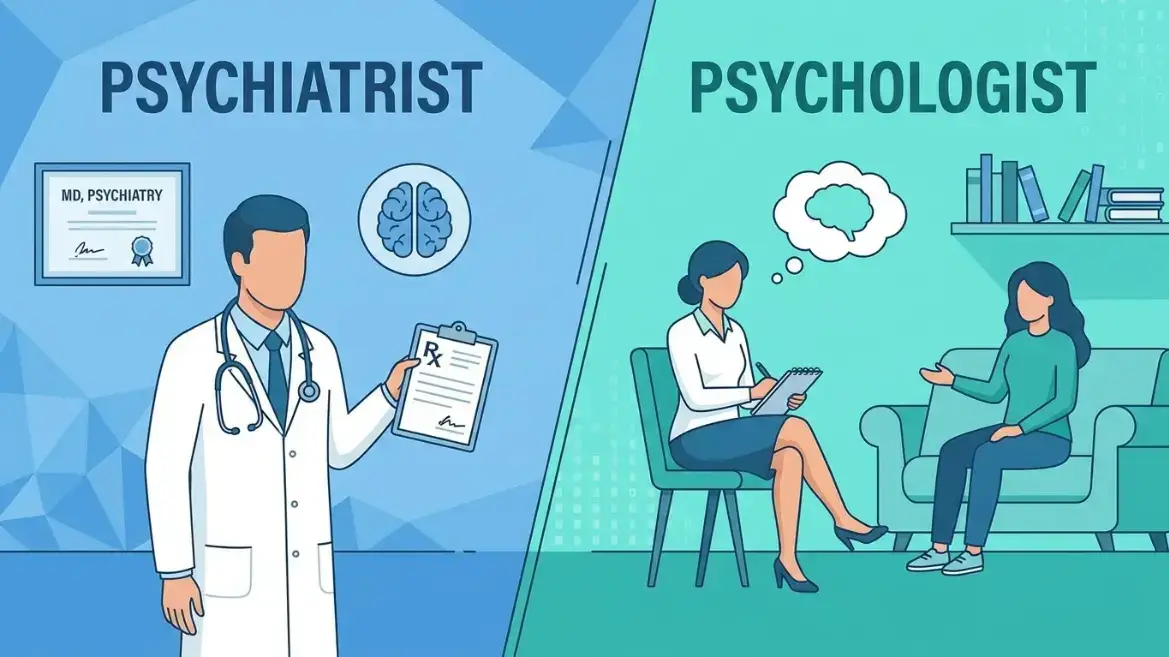
The biggest difference is simple. A psychiatrist is a medical doctor. A psychologist is not. Because psychiatrists went to medical school, they can prescribe medication, order lab tests, and look at how physical health conditions might be affecting your mental health. A psychologist cannot do any of those things in most states.
Psychologists focus on therapy. They are trained in approaches like cognitive behavioral therapy and dialectical behavior therapy, and they are very good at what they do. But if medication is needed, they have to refer you elsewhere. In practice, the two roles work well together. A psychiatrist handles the diagnosis and medication side. A psychologist or therapist handles the ongoing talk therapy.
Can Psychiatrists Provide Therapy Too?
Psychiatrists are trained in psychotherapy, they can provide a range of therapeutic approaches including cognitive behavioral therapy, psychodynamic therapy, and supportive therapy. However, in practice, many psychiatrists focus primarily on medication management.
Psychiatric appointments tend to be shorter than therapy sessions, and the demand for psychiatrists is high. A psychiatrist who spends their time doing ongoing therapy sessions can see far fewer patients than one who focuses on evaluations and medication checks. When psychiatrists do provide therapy, it is often short-term and integrated with medication management helping you understand your diagnosis.
Do You Need a Referral Before Seeing a Psychiatrist?
No. You do not need a therapist referral, a GP referral, or any prior mental health history to book an appointment. A psychiatrist evaluates your symptoms independently. No documentation from another provider is required before they can assess you or prescribe medication.
Many patients at Placid Psychiatry have never seen a mental health professional before. The initial evaluation starts from scratch, gathering a full picture to develop the right diagnosis and treatment plan.
Do you need to be in therapy to receive medication? No. Medication can be prescribed based on your psychiatric evaluation alone. Some patients do well with medication only, others with therapy only. Research consistently shows combined treatment produces better outcomes for depression, anxiety, ADHD, and PTSD than either approach alone. Your provider will recommend what fits your situation.

When Should You See a Psychiatrist?
You do not need to be in crisis to see a psychiatrist. But here are some signs it is time to reach out:
- Your symptoms have lasted more than two weeks and are not improving on their own.
- Depression or anxiety is affecting your ability to work, sleep, or maintain relationships.
- You have tried therapy but are not seeing enough improvement.
- Your symptoms include extreme mood swings, hallucinations, or thoughts of self-harm.
- A GP or therapist has suggested you need a psychiatric evaluation.
- You have tried medication before but it did not work or caused difficult side effects.
- You are on multiple medications and need someone with psychiatric expertise managing them.
Effective Communication With Your Psychiatrist
The quality of your psychiatric care depends heavily on what you share during your appointments. Psychiatrists cannot run a blood test for depression or scan for anxiety, their clinical judgment is built on what you tell them. These are the things that make appointments more productive.
Be specific about symptoms
Instead of saying you feel bad or stressed, describe the specifics. When did the symptoms start? How severe are they on a day-to-day scale? Are they constant or do they come in waves? How are they affecting your sleep, your ability to work, and your relationships? The more concrete you are, the more accurately your provider can assess what is happening.
Mention every medication and supplement you take
This includes vitamins, herbal supplements, hormonal contraceptives, and over-the-counter medications. Many psychiatric medications interact with other substances, and your provider needs the full picture to prescribe safely.
Be honest about alcohol and substance use
This is not about judgment, it is medically necessary information. Alcohol significantly affects how antidepressants work. Stimulants interact with certain substances in ways that can be dangerous. Your provider cannot make accurate prescribing decisions without knowing this.
Report back if something is not working
If a medication is causing side effects you cannot tolerate, or if you have not noticed any change after several weeks, say so directly at your next appointment. Adjusting medication is a normal and expected part of psychiatric care, not a sign that treatment has failed. The sooner your provider knows, the sooner the plan can be adjusted.
Come prepared with questions
Before leaving any appointment, you should know: what medication you are taking, why it was chosen for your situation, when it should start producing noticeable effects, what side effects to watch for, and when your next follow-up is scheduled.
Common Concerns About Psychiatric Medication
Side Effects
Common side effects vary by medication but may include nausea, headache, drowsiness, dry mouth, and sexual side effects. If you experience any, tell your psychiatrist rather than stopping on your own.
Dependency Risks
Most psychiatric medications are not addictive. Benzodiazepines carry the highest dependency risk, which is why they are prescribed short-term and with caution. SSRIs, SNRIs, mood stabilizers, and antipsychotics are not addictive in the clinical sense.
Long-Term Use
Some conditions, including bipolar disorder, schizophrenia, and recurrent depression, require ongoing medication. For others, it is a shorter part of recovery. Your psychiatrist will explain the expected duration and reasoning.
Stopping Medication Safely
Never stop psychiatric medication abruptly. Most require gradual tapering to avoid withdrawal. Stopping SSRIs or SNRIs suddenly can cause Discontinuation Syndrome. Always taper under your psychiatrist’s guidance.
You do not have to figure this out alone
Whether you have been struggling for weeks or years, reaching out is always the right move. A psychiatrist can help you understand what is going on, and find the right treatment. If you have been wondering whether medication is right for you, the only way to know for sure is to speak with someone who is qualified to answer that question properly.
Take the first step today and Contact us At Placid Psychiatry in Fullerton, CA, Jaehyun Cho, PA-C is ready to listen, evaluate, and build a treatment plan around what you actually need. Whether you prefer to come in or connect from home, the process is simple and the care is personal.
Conclusion
A psychiatrist is not just someone who hands you a prescription. They evaluate your full history, reach the right diagnosis, choose the medication that fits your specific situation, and stay involved in your care over time. If something is not working, they adjust. If side effects come up, they address them. The goal is never just a prescription. If you have been struggling and wondering whether medication might help, a psychiatric evaluation is the right first step. You do not need to have everything figured out before you go.
Frequently Asked Questions
Can a psychiatrist prescribe medication on the first visit?
Yes. If your evaluation is clear and a diagnosis is reached, a prescription can be written the same day. If more information is needed, your provider may wait until a follow-up.
Can a private psychiatrist prescribe medication?
Yes. Private psychiatrists have the same prescribing authority as any other psychiatrist. The difference is access and cost, not what they are licensed to do.
Do you need a referral to see a psychiatrist?
It depends on your insurance and healthcare system. Some require a referral from a GP, others allow you to book directly. Online psychiatry services usually do not require one.
Can a GP prescribe psychiatric medication instead?
Yes, for common medications like antidepressants. But for complex conditions or when initial medications have not worked, a psychiatrist’s specialized training makes a real difference.
Is psychiatric treatment confidential?
Yes. Everything you share is protected by medical confidentiality. Information is only shared in very rare circumstances involving immediate danger to yourself or others.