
Most people feel calm, a little floaty, and detached from their body during a session. Sights, sounds, and your sense of time can shift. With Spravato (esketamine), the strongest effects usually fade within 30 to 45 minutes, and most people feel like themselves again by the end of the day.
At Placid Psychiatry in Fullerton, CA, we offer Spravato, an FDA-approved nasal spray made from esketamine, one form of the ketamine molecule. It is for adults whose depression has not improved with other treatments. Before a first session, many people ask the same thing: what does ketamine feel like, and what does Spravato feel like in particular? This guide covers the mind and body effects, the emotional side, and what happens after your session ends.
What Does Ketamine Feel Like During Treatment?
Most people feel calm, dreamy, and separated from their body during a ketamine session. Ketamine is a dissociative medicine, which means it briefly changes how your brain links your thoughts, your senses, and your sense of self. With Spravato, effects start within minutes of the first spray and are strongest soon after the full dose.
In clinical trials, 61% to 84% of patients on Spravato had dissociation or changes in perception, according to the Spravato prescribing information. Every session takes place in a monitored room with trained staff, so you are never alone while the medicine works. Before you begin, agree on a simple signal, such as raising your hand, to let staff know you need help.
Changes in Your Sense of Time and Space
Time often feels stretched or squeezed during a session. A few minutes can seem long, or a full session may seem to end almost as soon as it began. Walls, ceilings, or objects may look closer, farther, larger, or smaller than they really are.
These changes are harmless and easy within the hour. Trying to make sense of the room can feel confusing, so many people close their eyes, wear an eye mask, or listen to soft music instead.
Feeling Detached From Your Body
Feeling disconnected from your body is the effect people describe most. Your hands may not feel like your own, your body may feel weightless, or you may lose track of where you end and the chair begins.
This is called dissociation. Dissociation is a feeling of being separated from your body, your thoughts, or the room, almost like watching life through a window. It is an expected part of how both ketamine and esketamine work, and it usually fades within 1 to 2 hours. Tell your care team right away if it feels too strong, lasts into the next day, or makes you feel unsafe. They can check your vital signs and review your dose.
Changes in Thoughts, Memories, and Perception
Your thinking may feel different during a session. Thoughts can drift slowly, jump between unrelated ideas, or feel unusually clear. Memories from years ago may come up without warning, and familiar sounds may seem new or strange.
Painful memories can feel surprising. You do not have to sort them out in the moment. Notice them and let them pass. After the session, write down anything that stood out so you can talk it through with your provider or therapist.
Why the Experience Can Feel Different From Person to Person
No two sessions feel exactly alike. Your Spravato dose (56 mg or 84 mg), sleep, stress level, other medicines, and past experiences with altered states all shape what you feel. The room, the music, and how safe you feel with your care team matter too.
For this reason, try not to compare your session with stories online. One person may see vivid images while another simply feels calm, and both can still benefit. Share your full health history and medication list so your provider can choose the right dose.
Does Spravato Feel Different From IV Ketamine?
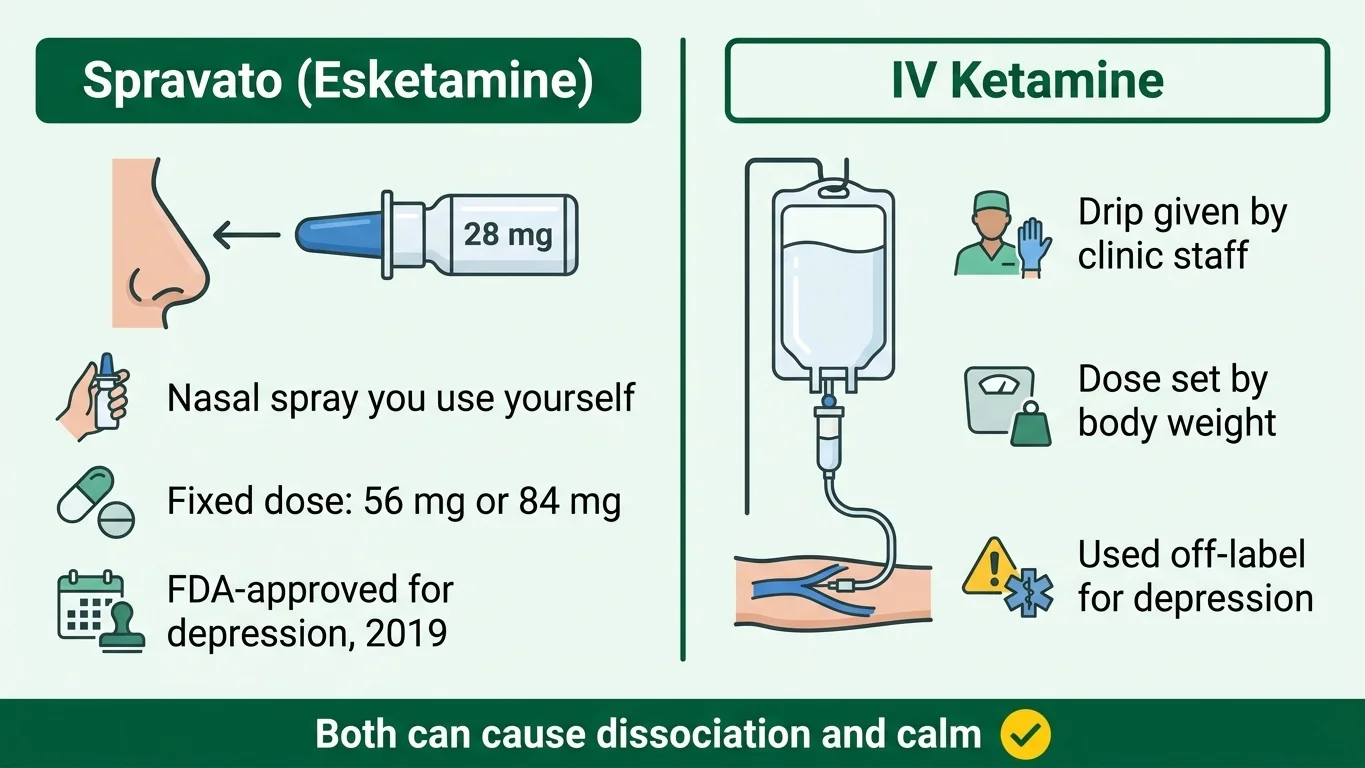
Spravato and IV ketamine cause similar feelings, such as dissociation and calm, but the two are given in different ways. Spravato contains esketamine, one form of the ketamine molecule, and you spray it into your nose yourself while staff watch. IV ketamine runs through a drip into a vein, and research studies set the IV dose by body weight.
Spravato comes in fixed doses. Each nasal spray device holds 28 mg, so most people use 2 devices (56 mg) or 3 devices (84 mg), resting 5 minutes between each one, according to the University of Colorado Anschutz Esketamine Clinic. The FDA approved Spravato for treatment-resistant depression in 2019, and it is given only in certified offices under the Spravato safety program.
Spravato at a Glance
| What You Want to Know | Spravato (Esketamine) | IV Ketamine |
| How it is given | Nasal spray you use yourself while staff watch | Drip into a vein, given by clinic staff |
| FDA-approved for depression? | Yes, approved in 2019 | No. Approved as an anesthetic, used off-label for depression |
| Dose | Fixed: 56 mg or 84 mg, in 28 mg devices | Set by body weight; 0.5 mg/kg over 40 minutes is the dose in the consensus statement |
| Blood pressure checks | Before dosing and about 40 minutes after | Before and during the infusion, and for at least 1 hour after (CANMAT) |
| Time in office after dose | At least 2 hours (FDA requirement) | Set by each clinic; guidelines call for at least 1 hour of blood pressure monitoring |
What Are the Physical Sensations of Ketamine?
The most common physical sensations are tingling, numbness, a heavy or floating feeling, dizziness, and sometimes nausea. Ketamine acts on nerve signals throughout your body, not only in your brain, so your skin, muscles, and balance can feel different.
Spravato also raises blood pressure for a short time. The rise peaks about 40 minutes after dosing and lasts about 4 hours, according to the Spravato prescribing information. Your care team checks your blood pressure before treatment and again at about 40 minutes.
Common Spravato Side Effects and What Helps
| Effect | How Often With Spravato | What Helps |
| Dissociation or changes in perception | 61% to 84% of patients | Eye mask, soft music, staying seated |
| Vertigo (a spinning feeling) | 16% of patients | Keep your eyes closed and stay seated |
| Vomiting | 11% of patients | Skip food for 2 hours before; ask about anti-nausea medicine |
| Higher blood pressure reported as a side effect | 10% of patients | Staff check it before dosing and at about 40 minutes |
Feeling Heavy, Light, Warm, or Numb
Your body may feel heavy, light, warm, or numb during treatment. Tingling in your fingers, toes, lips, or face is also common. These feelings are harmless and ease as the session goes on. A blanket, a pillow, and loose clothing can help you feel more comfortable.
Changes in Coordination and Body Awareness
Spravato can make your movements slow or clumsy, and standing or speaking may take extra effort. You may also lose track of where your hands and feet are. To prevent falls, stay seated until staff say it is safe to stand, get up slowly, and have a trusted adult drive you home.
Nausea, Dizziness, and Other Common Sensations
Nausea and dizziness are common, along with headache, dry mouth, blurred vision, and tiredness. These effects are usually brief and often ease over several sessions. Tell your provider if you get motion sickness, since they may suggest anti-nausea medicine first. Keep your eyes closed if the room spins, and sip water afterward.
Who Should Not Get Spravato?
Spravato is not safe for people with a condition where higher blood pressure or higher pressure inside the brain poses a serious risk, according to the Spravato patient information. Before your first visit, tell your provider if you have:
- High blood pressure that is not under control
- Chest pain from poor blood flow to the heart, such as angina
- A past stroke or problems with blood supply to the brain
- A history of misusing alcohol or drugs
- Any medicines or supplements, especially stimulants or MAOI antidepressants
Your provider will use this information to decide whether Spravato is a safe fit for you.
What Does the Emotional Experience Feel Like?
Most people feel calm and peaceful during treatment, while others feel strong emotions, a sense of connection, or new insight into their problems. Ketamine can lower the mental walls that usually hold feelings back, so tears, laughter, grief, or joy may come up more easily than usual.
These moments may be part of how the treatment helps. In a 2021 study led by Rachael Sumner at the University of Auckland, 32 adults with major depressive disorder received IV ketamine. People who felt stronger unity, spirituality, and insight during the session had bigger drops in depression scores 24 hours later.
Not every moment feels good. Fear or confusion can come up, but it usually passes within minutes, and trained staff stay nearby the whole time. Before your session, tell your provider about any trauma or painful memories so they can prepare you. During treatment, breathe slowly and let emotions come and go. Afterward, write down any insights while they are fresh and share them with your therapist.
Why Can Ketamine Cause Vivid or Unusual Experiences?
Ketamine causes vivid experiences because it blocks NMDA receptors in the brain. This changes how glutamate, a chemical messenger, carries signals between brain cells, which shifts the way your brain handles sight, sound, and your sense of self.
As a result, colors may look richer, patterns may seem to move, and music may seem to change speed or pitch. Some sessions feel like a waking dream, with places, faces, or short scenes playing out in your mind. A few people feel as if they are watching themselves from above.
These experiences can feel strange the first time, but they are a normal effect of the medicine. They do not mean you are losing your mind. Most people still know they are in a treatment room, even when the images feel real. If anything feels frightening, open your eyes, focus on your breathing, and tell your care team so they can help you feel grounded.
What Happens Before a Ketamine Therapy Session?
Before your first session, you will have a medical and mental health review, get clear food and travel rules, and talk through what the session may feel like. Good preparation lowers the chance of nausea and helps you feel settled.
Preparing Your Mind and Body
- Avoid food for 2 hours and liquids for 30 minutes before each dose, as the Spravato prescribing information advises, since some people feel nauseous.
- Set up a ride home ahead of time. You cannot drive until the next day.
- Avoid alcohol the day before and the day after treatment.
- Wear loose, comfortable clothes.
- Set a simple intention, such as “I want to feel lighter.”
What to Bring to Your Session
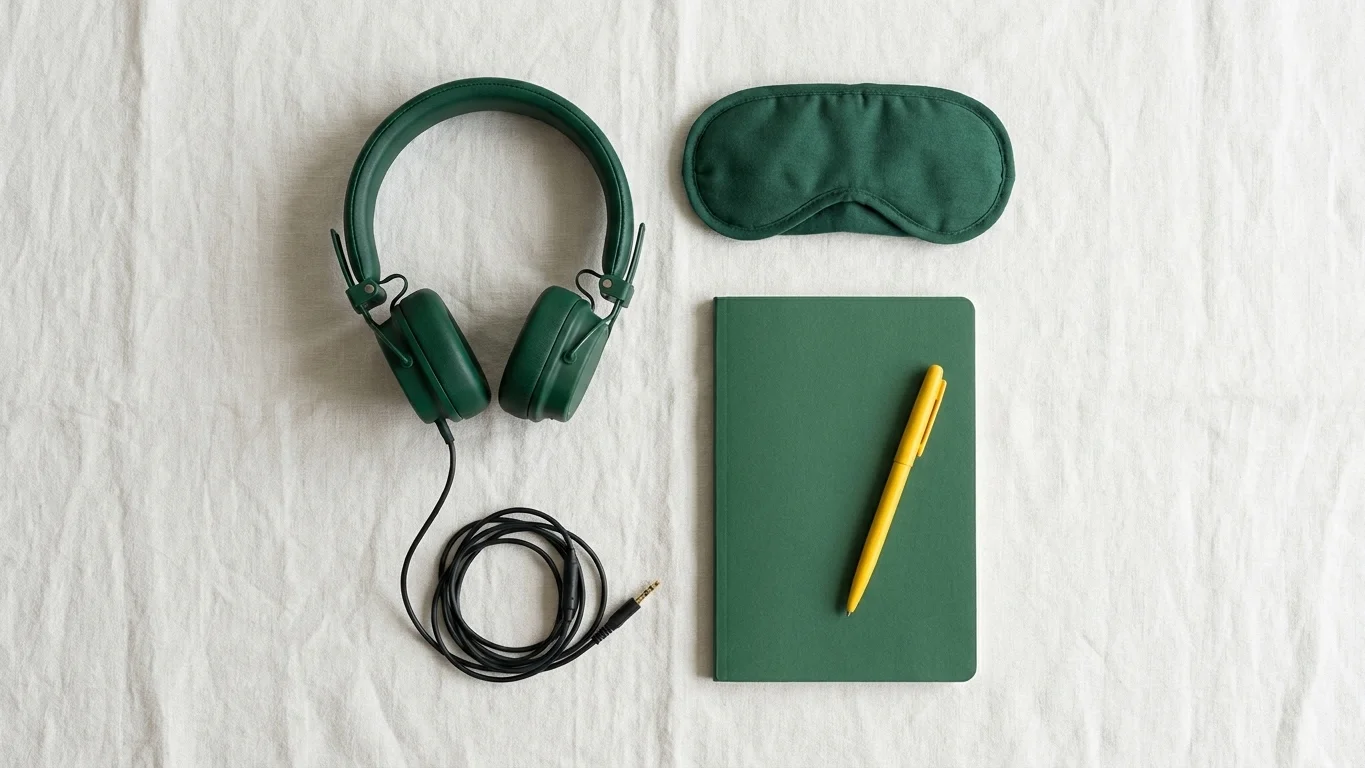
- Headphones and a calm playlist without lyrics
- An eye mask, if you like one
- A book or journal for the end of the monitoring period
- Anti-nausea medicine, if your provider approves it
What Your Treatment Team Will Explain
Your team will check your blood pressure, review your current medicines, and explain the effects you might notice. They will also tell you how long you will stay and what to do if you feel anxious. Bring every question you have, even small ones.
How Do Set and Setting Affect the Ketamine Experience?
Set and setting shape how a ketamine session feels. “Set” is your mindset, including your mood and expectations. “Setting” is the room and the people around you. Feeling calm and safe often leads to a more peaceful session.
Research supports this. In a 2021 Frontiers in Psychiatry study, O. Merve Mollaahmetoglu and her team at the University of Exeter interviewed 12 adults who received ketamine infusions for alcohol use disorder. They found that set and setting shaped how each session felt.
You can improve both before your appointment. Sleep well, keep the day free of stress, and arrive with your intention in mind. In the room, use your headphones and eye mask, and ask staff any questions before the first spray.
What Happens When a Ketamine Session Ends?
When a session ends, the strongest effects fade quickly, but you may feel tired, foggy, or a little unsteady for a few hours. Recovery happens in stages over the rest of the day. Grogginess is expected and does not mean something went wrong.
How You May Feel in the First Few Hours
Right after treatment, you may feel sleepy, relaxed, or slightly confused, and your balance and focus may still be off. Keep the rest of your day quiet. Drink water, eat a light meal, and skip alcohol and big decisions.
When You Usually Feel Back to Yourself
With Spravato, the strongest effects usually ease within 30 to 45 minutes. Even so, the FDA requires you to stay in the office under medical watch for at least 2 hours after each dose. Staff will not send you home until your blood pressure is coming down and you are stable.
Do not drive or use machinery until the next day, after a restful sleep. If you still feel off later that day, rest and call your provider.
What the Next Day May Feel Like
Most people wake up clear-headed the next morning. Some notice a lighter mood or more energy, while others feel no change yet. A slow start is normal, since mood benefits often build over several sessions. Keep your appointments and track how you feel in a short journal.
How Long Is Each Spravato Visit, and How Many Will You Need?
Each Spravato visit takes a little over 2 hours. Dosing takes about 10 to 15 minutes, followed by at least 2 hours of monitoring.
- First 4 to 6 weeks: 2 sessions a week
- After that: usually 1 session a week, if your symptoms are improving
- Long term: you and your provider decide the schedule together
What Is a Ketamine “Afterglow”?
The afterglow is a period of a few days after treatment when people feel more hopeful, open, and at peace. In a 2021 patient interview study by Chris Griffiths and colleagues, 13 adults with treatment-resistant depression said their mood lifted for about 3 to 6 days after each IV ketamine infusion.
This window is a good time to build new habits. Journal, spend time with supportive people, or book a therapy session to build on how you feel.
How Long Does the Ketamine Experience Last?
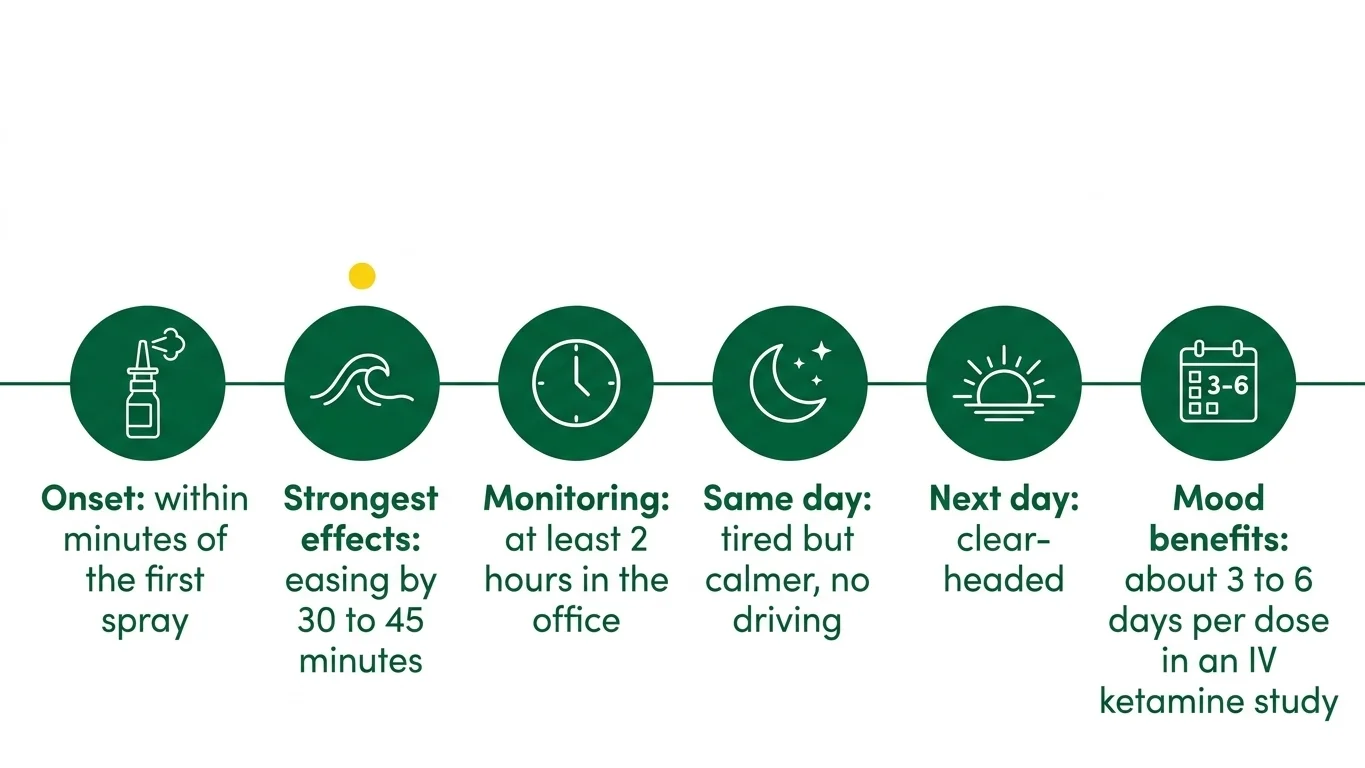
With Spravato, effects begin within minutes, the strongest effects usually ease by 30 to 45 minutes, and mood benefits can last several days per session.
| Stage | When It Happens | What You May Feel |
| Onset | Within minutes of the first spray; devices are used 5 minutes apart | Tingling, lightness, sounds or colors starting to shift |
| Strongest effects | Soon after the full dose; usually easing by 30 to 45 minutes | Dissociation, dreamlike images, changes in time and space |
| Monitoring | At least 2 hours in the office | Sleepy, foggy, a little unsteady |
| Same day | Rest of the day | Tired but calmer; no driving |
| Next day | After a restful sleep | Clear-headed; some notice a lighter mood |
| Mood benefits | About 3 to 6 days per dose in an IV ketamine study | More hope and calm; builds over a series of sessions |
Does Ketamine Feel the Same Every Time?
No, ketamine does not feel the same every time, even at the same dose. A first session may feel intense, while a later one feels quiet and calm. Your body, mood, and surroundings change from day to day, and so does the way the medicine affects you.
A milder session does not mean the treatment stopped working. The strength of the experience does not always match how much it helps your mood. Keep a short journal after each visit and share big changes with your provider.
How Dose Can Affect the Experience
Dose makes a big difference. Spravato comes in fixed doses of 56 mg or 84 mg, and your provider chooses and changes the dose based on your safety and progress. Never change your dose on your own or use ketamine outside of treatment.
Why Your Experience May Change Between Sessions
Your first session often feels the strongest because everything is new. Later sessions may feel milder once you know what to expect, or different because your mood has improved. These changes are normal. If a session feels much stronger or harder than before, tell your care team so they can review your plan.
Can a Ketamine Session Feel Scary or Uncomfortable?
Yes, a session can sometimes feel scary or uncomfortable, but these moments are usually short and pass on their own. You may feel anxious, confused, or suspicious, or worry that the feeling will never end. Nausea or a racing heart can make these moments feel stronger. First sessions are more likely to feel this way, since everything is new.
A hard moment does not mean the treatment is failing or that you are in danger. Trained staff watch you the whole time and can step in with comfort or medical care. If you start to feel uneasy, take off your eye mask, look around the room, and hold something solid, such as the arm of the chair. Afterward, talk with your provider about what felt hard so they can adjust your music, setting, or plan.
Can You Lose Control During Ketamine Treatment?
No, you will not lose control in a way that puts you in danger, though your thoughts may feel harder to steer for a short time. Your mind may drift and your sense of time may blur. Even so, most people stay aware of where they are and can still answer staff. The medicine wears off on its own, and you stay in the office until you are stable and alert.
What Is the Difference Between Medical Ketamine and Recreational Ketamine?
Medical ketamine is given at measured doses with screening and monitoring. Recreational use is unmeasured, unmonitored, and often mixed with other substances, which raises the risk of a frightening or harmful experience. Much higher recreational doses can cause the “K-hole,” a state of intense dissociation described in a 2008 Drug and Alcohol Dependence study by Muetzelfeldt, Curran, and colleagues.
Why Medical Treatment Is Carefully Monitored
Medical treatment includes screening before your first dose and trained staff beside you during every session. The right dose aims to ease symptoms without overwhelming you, and a calm, safe room lowers the chance of a frightening session.
Does Spravato Get You High?
No, Spravato is not meant to make you feel high, though it can make you feel dreamy, floaty, or giggly for a short time. Doses are fixed and measured to ease depression, and many patients describe the feeling as calm and unusual rather than fun. If you are worried about misuse, talk openly with your provider about your history with alcohol or drugs.
When Should You Talk to Your Treatment Provider About Your Experience?
Call your provider any time a feeling from treatment lasts past the next day or makes you feel unsafe. Reach out if you:
- Feel very anxious, confused, or upset for more than a day
- Notice new or worse thoughts of self-harm
- Have urges to use ketamine outside of treatment
- Feel pain or burning when you urinate, or see blood in your urine
- See no change after several weeks of sessions
If you are ever in crisis, call or text 988, the Suicide and Crisis Lifeline, or call 911.
Conclusion
So, what does ketamine feel like? For most people, it feels calm, dreamy, and a little strange, with a sense of being detached from the body and shifts in time and perception. Some people feel strong emotions or brief fear, which pass with support. With Spravato, the strongest effects ease within the hour, and mood benefits can build over days and across repeated sessions. Knowing what to expect, preparing well, and choosing a safe, monitored setting, like our Spravato office in Fullerton, can shape a much better experience.
Take the Next Step With Placid Psychiatry
If depression has not improved with other treatments, Spravato (esketamine) may be the right next step for you. Jaehyun Cho, PA-C, will review your health history, explain what treatment may feel like, and help you decide whether Spravato fits your needs. Every session takes place in a calm, monitored room, with our team beside you from start to finish.
Feeling unsure about something new is normal, and you do not need all the answers before you reach out. At Placid Psychiatry, we will walk you through each step and answer your questions so you feel safe and prepared. Learn more about Spravato treatment in Fullerton or schedule your evaluation today. Call or text 562-354-0002 to get started.
Frequently Asked Questions
What Does Ketamine Feel Like Compared to Being Drunk?
Some patients say Spravato feels a little like being drunk, with dizziness and shaky balance. In clinical studies, “feeling drunk” was one of the most common effects still present 90 minutes after a dose, along with dizziness and dissociation. Unlike alcohol, these effects are monitored by trained staff and wear off during your office visit.
Can You Take Spravato at Home?
Spravato is never taken home. The FDA requires every dose to be given under the direct watch of a healthcare provider, in an office certified under the Spravato safety program. You use the nasal spray yourself, but only while staff are in the room with you.
Do You Keep Taking Your Antidepressant With Spravato?
Spravato was studied together with an oral antidepressant, and most people keep taking their daily antidepressant during treatment. Your provider will review your current medicines and tell you exactly what to continue, change, or stop.
Can Spravato Change How Things Taste?
A change in taste is one of the side effects some patients still notice 2 hours after a dose. It is usually short-lived. Bringing water to sip after your session can help.
Can You Go Back to Work After a Spravato Session?
Plan to take the rest of the day off. The Spravato medication guide says not to do anything that requires you to be fully alert after a dose. Most people return to work the next day, after a restful sleep.
Who Can Get Spravato?
Spravato is for adults with depression that has not improved after trying at least 2 different antidepressants. A provider must first review your health history, blood pressure, and current medicines to make sure Spravato is a safe fit.