
Emotional immaturity can make it hard to manage feelings, handle conflict, accept feedback, or understand another person’s point of view. These patterns can affect relationships, work, and daily choices. Therapy for emotional immaturity can help a person notice these patterns and learn healthier ways to respond.
If emotional reactions are creating stress in your life, professional support can provide direction. Placid Psychiatry in Fullerton, CA offers mental health evaluation and personalized treatment options for people who want to better understand their emotions, behavior, and overall mental health.
Emotional growth takes time. It develops through self-awareness, practice, support, and a willingness to change. This guide explains common signs and causes of emotional immaturity, how therapy may help, and what you can do to build stronger emotional skills.
What Is Emotional Immaturity?
Emotional immaturity refers to patterns that make it harder for a person to understand, manage, and respond to emotions in a healthy way. Someone may react strongly to small problems, avoid uncomfortable conversations, blame others, or struggle to think about how their behavior affects people around them.
These patterns often become more noticeable during stress, conflict, criticism, or disappointment. Emotional immaturity can affect relationships, communication, decision-making, and the ability to solve problems calmly. It can improve over time as a person develops stronger emotional awareness and coping skills.
Emotional Immaturity vs. Emotional Maturity
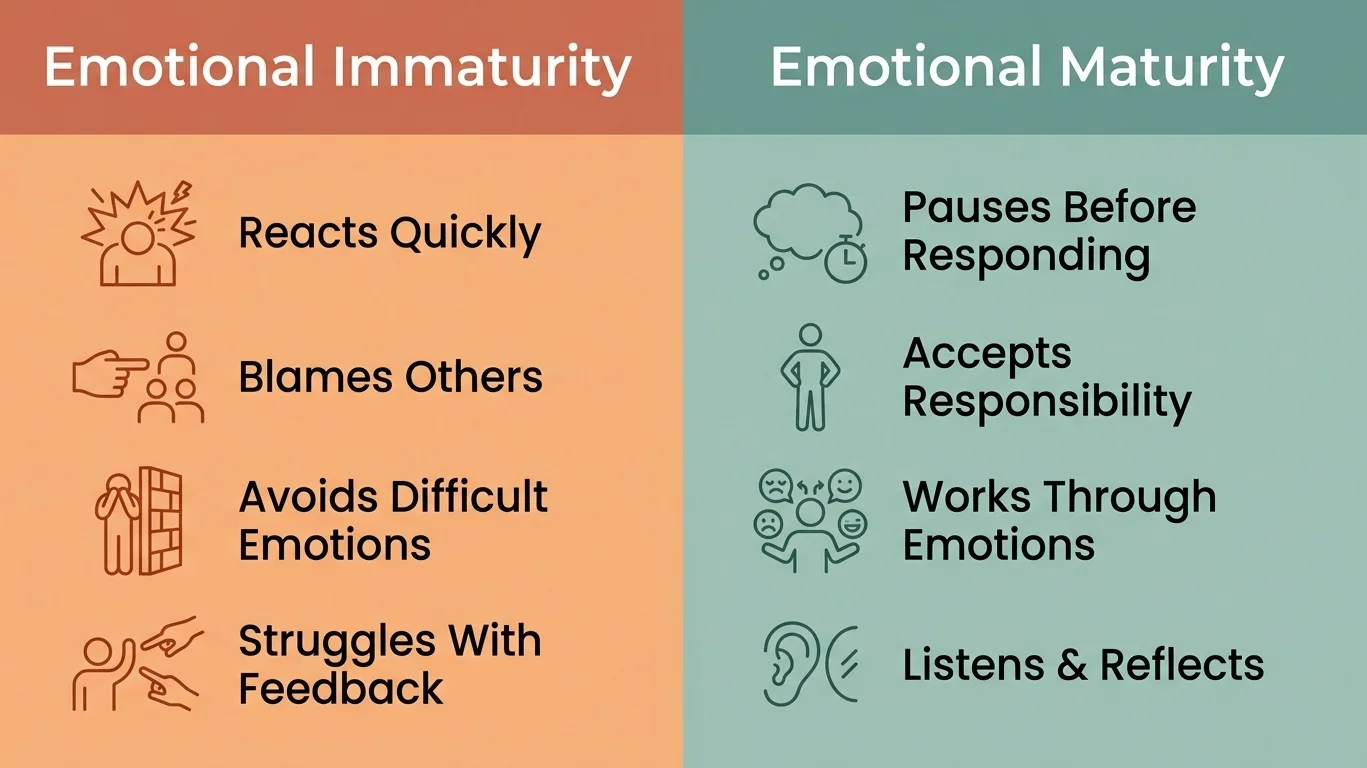
Emotional immaturity and emotional maturity mainly differ in how a person responds to strong feelings, stress, conflict, and responsibility. Both emotionally mature and immature people experience anger, sadness, or frustration, but their ways of handling these emotions can be very different.
| Emotional Immaturity | Emotional Maturity |
| Reacts quickly during conflict | Pauses before responding |
| May blame others | Accepts responsibility |
| Avoids difficult emotions | Works through difficult emotions |
| Struggles with feedback | Listens and reflects on feedback |
| Focuses mainly on personal feelings | Considers other people’s feelings |
Emotional Immaturity Is Not a Mental Health Diagnosis
Emotional immaturity is not an official mental health diagnosis. It is a general term used to describe certain patterns in emotional regulation, communication, responsibility, and relationships. These behaviors may develop because of childhood experiences, stress, trauma, limited emotional support, or difficulty learning healthy coping skills.
Some mental health conditions can also involve emotional regulation problems, but this does not mean that every emotionally immature person has a mental health disorder. A mental health professional can help identify what may be causing repeated emotional or behavioral difficulties.
Emotional Immaturity vs. Emotional Intelligence
Emotional immaturity and emotional intelligence are related, but they do not mean the same thing. Emotional intelligence focuses on recognizing and understanding emotions, while emotional maturity is about using that understanding to manage reactions, make thoughtful choices, and maintain healthier relationships.
| Emotional Intelligence | Emotional Maturity |
| Recognizes emotions | Manages emotional reactions |
| Understands other people’s feelings | Responds with empathy |
| Notices emotional triggers | Chooses healthier responses |
| Builds emotional awareness | Applies awareness in daily life |
Signs of Emotional Immaturity in Adults

Emotional immaturity can look different from one person to another. Having an emotional reaction, making a mistake, or struggling during a stressful moment does not automatically mean someone is emotionally immature. The concern is usually a repeated pattern of behavior that affects relationships, communication, work, or daily decisions.
These signs may become more noticeable during conflict, criticism, disappointment, or situations where a person feels uncomfortable or out of control. Looking at patterns over time can be more useful than judging someone based on a single reaction.
Difficulty Managing Strong Emotions
A person who struggles with emotional maturity may have trouble calming down once strong feelings begin. Small disagreements, delays, criticism, or unexpected changes may lead to intense anger, sadness, frustration, or defensiveness.
They may react before thinking, say things they later regret, or feel overwhelmed by emotions that seem difficult to control. Emotional growth often involves learning how to pause, identify the feeling, and choose a response instead of reacting immediately.
Avoiding Responsibility or Blaming Others
Emotionally immature behavior can include difficulty admitting when a mistake has been made. A person may focus on what someone else did wrong, make excuses, or blame outside circumstances instead of considering their own role in the problem.
This can make it difficult to repair relationships because meaningful change usually requires personal responsibility. Emotional maturity includes being able to say, “I handled that badly,” understand the effect of your actions, and make an effort to respond differently next time.
Poor Communication and Conflict Skills
Healthy communication can become difficult when emotions feel intense. A person may yell, interrupt, use sarcasm, give the silent treatment, leave the conversation, or make personal attacks instead of discussing the actual issue.
Some people may also avoid conflict completely because they do not know how to express uncomfortable feelings. Learning to listen, communicate needs clearly, and stay respectful during disagreements can help create healthier relationships.
Difficulty Accepting Feedback
Constructive feedback can feel very personal to someone who struggles with emotional maturity. Even a calm suggestion may be understood as rejection, disrespect, or criticism of their entire character.
The person may become defensive, deny the problem, argue immediately, or stop listening. Emotional maturity involves being able to hear feedback, think about whether it is useful, and make changes without feeling that one mistake defines who you are.
Impulsive or Self-Focused Behavior
Strong emotions can sometimes lead to quick decisions without enough thought about the consequences. A person may send an angry message, end a relationship during an argument, spend money impulsively, or make choices based only on how they feel in that moment.
Self-focused behavior may also involve expecting other people to meet their emotional needs without considering their feelings or limits. Emotional maturity includes thinking about both personal needs and how choices may affect others.
Struggling With Empathy and Perspective-Taking
Empathy involves trying to understand another person’s feelings and point of view. Someone showing emotionally immature patterns may have difficulty doing this, especially during conflict.
They may focus mainly on proving that they are right or explaining why their feelings matter more. This can make others feel ignored or misunderstood. Developing emotional maturity often includes learning to listen without immediately defending yourself and recognizing that two people can experience the same situation differently.
Avoiding Difficult Conversations or Emotional Situations
Some people respond to emotional discomfort by avoiding it completely. They may change the subject, stop answering messages, leave the room, ignore a problem, or delay an important conversation for a long time.
Avoidance may provide short-term relief, but unresolved issues can become more difficult over time. Emotional maturity involves learning to stay present during uncomfortable situations, express feelings clearly, and work through problems even when the conversation feels difficult.
What Causes Emotional Immaturity?
Emotional immaturity can develop for many reasons, and there is usually no single cause. Childhood experiences, family relationships, parenting styles, trauma, stress, and a lack of healthy emotional role models can all affect how a person learns to handle feelings. If someone grows up in an environment where emotions are ignored, punished, or poorly managed, they may have fewer chances to learn healthy coping and communication skills.
Emotional development can also be shaped by social experiences, ongoing stress, and mental health challenges that affect emotional regulation. Some people may rely on avoidance, blame, or impulsive reactions because these patterns once helped them cope with difficult situations. Understanding where these behaviors come from can make it easier to work on healthier emotional responses over time.
How Emotional Immaturity Can Affect Relationships
Emotional immaturity can create repeated problems in romantic relationships, families, friendships, and work settings. A person may struggle to communicate clearly, handle disagreement, accept responsibility, or understand another person’s feelings. This can lead to frequent arguments, misunderstandings, broken trust, and frustration for both people.
Over time, these patterns can make relationships feel one-sided or emotionally exhausting. Poor boundaries, blame, avoidance, or impulsive reactions may make it harder to solve problems in a healthy way. Learning better communication, empathy, emotional control, and responsibility can help build stronger and more balanced relationships.
How Therapy Can Help With Emotional Immaturity
Therapy can help a person understand the emotional patterns that affect their reactions, choices, and relationships. It can provide a safe space to explore why certain situations trigger anger, defensiveness, avoidance, or impulsive behavior. A therapist can also help identify unhealthy coping habits and the past experiences that may have shaped them.
Over time, therapy can support better emotional awareness, communication, empathy, and self-control. A person may learn how to pause before reacting, accept responsibility, handle conflict more calmly, and express needs in healthier ways. These skills can make daily life and relationships feel more stable and manageable.
Types of Therapy for Emotional Immaturity
There is no single treatment that is best for everyone. The right approach depends on symptoms, history, goals, relationships, and any other mental health concerns. A therapist may also combine different methods based on the person’s needs. Treatment can change over time as emotional skills improve and new concerns become clearer.
Cognitive Behavioral Therapy (CBT)
Cognitive Behavioral Therapy looks at links between thoughts, feelings, and behaviors. It can help people challenge unhelpful thinking and practice more useful responses. It may also help a person notice automatic thoughts that lead to defensiveness, blame, or impulsive reactions. With practice, these patterns can be replaced with more balanced ways of thinking and responding.
Dialectical Behavior Therapy (DBT)
DBT teaches skills for emotion regulation, distress tolerance, mindfulness, and relationships. It was originally developed to help people manage intense emotions and reduce impulsive reactions, and it can be especially useful for people who feel overwhelmed by strong emotions or react quickly during stressful situations. DBT skills can also help improve communication and reduce conflict.
Trauma-Informed Therapy
A trauma-informed approach considers how past experiences may affect present reactions while placing strong attention on safety, respect, and choice. It can help people understand how earlier experiences may have shaped current emotional habits. This approach also avoids blaming the person for coping patterns that may have developed during difficult situations.
Individual Therapy
Individual therapy gives you private space to explore emotional habits, family patterns, relationship concerns, and personal goals. It allows you to work at your own pace while building self-awareness and healthier coping skills. A therapist can also help you set personal goals and track changes in your emotional responses over time.
Family or Couples Therapy
When emotional patterns are affecting close relationships, family or couples therapy may help improve communication, boundaries, and conflict repair. Sessions can help each person understand how their reactions affect the relationship. They may also provide a structured space to practice healthier communication and solve repeated problems together.
Emotional Immaturity and Childhood Trauma
Childhood trauma can affect how a person learns to manage emotions, trust others, and respond to stress. If a child grows up with fear, neglect, criticism, instability, or other difficult experiences, they may develop coping patterns that help them feel safer at the time. These patterns can include shutting down, avoiding conflict, becoming defensive, people-pleasing, or reacting strongly when they feel threatened.
As an adult, these same responses may continue even when the original danger is no longer present. This does not mean everyone who experiences childhood trauma will become emotionally immature. However, therapy can help a person understand where these patterns came from, recognize current triggers, and learn healthier ways to manage emotions, communicate, and respond to difficult situations.
How to Develop Emotional Maturity
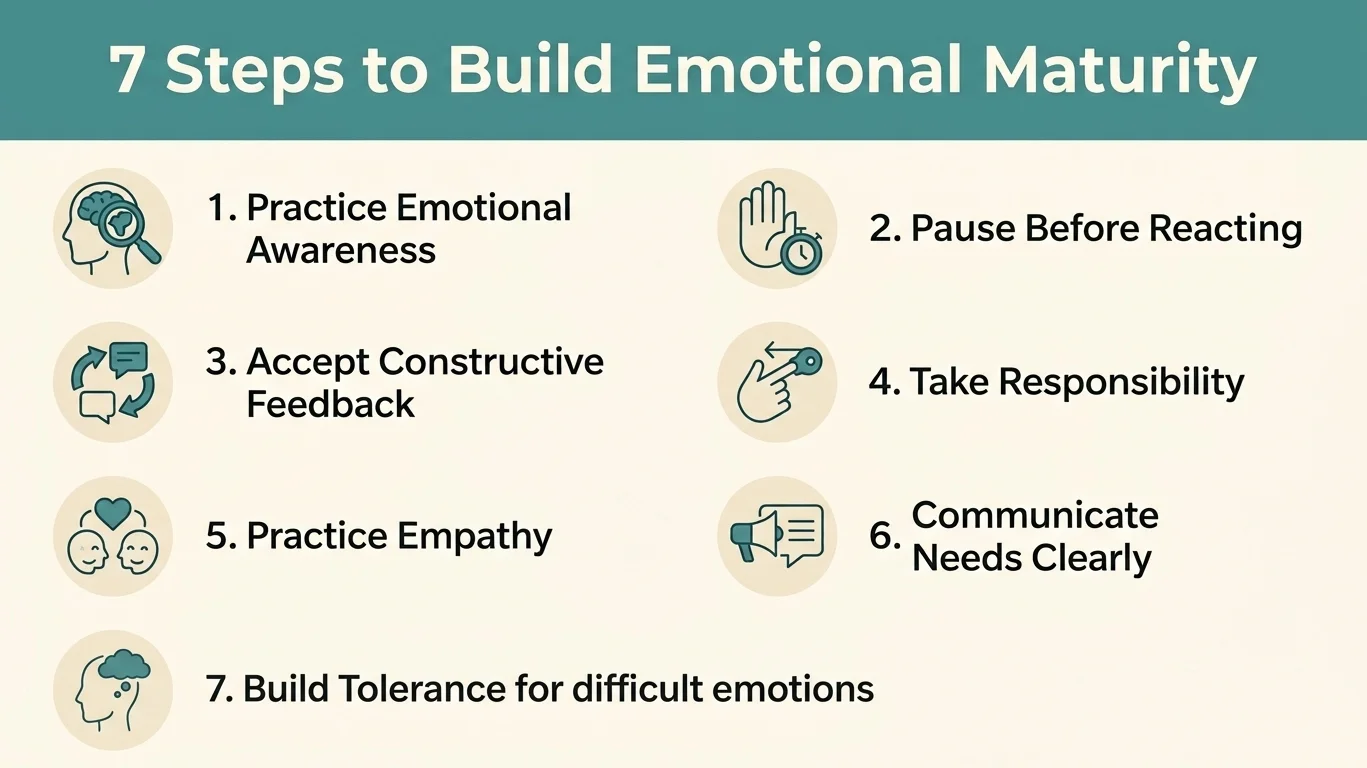
Emotional maturity is a set of skills that can grow with practice. Small changes repeated often usually matter more than trying to change everything at once.
Practice Emotional Awareness: Ask what you are feeling, what triggered it, and what you need before you respond.
Pause Before Reacting: Give yourself a few seconds before sending a message, raising your voice, or making an important decision.
Learn to Accept Constructive Feedback: Listen for useful information, even when feedback feels uncomfortable. You can disagree with part of it and still learn something.
Take Responsibility Without Excessive Shame: Acknowledge what happened, apologize when needed, and decide what to do differently instead of getting stuck in self-criticism.
Practice Empathy: Ask what another person may be feeling or needing. Curiosity can make conflict less defensive.
Communicate Needs Clearly: Say what you feel, need, or can do. Clear words are usually more effective than hints, silence, or angry reactions.
Build Tolerance for Difficult Emotions: Disappointment, frustration, sadness, and embarrassment do not always need an immediate fix. Learning to sit with discomfort can improve self-control.
How to Set Boundaries With Emotionally Immature People
Setting boundaries with emotionally immature people can help protect your time, energy, and emotional well-being. Clear boundaries explain what behavior you are comfortable with and what you will not accept. It is often best to communicate calmly and directly without giving long explanations or trying to control how the other person reacts.
You may also need to stay consistent, especially if the person becomes upset, defensive, or tries to ignore your limits. Remember that you are responsible for your own choices, not for managing someone else’s emotions. If the relationship continues to feel unhealthy or stressful, creating more distance may sometimes be necessary.
When Should You Consider Therapy for Emotional Immaturity?
You may want to consider therapy when emotional patterns keep repeating and start affecting your relationships, work, or daily life. Frequent arguments, strong reactions, difficulty accepting feedback, avoiding responsibility, or feeling unable to control emotions can be signs that professional support may be helpful. Therapy can also be useful if you understand the problem but still struggle to change your response.
You do not need to wait until things feel severe before seeking help. Therapy can support you if you want to better understand your triggers, improve communication, build healthier coping skills, or work through past experiences that still affect you. The goal is to develop more awareness and learn practical ways to respond to emotions with greater control and confidence.
What to Expect From Therapy for Emotional Immaturity
Therapy often involves noticing patterns, understanding where they came from, learning new skills, and practicing those skills in real life.
Identifying Emotional Patterns: You may start by looking at common triggers, thoughts, conflicts, and reactions.
Understanding Where Those Patterns Come From: Sessions may explore family experiences, past relationships, coping habits, and beliefs that shaped your current behavior.
Learning New Emotional and Relationship Skills: You may practice communication, coping tools, emotional regulation, and ways to challenge unhelpful thoughts.
Practicing Healthier Responses Over Time: New skills become stronger through repeated use outside therapy, especially during real moments of stress or conflict.
Can Emotional Immaturity Improve With Therapy?
Yes, emotional patterns can change. Progress often depends on self-awareness, willingness to take responsibility, consistent practice, and support that fits the person’s needs.
Therapy does not remove difficult emotions or prevent every conflict. It can help you respond with more control, reflection, empathy, and choice. Growth may be gradual, but steady practice can improve coping and relationships.
Conclusion
Emotional immaturity can appear as defensiveness, impulsive reactions, blame, avoidance, weak boundaries, or difficulty handling conflict. These patterns may be shaped by childhood learning, family dynamics, trauma, stress, or emotional regulation challenges.
Therapy for emotional immaturity can help a person understand repeated patterns and build healthier skills for communication, coping, empathy, responsibility, and self-reflection. The goal is not perfect behavior. It is learning to respond with more awareness and less automatic reaction. If these patterns are affecting your relationships, work, or emotional health, professional support may be a useful next step.
Take the Next Step Toward Emotional Growth
If strong emotions, repeated conflict, or unhealthy relationship patterns are making daily life harder, professional care can help you understand what is happening. Placid Psychiatry in Fullerton, CA provides thoughtful psychiatric evaluation and personalized mental health treatment based on your symptoms, history, and goals.
Contact Placid Psychiatry to schedule an appointment and discuss the emotional or mental health concerns affecting your life. A clear evaluation can help you understand your needs and explore treatment options that fit your situation.
Frequently Asked Questions
Can therapy help with emotional immaturity?
Yes. Therapy can help you recognize emotional patterns that may be affecting your relationships, communication, or decision-making. A therapist can also teach healthier ways to manage strong emotions, respond to conflict, and take responsibility for your actions. Over time, these skills can support better emotional control and stronger relationships.
What type of therapy is best for emotional immaturity?
There is no single type of therapy that works best for everyone. CBT may help change unhelpful thoughts and behaviors, while DBT can support emotional regulation and coping skills. Trauma-informed therapy may be useful when past experiences affect current reactions. The right approach depends on your needs, history, and treatment goals.
Is emotional immaturity a mental health disorder?
No. Emotional immaturity is not a formal mental health diagnosis. It is a general term used to describe patterns such as poor emotional control, difficulty accepting responsibility, or problems with communication and empathy. In some cases, these behaviors may also appear alongside mental health conditions that require professional evaluation.
Can an emotionally immature person change?
Yes. Emotional maturity can develop at any age when a person is willing to recognize unhealthy patterns and work on them. Change often involves learning better communication, emotional regulation, empathy, and coping skills. Therapy can provide support and guidance while these new habits are practiced over time.
Can childhood trauma cause emotional immaturity?
Childhood trauma can affect emotional development, coping skills, trust, and the way a person responds to stress. Some adults may continue using emotional patterns they learned as a way to protect themselves during difficult childhood experiences. However, trauma does not mean someone will automatically become emotionally immature, and many people develop healthy emotional skills with support.
How long does therapy for emotional immaturity take?
There is no set timeline because every person’s needs and experiences are different. Some people may notice progress after learning a few new coping and communication skills, while deeper emotional patterns may take longer to address. The length of therapy can depend on your goals, history, symptoms, and consistency with practicing new skills.
Can therapy help with emotionally immature relationships?
Yes. Therapy can help people recognize unhealthy relationship patterns, improve communication, and create clearer boundaries. Individual therapy may help you understand your own reactions, while couples or family therapy may support healthier interaction between people. Progress often depends on each person’s willingness to take responsibility and make changes.