
If you have been feeling anxious for days, weeks, or even longer, you are probably asking yourself one simple question. How long is this going to last? You want to know if this feeling will fade soon or if it is something you will have to deal with for a long time.
At Placid Psychiatry in Fullerton, CA, we talk to patients about this question almost every week. Anxiety affects people in different ways, and there is no single answer that fits everyone. In this blog, we will walk through how long anxiety usually lasts, what makes it stick around longer, and what actually helps it fade faster.
How Long Does Anxiety Last?
The length of anxiety varies from person to person and depends on what is causing it. For some people, anxiety lasts only a few minutes or hours, such as before a job interview, exam, or public speaking event. Once the stressful situation passes, the anxious feelings often fade as well. However, if anxiety is linked to an anxiety disorder, it can continue for weeks, months, or even longer without proper treatment.
There is no set timeline for anxiety because everyone’s experience is different. With the right treatment, such as therapy, medication when needed, and healthy lifestyle changes, many people notice significant improvement over time. Early intervention can also help reduce symptoms and prevent anxiety from becoming more persistent.
Why Anxiety Lasts Different Lengths of Time for Different People
No two people experience anxiety in exactly the same way. The duration of anxiety depends on several factors, including the cause of the anxiety, its severity, your overall mental and physical health, and how you respond to stress. While one person may recover quickly after a stressful event, another may continue feeling anxious long after the situation has passed.
Your support system, coping skills, and whether you receive professional treatment also play an important role. People who seek help early and consistently practice healthy coping strategies often recover faster than those who try to manage severe anxiety on their own.
When Anxiety Becomes a Concern
Feeling anxious from time to time is a normal part of life, especially during stressful situations. However, anxiety may become a concern if it lasts for several weeks, keeps returning without a clear reason, or begins to interfere with your daily life. Difficulty sleeping, trouble concentrating, avoiding social situations, or constant worry are all signs that anxiety may need professional attention.
If your anxiety is affecting your work, relationships, physical health, or overall quality of life, it’s important not to ignore it. Reaching out to a mental health professional can help you understand what’s causing your anxiety and develop a treatment plan that supports long-term recovery.
What Is Anxiety?
Anxiety is your body’s natural response to stress or danger. It can show up as worry, fear, or a sense that something is wrong, even when there is no clear threat in front of you.
Normal Anxiety vs. Anxiety Disorders
| Normal Anxiety | Anxiety Disorder |
| A natural response to stress or challenging situations. | A mental health condition where anxiety is frequent, intense, and difficult to control. |
| Usually has a clear cause, such as an exam, interview, or important event. | May occur with or without an obvious trigger and often persists over time. |
| Symptoms are temporary and improve once the stressful situation passes. | Symptoms can last for weeks, months, or longer without proper treatment. |
| Does not significantly interfere with daily activities. | Can affect work, school, relationships, and overall quality of life. |
| Feelings of worry are manageable and proportionate to the situation. | Worry is often excessive, persistent, and difficult to manage. |
| Usually does not require professional treatment. | Often benefits from therapy, medication, or a combination of both. |
| Can motivate you to prepare or perform better. | May lead to avoidance, panic, or difficulty functioning in everyday life. |
Common Symptoms of Anxiety
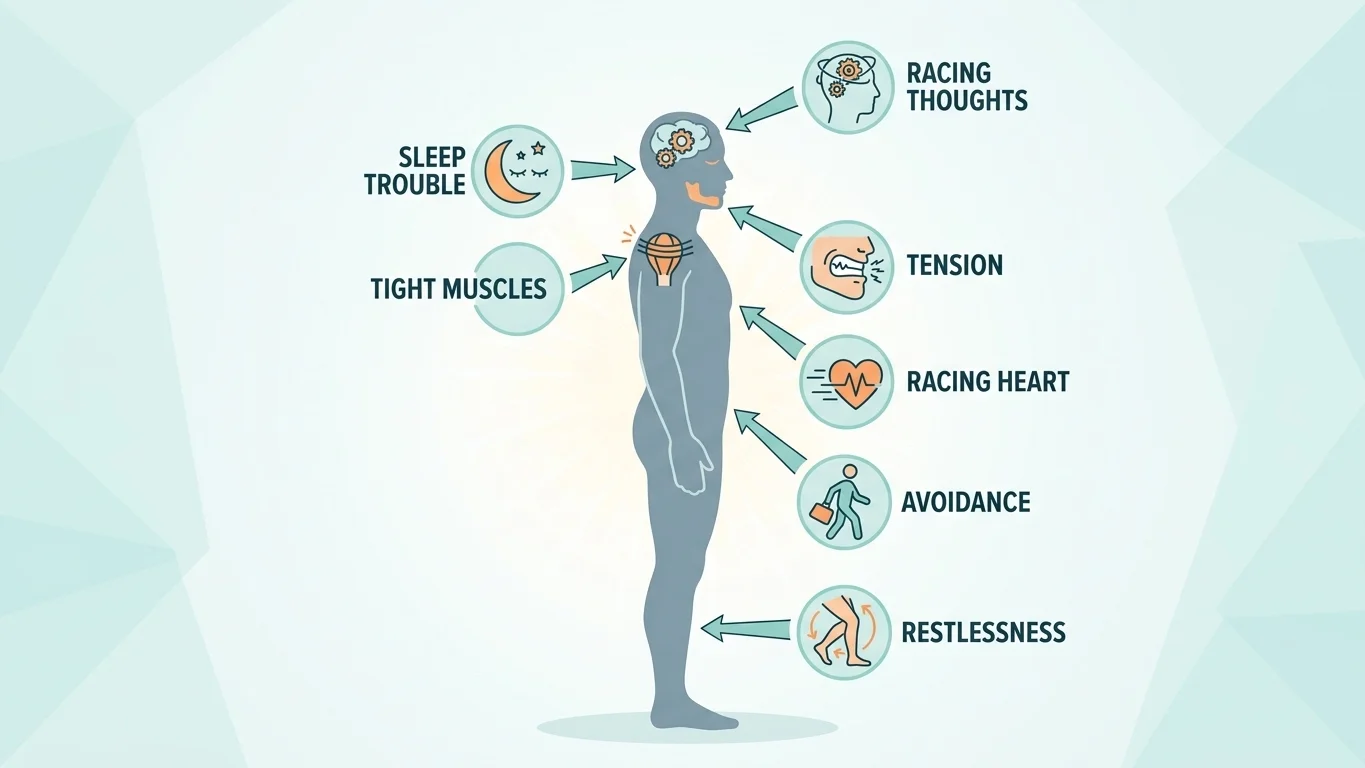
Anxiety can affect both your mind and your body. Common signs include:
- Racing or repeated worried thoughts
- A pounding heart or tight chest
- Trouble falling or staying asleep
- Muscle tension
- Trouble focusing on tasks
- Feeling restless or on edge
- Avoiding certain places, people, or situations
Why Anxiety Happens
Anxiety can come from many sources. Stressful life events, ongoing pressure at work or home, past trauma, and even genetics can all play a role. Sometimes anxiety builds up slowly over time. Other times it shows up suddenly after a specific event.
How Long Can Anxiety Last?
The duration of anxiety depends on its cause, severity, and whether you receive treatment.
Temporary (Situational) Anxiety: This type of anxiety is tied to one clear event, like a presentation or a hard conversation. It usually fades within a few hours once the event is over. Some people still feel a bit tense for the rest of the day, but it clears up on its own by the next morning.
Anxiety That Lasts for Weeks or Months: Sometimes anxiety sticks around longer than expected. This often happens when there is an ongoing stressor, like a hard job or a health problem. This kind of anxiety can come and go for weeks or months, especially if the stress behind it never gets addressed.
Chronic Anxiety Disorders: Chronic anxiety disorders, like Generalized Anxiety Disorder, do not follow a clear start and end point. Without treatment, they can last for years. With the right care, most people start to feel steadier within weeks to a few months.
How Long Do Anxiety Attacks Last?
Anxiety attacks can vary in length depending on the person and the situation. They may last anywhere from a few minutes to several hours, with symptoms often rising and falling throughout the episode. Unlike panic attacks, which typically peak within 10 to 20 minutes, anxiety attacks usually build up gradually and may continue as long as the stressful situation or anxious thoughts persist.
Although anxiety attacks can feel overwhelming, they do not last forever. Using healthy coping strategies, such as deep breathing, grounding exercises, or talking to someone you trust, can help reduce their intensity. If anxiety attacks happen frequently, last for long periods, or interfere with your daily life, seeking support from a mental health professional can help you identify the underlying cause and find effective treatment.
Factors That Affect How Long Anxiety Lasts
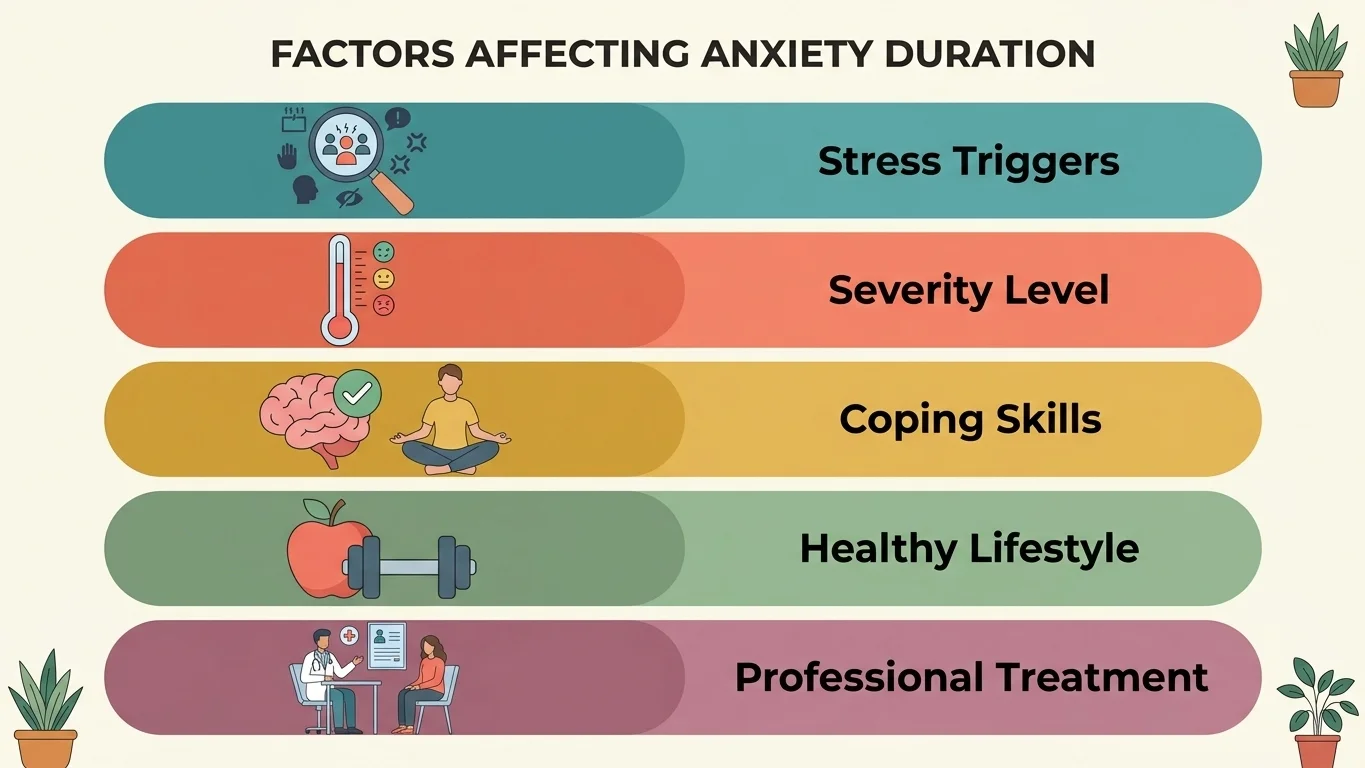
Many things can affect how long your anxiety lasts. What caused it, how severe it is, your coping habits, your daily routine, and whether you get help all play a part. Two people can have the same type of anxiety and still recover at very different speeds, simply because these factors are different for each of them.
The Cause of Your Anxiety
A short-term stressor, like an exam or a hard conversation, usually fades once that event is over. Your body calms back down naturally once the pressure is gone. Anxiety linked to ongoing stress, past trauma, or a diagnosed anxiety disorder works differently. There is no single moment when the stress ends, so it does not have a clear point to fade from on its own. This kind of anxiety often needs therapy or other professional support to actually improve.
Type and Severity of Anxiety
The type and severity of anxiety can greatly affect recovery time. Mild anxiety may improve within a few weeks with healthy coping strategies, while moderate or severe anxiety often requires more time and structured treatment. Different anxiety disorders, such as generalized anxiety disorder, social anxiety disorder, panic disorder, or specific phobias, each have unique symptoms and treatment approaches.
More severe anxiety may interfere with work, relationships, sleep, and daily activities, making recovery a longer process. With consistent treatment, however, many people experience significant improvement regardless of the type of anxiety they have.
Your Coping Skills
The coping skills you use can make a meaningful difference in how quickly you recover from anxiety. Healthy strategies such as deep breathing, mindfulness, regular exercise, journaling, or talking with someone you trust can help reduce stress and make anxious feelings easier to manage. These skills also build resilience, making it easier to handle future challenges.
On the other hand, avoiding problems, isolating yourself, or relying on unhealthy coping habits may allow anxiety to persist or become worse over time. Learning effective coping techniques through therapy can improve both short-term relief and long-term recovery.
Lifestyle Habits
Your daily lifestyle plays an important role in managing anxiety. Getting enough sleep, eating a balanced diet, staying physically active, and limiting caffeine and alcohol can all help regulate your mood and reduce anxiety symptoms. Even small, consistent healthy habits can have a positive impact on your mental well-being.
Poor sleep, chronic stress, lack of exercise, or excessive caffeine consumption can increase anxiety and make symptoms last longer. Maintaining a healthy routine supports your body’s ability to cope with stress and enhances the benefits of therapy or other treatments.
Getting Professional Treatment
Seeking professional treatment is one of the most effective ways to shorten the duration of anxiety. Therapies such as Cognitive Behavioral Therapy (CBT), along with medication when appropriate, can help reduce symptoms, teach healthy coping strategies, and address the underlying causes of anxiety. Early treatment often leads to faster improvement and better long-term outcomes.
Delaying treatment may allow anxiety to become more deeply rooted, making recovery more challenging. If anxiety is affecting your daily life, reaching out to a mental health professional can provide the guidance and support needed to regain control and improve your overall quality of life.
Can Anxiety Go Away on Its Own?
In some cases, yes. Anxiety caused by a temporary stressful event, such as an important exam, job interview, or major life change, may improve on its own once the situation has passed. As stress levels decrease, the anxious thoughts and physical symptoms often become less intense and gradually fade without the need for professional treatment.
However, anxiety that lasts for weeks, keeps returning, or begins to interfere with your daily life is less likely to go away without help. If your anxiety is affecting your work, relationships, sleep, or overall well-being, seeking support from a mental health professional can make a significant difference. Early treatment can help you understand the underlying causes of your anxiety, develop healthy coping skills, and prevent symptoms from becoming more severe over time.
What Are the Most Effective Treatments for Anxiety?
Anxiety is highly treatable, and the right treatment can help reduce symptoms, improve daily functioning, and support long-term recovery.
Cognitive Behavioral Therapy (CBT)
Cognitive Behavioral Therapy (CBT) is one of the most effective and widely recommended treatments for anxiety disorders. It helps you identify negative or unhelpful thought patterns that contribute to anxiety and replace them with healthier, more realistic ways of thinking. As you practice these new thinking patterns, you become better equipped to respond to stressful situations without feeling overwhelmed.
CBT also teaches practical coping skills, such as problem-solving, relaxation techniques, and strategies for managing anxious thoughts. These skills can help reduce anxiety symptoms over time and provide long-term tools for handling future challenges.
Medication
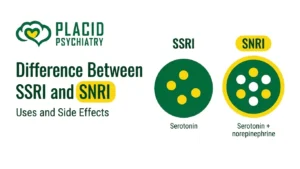
Medication may be recommended if anxiety is moderate to severe or is significantly affecting your daily life. Common medications, such as selective serotonin reuptake inhibitors (SSRIs) and serotonin-norepinephrine reuptake inhibitors (SNRIs), can help regulate brain chemicals involved in mood and anxiety, making symptoms more manageable.
Medication is often most effective when combined with therapy. While medication can reduce symptoms, therapy helps address the underlying causes of anxiety and teaches long-term coping strategies. A healthcare provider or psychiatrist can determine whether medication is appropriate based on your symptoms and medical history.
Lifestyle Changes
Healthy daily habits can play an important role in reducing anxiety and supporting recovery. Regular exercise, getting enough sleep, eating a balanced diet, and limiting caffeine and alcohol can all help improve your mood and make your body more resilient to stress. Even small lifestyle changes can have a positive impact when practiced consistently.
Although lifestyle changes alone may not treat an anxiety disorder, they can strengthen the benefits of therapy and medication. Maintaining healthy routines can also lower the risk of future anxiety episodes and improve your overall mental well-being.
Stress Management Techniques
Learning healthy ways to manage stress can help reduce both the intensity and duration of anxiety. Techniques such as deep breathing, mindfulness meditation, progressive muscle relaxation, and grounding exercises help calm your body’s stress response and bring your attention back to the present moment.
Practicing these techniques regularly, not just during anxious moments can improve your ability to cope with stress over time. Combined with therapy and healthy lifestyle habits, stress management techniques can help you feel more in control and make anxiety easier to manage in everyday life.
How to Cope While Anxiety Is Lasting

Coping with anxiety starts by focusing on simple, healthy habits that help calm your mind and body. Deep breathing, mindfulness, regular exercise, and getting enough sleep can all reduce stress and make anxious feelings easier to manage. Limiting caffeine and alcohol, eating balanced meals, and sticking to a daily routine can also improve your emotional well-being and help you feel more in control.
It’s also important to reach out for support instead of trying to handle anxiety alone. Talking with a trusted friend, family member, or mental health professional can provide reassurance and practical guidance. If your anxiety continues for several weeks, becomes overwhelming, or starts affecting your work, relationships, or daily life, seeking professional treatment can help you develop effective coping strategies and work toward long-term recovery.
Signs Your Anxiety Is Improving
As anxiety improves, you’ll often notice gradual changes in how you think, feel, and respond to everyday situations.
- You worry less often and with less intensity.
- Physical symptoms, such as a racing heart or muscle tension, become less frequent.
- You feel calmer in situations that once caused anxiety.
- You’re sleeping better and waking up feeling more rested.
- It’s easier to concentrate at work, school, or home.
- You avoid fewer situations because of fear or worry.
- You feel more confident using healthy coping skills.
- Your daily activities and relationships become easier to manage.
- You recover more quickly after stressful situations.
- You feel more hopeful and in control of your emotions.
When Should You Seek Professional Help?
You should consider seeking professional help if your anxiety lasts for several weeks, keeps coming back, or begins interfering with your daily life. Constant worry, trouble sleeping, difficulty concentrating, avoiding everyday activities, or physical symptoms that don’t improve are all signs that you may benefit from professional support.
A mental health professional can help identify the cause of your anxiety and recommend the right treatment, such as therapy, medication, or both. Getting help early can prevent symptoms from becoming more severe and improve your chances of long-term recovery.
Myths About How Long Anxiety Lasts
There are many misconceptions about how long anxiety lasts, but understanding the facts can help you set realistic expectations for recovery and treatment.
Myth: Anxiety Always Lasts Forever Anxiety is highly treatable. Many people see real, lasting improvement once they start therapy, medication, or both.
Myth: You Should Just Wait for It to Go Away Waiting often allows anxiety to grow stronger and more deeply rooted. Getting support early usually leads to faster relief.
Myth: Recovery Happens Overnight Recovery takes time and consistency. There is no single session or quick fix, but steady progress is very achievable.
Myth: Needing Help Means You’re Weak Reaching out for support takes self-awareness and strength. It is one of the most proactive steps a person can take for their own well-being.
Take the First Step Toward Anxiety Relief
You do not have to keep wondering how long this feeling will last. At Placid Psychiatry in Fullerton, CA, our team offers personalized anxiety treatment, including therapy and medication management, both in person and through telehealth across the country. Book your appointment with Placid Psychiatry today and start feeling like yourself again.
Conclusion
Anxiety does not last the same length of time for everyone, and that is okay. What matters most is understanding what is driving your anxiety and taking steps toward real relief instead of just waiting it out. With the right treatment, healthy habits, and support from people who understand, anxiety can be managed so it no longer controls your day. Placid Psychiatry is here to help you take that first step, whenever you are ready.
Frequently Asked Questions
How long does anxiety usually last?
Anxiety tied to a specific event usually fades within a few hours to a day. Anxiety linked to ongoing stress or a disorder can last for weeks or months if it is not treated. Getting the right support tends to shorten this timeline significantly.
Can anxiety last for months?
Yes. When anxiety is tied to an ongoing stressor, like a difficult job or health issue, or when it is part of a diagnosed anxiety disorder, it can last for months without treatment. Therapy and lifestyle changes often help shorten this timeline and bring real relief.
Can anxiety last all day?
Yes, especially with generalized anxiety, where worry can follow you throughout the day at a lower, more constant level rather than coming and going in short bursts. This kind of all-day anxiety often responds well to therapy and stress management techniques.
How long do anxiety attacks last?
Anxiety attacks typically build gradually and can last anywhere from a few minutes to a few hours, depending on the person and the trigger. This is different from a panic attack, which usually peaks quickly within about ten minutes.
Does anxiety ever go away completely?
For many people, anxiety can be managed so well that it barely affects daily life anymore. While it may show up occasionally during stressful times, most people find that with the right treatment, it stops controlling their day-to-day life.
What helps anxiety go away faster?
Therapy, especially Cognitive Behavioral Therapy, along with healthy sleep, regular exercise, and reduced caffeine intake, can all help anxiety improve faster. Working with a professional often speeds up recovery compared to trying to manage it alone.