
The main difference between Major Depressive Disorder (MDD) and Persistent Depressive Disorder (PDD) is how long the symptoms last and how severe they are. MDD causes strong symptoms that can affect daily life and last for at least two weeks. PDD has milder symptoms, but they continue for two years or longer.
Depression does not look the same for everyone. Some people go through short but intense periods of deep sadness, while others carry a low level of depression for years without it ever fully lifting. Both experiences are real, and both deserve proper care, but they are actually two different conditions with their own patterns and treatment paths.
At Placid Psychiatry in Fullerton, CA, we work with patients dealing with both major depressive disorder and persistent depressive disorder every week. Understanding which one you might be facing, or whether you are dealing with a mix of both, is the first step toward finding the right treatment. This guide breaks down what each condition looks like, how they differ, and what treatment options are available.
What Is the Difference Between Major Depressive Disorder and Persistent Depressive Disorder?
The biggest difference comes down to strength and length. Major depressive disorder, or MDD, brings on strong symptoms that show up in episodes, often lasting weeks or months at a time. Persistent depressive disorder, or PDD, brings milder symptoms that last much longer, often for years, without fully going away.
Some people deal with both conditions at once. When this happens, it is sometimes called double depression, where a milder, long lasting PDD is combined with a stronger MDD episode layered on top of it.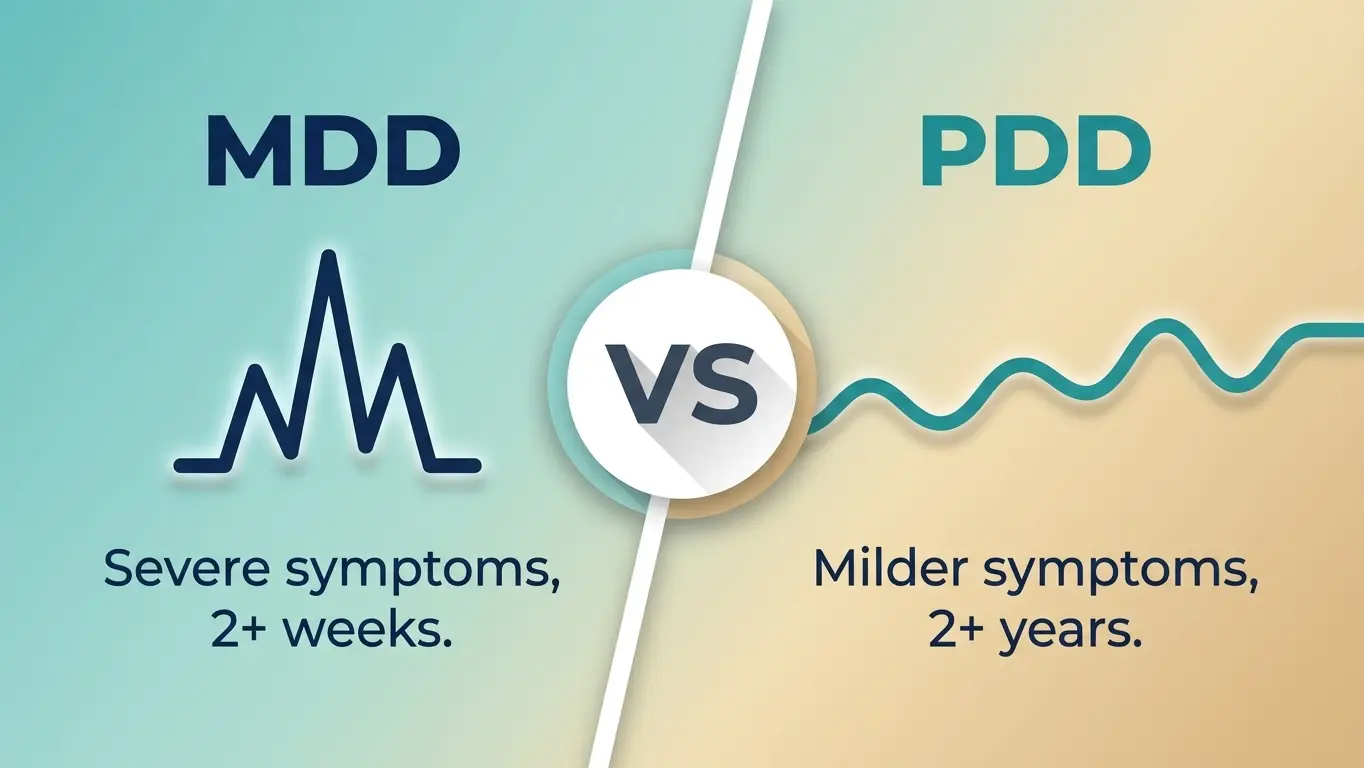
What Is Double Depression?
Double depression is a major depressive episode that occurs on top of existing persistent depressive disorder (dysthymia). In practice, this means a person who has felt a persistent low mood for years suddenly develops the more intense, disruptive symptoms of MDD while the underlying dysthymic disorder is still present.
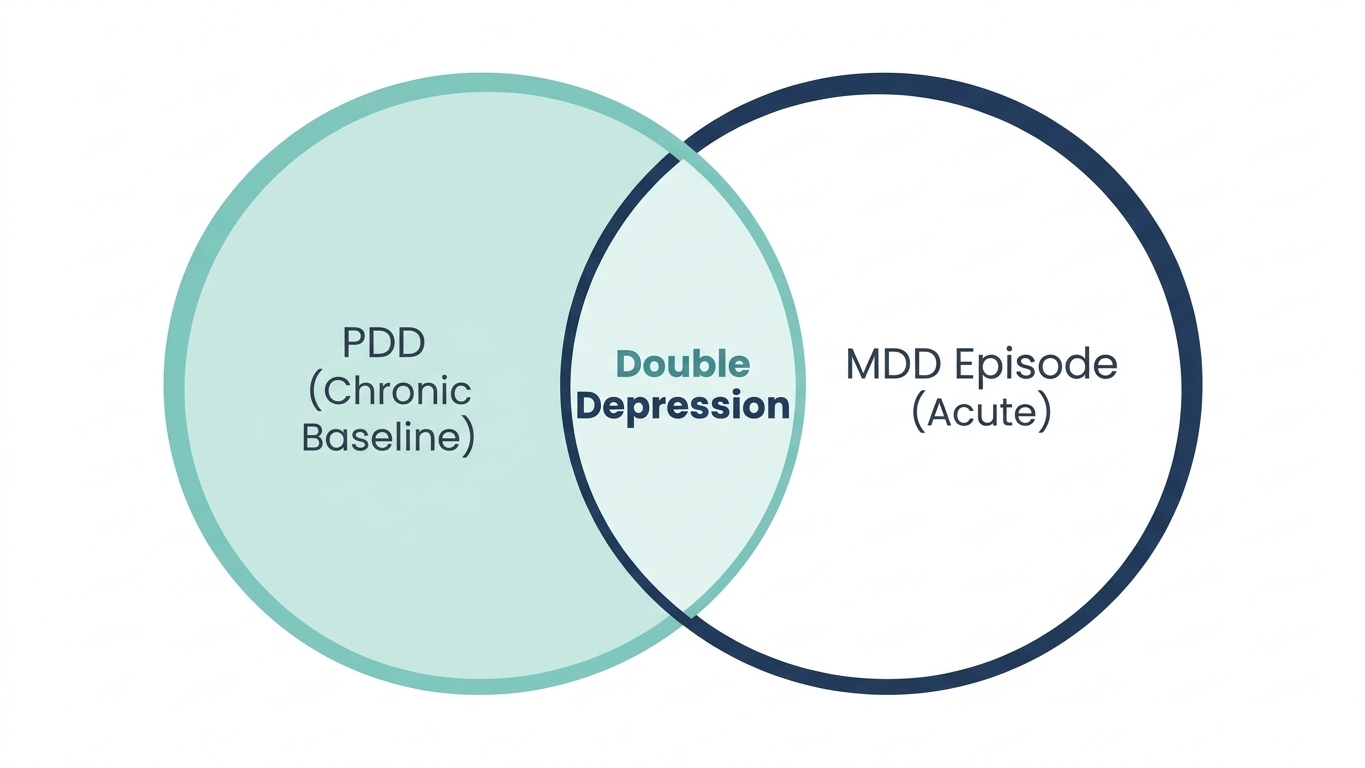
This combination is more common than many people realize. Because PDD symptoms are mild enough to become a person’s baseline, an MDD episode on top of it can feel especially destabilizing, since the person has less of a “normal” mood to return to once the acute episode passes. Recognizing double depression matters because treatment usually needs to address both layers, not just the more visible major depressive disorder episode.
Can Persistent Depressive Disorder Turn Into Major Depressive Disorder?
Yes, persistent depressive disorder can progress into major depressive disorder over time, especially if it goes untreated. This is different from double depression, which describes an MDD episode occurring alongside existing PDD. This question is about whether PDD itself can evolve into MDD.
Research suggests people with persistent depressive disorder have a meaningfully higher chance of developing a major depressive episode than the general population. Left untreated, the chronic, low grade symptoms of dysthymia can intensify, particularly during periods of added life stress, and cross the threshold into a full MDD episode. This is part of why early treatment for PDD matters even when symptoms feel manageable. Addressing chronic depression early can reduce the likelihood of it escalating into a more severe episode later.
What Is Major Depressive Disorder (MDD)?
Major depressive disorder is a mental health condition marked by intense feelings of sadness, hopelessness, or loss of interest that interfere with daily life. It usually appears in distinct episodes rather than as a constant, low level state.
Common Symptoms of Major Depressive Disorder
People with MDD, sometimes called clinical depression, typically experience:
- Persistent sadness or a sense of emptiness
- Loss of interest in activities once enjoyed
- Noticeable changes in appetite or weight
- Sleeping too much or too little
- Fatigue or low energy nearly every day
- Difficulty concentrating or making decisions
- Feelings of worthlessness or excessive guilt
- In more severe cases, thoughts of death or self-harm
Because these symptoms are intense, MDD often makes it difficult to function at work, in school, or in relationships during an episode.
How Long Does MDD Last?
A single episode of MDD typically lasts at least two weeks, though many episodes last several months if untreated. Some people experience only one episode in their life, while others have recurring episodes over time.
Who Is Most at Risk?
People with a family history of depression, those going through major life stress or trauma, and people with certain chronic health conditions face a higher risk of developing MDD. Hormonal changes and certain medications can also increase risk.
What Is Persistent Depressive Disorder (PDD)?
Persistent depressive disorder, also called dysthymia, is a chronic form of depression involving milder symptoms that last for an extended period, often two years or more in adults. Because the symptoms are less severe, many people mistake PDD for just having a naturally gloomy personality rather than a treatable condition.
Common Symptoms of Persistent Depressive Disorder
PDD, or dysthymia, produces symptoms that are usually milder than MDD but last far longer:
- Low or sad mood most of the day, more days than not
- Low energy or chronic fatigue
- Poor self-esteem
- Trouble concentrating or making decisions
- Appetite changes, eating too little or too much
- Sleep disturbances
- An underlying sense of hopelessness
Because these symptoms build gradually and rarely fully lift, many people living with this form of chronic depression assume it’s simply their personality rather than a treatable condition.
How Long Does PDD Last?
By definition, PDD lasts at least two years in adults, and one year in children and teens. Many people live with it for much longer before seeking help, since the symptoms can feel like a normal part of who they are.
Who Is Most at Risk?
Similar to MDD, family history plays a role in PDD risk. Early childhood stress, ongoing life difficulties, and certain personality traits, like a tendency toward negative thinking, are also linked to higher risk.
Persistent Depressive Disorder in Children and Teens
In children and teens, persistent depressive disorder is diagnosed after just one year of symptoms, compared to two years in adults, and often shows up as irritability rather than a clearly low mood. A two year window represents a much larger portion of a young person’s life, which is why the diagnostic threshold is shorter. Because the primary symptom is often irritability rather than sadness, it can easily be mistaken for typical adolescent moodiness or defiance rather than chronic depression.
Because dysthymia in young people often starts early and stretches on for years, it can quietly shape a child’s self-image, friendships, and academic performance before anyone recognizes it as a treatable condition. Parents and caregivers who notice a persistent pattern of irritability, low energy, or withdrawal lasting a year or more, rather than a passing phase, should consider a professional evaluation.
Major Depressive Disorder vs Persistent Depressive Disorder: Side-by-Side Comparison
Compare Major Depressive Disorder (MDD) and Persistent Depressive Disorder (PDD) to see how they differ in symptoms, duration, diagnosis, treatment, and daily life impact.
| Category | Major Depressive Disorder (MDD) | Persistent Depressive Disorder (PDD) |
| Symptom Severity | Intense and disruptive, often hard to function during an episode | Milder, but still noticeably affects daily life over time |
| Duration of Symptoms | Comes in episodes, usually weeks to months | Chronic, lasting two years or more |
| Daily Life Impact | Can make it hard to get out of bed or complete basic tasks | Creates a persistent low mood, though the person can often still function day to day |
| Causes and Risk Factors | Genetics, brain chemistry, and stress | Same overlapping causes, but more closely linked to early life stress and long term negative thinking |
| Diagnosis | Based on specific symptoms lasting at least two weeks | Based on milder symptoms lasting two years or more in adults |
| Treatment Options | Therapy, medication, or both | Therapy, medication, or both, often over a longer timeline |
| Long-Term Outlook | Often significant improvement within weeks to months | Usually requires ongoing management, though real improvement is still possible |
How Common Are MDD and PDD?
Major depressive disorder is diagnosed far more often than persistent depressive disorder, though PDD likely goes underreported because its chronic, milder symptoms are frequently mistaken for personality rather than a clinical condition.
According to the National Institute of Mental Health, an estimated 21 million U.S. adults, about 8.3% of the adult population, experienced at least one major depressive episode in 2021. MDD is roughly twice as common in women (10.3%) as in men (6.2%), and rates are highest among adults aged 18 to 25 (18.6%).
Persistent depressive disorder is far less common on paper, affecting an estimated 1.5% of U.S. adults in a given year, with a lifetime prevalence of around 2.5%, according to NIMH and Cleveland Clinic data. But because PDD symptoms build gradually and rarely fully resolve on their own, many cases likely go undiagnosed for years, which means the true prevalence of chronic depression in the population may be higher than official estimates suggest.
Common Symptoms Shared by MDD and PDD
Even though MDD and PDD differ in intensity and duration, they share many of the same underlying symptoms, which is part of why the two conditions can be hard to tell apart without a professional evaluation.
Emotional Symptoms
Both conditions can involve sadness, hopelessness, irritability, and a general sense that things will not get better. These feelings are not just passing moods. They tend to linger and color the way a person sees everyday situations, making even small setbacks feel much heavier than they actually are.
In MDD, this emotional weight often arrives suddenly and intensely, while in PDD it tends to sit quietly in the background for so long that a person may not realize how much it has shaped their outlook.
Physical Symptoms
Fatigue, changes in appetite, and sleep disturbances, whether sleeping too much or too little, are common in both conditions. Depression affects the body just as much as the mind, often leaving people feeling physically drained even after a full night of rest.
Appetite changes can go in either direction too, some people lose interest in food entirely, while others turn to eating as a way of coping, and both patterns can show up in either MDD or PDD.
Cognitive Symptoms
Trouble concentrating, indecisiveness, and difficulty remembering things are frequently reported in both MDD and PDD. This mental fog can make it harder to keep up at work or school, follow conversations, or make even simple decisions, like what to eat for dinner.
Because these symptoms build up gradually in PDD, people sometimes assume they are just naturally forgetful or indecisive, rather than recognizing it as a symptom of depression.
Behavioral Symptoms
Withdrawing from friends and family, losing interest in hobbies, and a drop in overall motivation can appear in both conditions. Someone who once enjoyed spending time with others or pursuing a favorite activity may start turning down invitations or letting hobbies fall away, often without fully realizing why.
Over time, this withdrawal can deepen feelings of isolation, which in turn can make the depression itself harder to shake, creating a cycle that professional treatment is often needed to break.
What Causes Major Depressive Disorder and Persistent Depressive Disorder?
There is rarely just one cause behind either condition. Most cases develop from a mix of biological, psychological, and life factors working together over time.
Genetics and Family History
Having a close family member with depression increases the likelihood of developing either condition, suggesting a genetic component to both. This does not mean depression is guaranteed to pass down, but it does mean that people with a parent or sibling who has struggled with depression should pay closer attention to their own mood and mental health over time.
Brain Chemistry
Imbalances in brain chemicals that regulate mood, like serotonin and dopamine, are linked to both MDD and PDD. These chemicals help control how the brain manages emotions, motivation, and pleasure, so when they are out of balance, it can directly affect how someone feels day to day, which is part of why medication is often an effective part of treatment.
Stress and Trauma
Major life stress, loss, or trauma can trigger an episode of MDD, while chronic, ongoing stress is more closely tied to the development of PDD. A sudden loss, like the death of a loved one or a job loss, can bring on an intense MDD episode fairly quickly, while years of steady pressure, like a difficult home environment or long term financial strain, tend to wear a person down more gradually into the pattern seen in PDD.
Chronic Medical Conditions
Long term health conditions, like chronic pain or thyroid disorders, are associated with a higher risk of both types of depression. Living with a condition that causes daily discomfort or limits your normal activities can take a real toll on mental health over time, and some medical conditions also directly affect brain chemistry in ways that make depression more likely.
Substance Use
Alcohol and drug use can both contribute to and worsen symptoms of depression, and can make diagnosis more complicated. Some people turn to alcohol or drugs as a way to cope with an existing low mood, but these substances often make depression symptoms worse over time, and can also mask or mimic symptoms in a way that makes an accurate diagnosis harder to reach.
Other Mental Health Conditions
Anxiety disorders, ADHD, and other mental health conditions frequently occur alongside both MDD and PDD, which can affect how symptoms show up and how treatment is approached. When two conditions overlap, symptoms can blend together in ways that make it harder to tell which condition is driving which symptom, which is why a thorough evaluation from a mental health provider is so important for getting the right diagnosis and treatment plan.
MDD and PDD vs. Other Types of Depression
MDD and PDD are two of several recognized depression types, alongside seasonal affective disorder, postpartum depression, and bipolar depression, each distinguished by timing, triggers, or accompanying symptoms.
- Seasonal Affective Disorder (SAD) is a pattern of depressive episodes tied to a specific season, most often winter, and typically resolves as the season changes. Unlike PDD, it isn’t continuous year round.
- Postpartum depression occurs after childbirth and involves symptoms similar to MDD, but tied specifically to the postpartum period rather than being chronic or recurring independently of it.
- Bipolar depression involves depressive episodes that alternate with periods of mania or hypomania, distinguishing it from both MDD and PDD, which don’t include manic episodes.
Understanding where MDD and PDD fit among these related conditions can help clarify why an accurate diagnosis, rather than a general label of “depression,” matters so much for choosing the right treatment path.
How Doctors Diagnose MDD and PDD?
Doctors use standardized criteria, primarily from the DSM-5, to diagnose both conditions based on symptom type, severity, and duration.
A physical exam and basic lab work help rule out medical conditions, like thyroid problems, that can mimic or contribute to depression symptoms.
A detailed conversation about mood, sleep, energy, and daily functioning helps a provider understand the full picture and determine which diagnosis, or combination of diagnoses, fits best.
Providers often use standardized screening tools, like the PHQ-9 questionnaire, alongside a clinical interview to gauge symptom severity and track changes over time.
DSM-5 Diagnostic Criteria: How Many Symptoms Are Required for MDD vs. PDD?
MDD requires five or more symptoms present nearly every day for at least two weeks, while PDD requires two or more symptoms plus a depressed mood most of the day for at least two years. Here’s how each threshold breaks down.
Major Depressive Disorder (MDD) diagnostic criteria: A diagnosis requires five or more symptoms present nearly every day for at least two weeks, and at least one of the five must be either depressed mood or loss of interest/pleasure (anhedonia). The full symptom list a doctor draws from includes:
- Depressed mood most of the day
- Loss of interest or pleasure in nearly all activities
- Significant weight or appetite change
- Insomnia or sleeping too much
- Psychomotor agitation or slowing that others can notice
- Fatigue or loss of energy
- Feelings of worthlessness or excessive guilt
- Reduced ability to concentrate or make decisions
- Recurrent thoughts of death or suicidal ideation
Persistent Depressive Disorder (PDD), also called dysthymia, diagnostic criteria: A diagnosis requires a depressed mood for most of the day, more days than not, for at least two years in adults (one year in children and teens), plus two or more of the following:
- Poor appetite or overeating
- Insomnia or hypersomnia
- Low energy or fatigue
- Low self-esteem
- Poor concentration or difficulty making decisions
- Feelings of hopelessness
Critically, for a PDD diagnosis, the person cannot have gone without symptoms for more than two months at a stretch during that two-year window. This is what separates chronic depression like PDD from a series of unrelated MDD episodes.
Is Persistent Depressive Disorder More Dangerous Than It Sounds?
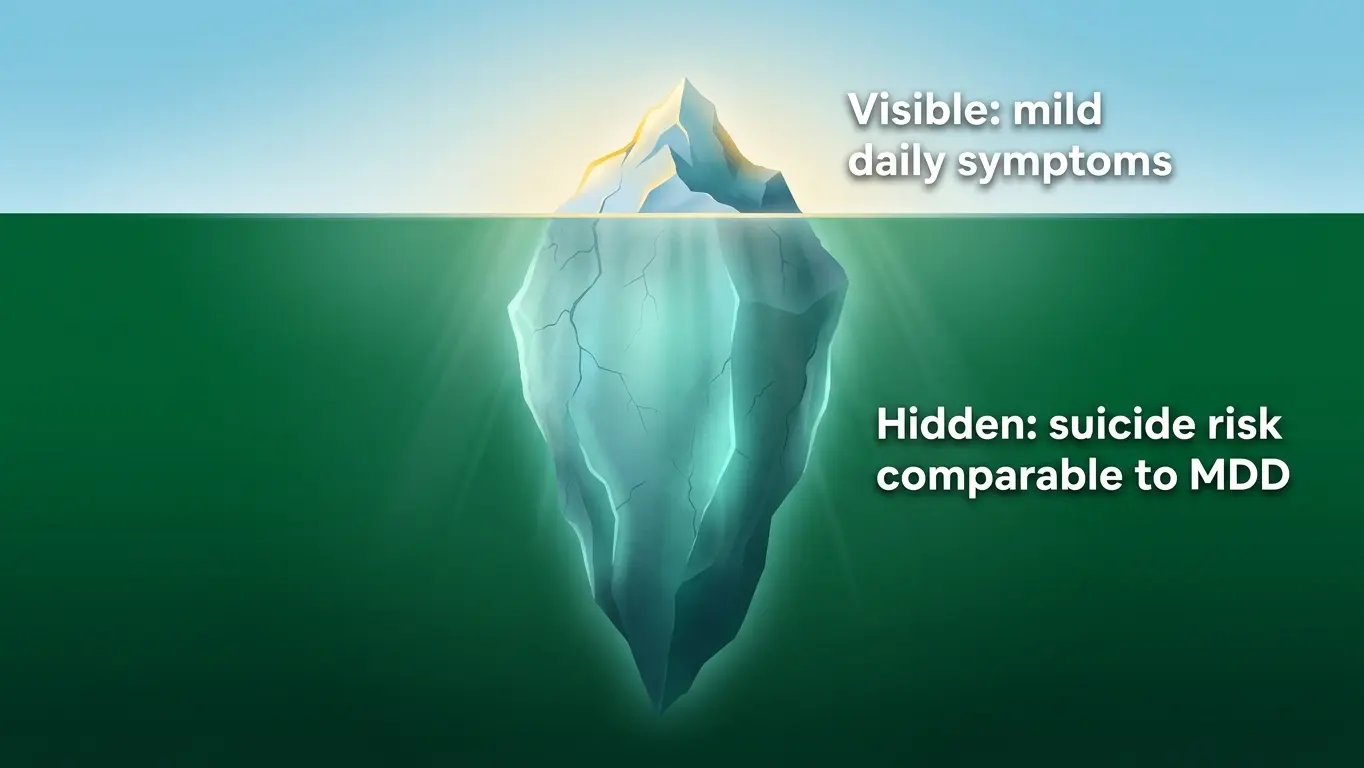
Yes. Despite milder day-to-day symptoms, people with persistent depressive disorder face a risk of suicidal thoughts and behavior comparable to, and in some cases higher than, those with major depressive disorder. Functional impairment, the day-to-day toll on work, relationships, and self-care, can also be just as severe as what’s seen in MDD, even though the individual symptoms are less intense. This finding is documented in clinical literature, including NCBI’s StatPearls resource.
A few reasons this risk gets overlooked:
- Underdiagnosis. Because symptoms are chronic rather than episodic, PDD is often mistaken for personality rather than a clinical condition, so it goes untreated far longer than MDD.
- Normalization. People who have lived with low-grade depression for years may not recognize their baseline as something treatable.
- Cumulative burden. Even mild symptoms sustained over years can erode resilience, relationships, and coping capacity in ways a shorter, more intense MDD episode may not.
This is exactly why professional evaluation matters regardless of how “mild” chronic symptoms may feel; persistence, not intensity, is often the bigger warning sign.
Treatment Options for Major Depressive Disorder and Persistent Depressive Disorder
Talk therapy, especially cognitive behavioral therapy, helps patients identify negative thought patterns and build healthier coping strategies for both conditions. Medications can help correct the brain chemistry imbalances linked to depression, and are often used alongside therapy for the best results.
Regular exercise, consistent sleep, and reduced alcohol use can meaningfully support treatment and improve overall mood over time. Many patients see the best results from combining therapy and medication, rather than relying on just one approach alone.
For depression that does not respond to standard treatment, options like Spravato, or esketamine, offer another path forward for patients who have not found relief through medication and therapy alone.
For PDD specifically, a specialized approach called Cognitive Behavioral Analysis System of Psychotherapy (CBASP) was developed for chronic depression and is one of the few therapies studied specifically for this condition. Combined with medication, CBASP has shown notably strong response rates in clinical trials, making it worth discussing with your provider if standard therapy alone hasn’t provided enough relief from long-standing symptoms.
Living With Major Depressive Disorder or Persistent Depressive Disorder
Consistent sleep, regular movement, and a balanced diet all support better mental health and can make symptoms easier to manage day to day. Staying connected to friends, family, or support groups helps reduce the isolation that often comes with depression.
Ongoing check ins with a mental health provider help track progress and adjust treatment as needed, especially for the longer lasting nature of PDD. Continuing therapy or medication even after symptoms improve, along with staying alert to early warning signs, helps reduce the chance of depression returning.
When Should You Seek Professional Help?
Thoughts of self harm or suicide, a sudden worsening of symptoms, or an inability to care for yourself or your basic needs all call for immediate professional help. Your first visit usually involves a detailed conversation about your symptoms, history, and daily life, giving your provider the information needed to recommend the right next steps.
Talk to Placid Psychiatry in Fullerton, CA
If you think you might be dealing with major depressive disorder, persistent depressive disorder, or a mix of both, you do not have to figure it out alone. The team at Placid Psychiatry in Fullerton, CA offers thorough evaluations and personalized treatment plans, whether you prefer an in-person visit or telehealth from home. Contact us today to schedule an appointment and take the first step toward feeling like yourself again.
Conclusion
Major depressive disorder and persistent depressive disorder are different conditions, but both are real, treatable, and nothing to feel ashamed of. Whether your symptoms come in intense waves or have quietly stuck around for years, understanding what you are dealing with is the first step toward feeling better. With the right diagnosis and a treatment plan built around your specific needs, meaningful improvement is possible.
Frequently Asked Questions
Is Persistent Depressive Disorder Worse Than Major Depressive Disorder?
Not necessarily worse, just different. MDD tends to be more intense but shorter, while PDD is milder but lasts much longer, and both can significantly affect quality of life.
Can You Have Both MDD and PDD at the Same Time?
Yes, this is sometimes called double depression, where a person with existing PDD experiences a more severe MDD episode layered on top of it.
Which Condition Lasts Longer?
PDD lasts longer by definition, requiring at least two years of symptoms in adults, while MDD episodes typically last weeks to months.
Can Major Depressive Disorder Become Persistent Depressive Disorder?
While they are separate diagnoses, ongoing or poorly managed MDD symptoms can sometimes evolve into a more chronic pattern that overlaps with PDD, which is part of why early treatment matters.
Are the Treatments for MDD and PDD the Same?
The general approach, therapy and medication, is similar for both, though treatment for PDD often requires a longer term commitment given how long the condition typically lasts.
Can Depression Go Away Without Treatment?
Some MDD episodes do improve on their own over time, but treatment significantly speeds up recovery and reduces the risk of future episodes. PDD rarely resolves without some form of treatment, given its chronic nature.
What Lifestyle Changes Can Help Manage Depression?
Regular exercise, consistent sleep, reduced alcohol use, and staying socially connected can all meaningfully support recovery alongside professional treatment.
How Long Does Recovery Usually Take?
Recovery timelines vary widely. Some people notice improvement within weeks of starting treatment, while others, especially those with PDD, may need several months or longer of consistent care to see lasting change.