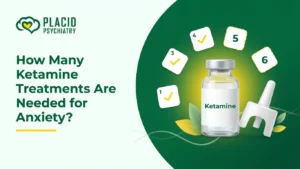

Most people need 6 ketamine treatments for depression. These 6 sessions happen over 2 to 3 weeks. After that, some people come back for extra sessions every few weeks to stay well. The total number is different for each person. It depends on how serious your depression is and how your body responds to the treatment. Ketamine is not like other depression medicines. Most medicines take 4 to 8 weeks before you feel any change. Ketamine works much faster. Many people start to feel better within a few hours or days after their first session. This is why doctors often recommend ketamine for people whose other medicines did not work. These people are said to have treatment-resistant depression.
Ketamine is not a pill you take at home. It is given in a clinic by a trained doctor. The sessions are safe and supervised. You sit in a quiet room while the medicine is given through an IV. Most sessions last about 40 minutes. At Placid Psychiatry in Fullerton, CA, we build a personal treatment plan for every patient. No two plans are the same. In this article, we explain how many sessions most people need, what happens during each visit, and how ketamine can work alongside your other treatments to help you feel better for the long term.
What Ketamine Is and How It Works in the Brain
Ketamine was first approved as an anaesthetic in the 1960s and has been used in hospitals for decades. Over time, doctors noticed that some patients experienced rapid relief from depression symptoms after receiving ketamine, even within hours.
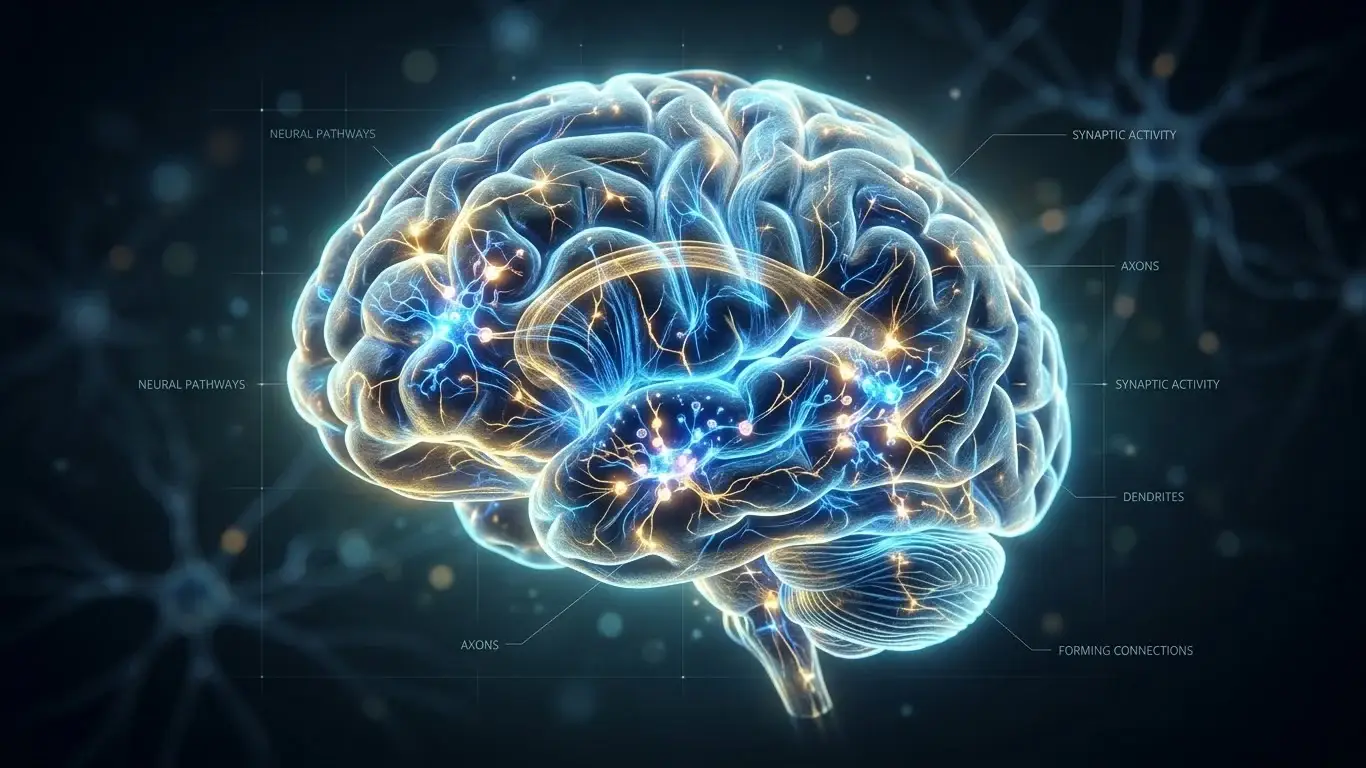
Unlike traditional antidepressants that mainly affect serotonin or dopamine, ketamine works on the brain’s glutamate system. It helps the brain form new connections between cells, a process linked to improved mood and thinking. Researchers believe this is one reason ketamine may work faster than many other depression treatments.
Why Ketamine Is Used for Treatment-Resistant Depression
Doctors typically consider ketamine when a patient has tried at least two antidepressants without getting meaningful relief. This is called treatment-resistant depression, and it affects roughly one-third of people diagnosed with major depression. For these patients, the usual medications either stop working or never work at all. Ketamine offers a different mechanism and, crucially, a much faster response.
Ketamine vs Traditional Antidepressants
A standard antidepressant like an SSRI can take six to eight weeks to show results. And for many people, even after waiting that long, the improvement is partial. Ketamine can produce noticeable relief within hours to a few days after the first session. That speed matters enormously for people who are struggling with severe or long-standing depression.
The trade-off is that ketamine requires in-clinic sessions and ongoing maintenance, while a pill is easier to manage daily. Neither approach is better for everyone. They work in different ways, and many patients eventually use both together.
How Many Ketamine Treatments Are Usually Needed?
The number of ketamine treatments needed for depression depends on several things. These include how long you have had depression, how severe your symptoms are, and how your brain responds after the first few sessions. That said, most patients follow a similar starting plan.
What Happens During the Ketamine Induction Phase
 The induction phase is the starting period of ketamine treatment. During this phase you receive 6 IV ketamine infusions over 2 to 3 weeks. Sessions are usually scheduled 3 times a week with rest days in between. Each session lasts around 40 minutes. The ketamine dose used for depression is typically 0.5 mg per kg of body weight, given slowly through an IV drip.
The reason sessions are spaced this way is important. Spreading them too far apart reduces the cumulative effect of the treatment. Each session builds on the one before it. By the time you reach your fourth or fifth infusion, most patients begin to notice a real shift in how they feel.
How Many Ketamine Sessions Do Most Patients Need
Most patients begin with 6 ketamine sessions. Some clinics may start with 4 depending on the severity of symptoms. Research consistently shows that multiple sessions over a short period produce better results than a single infusion. A single ketamine treatment for depression rarely provides lasting relief on its own.
This table gives a general picture of how many sessions different patients typically need.
| Patient Type | Recommended Sessions |
|---|---|
| First-time ketamine patient | 6 infusions over 2 to 3 weeks |
| Severe or long-term depression | 6 to 8 infusions plus regular booster sessions |
| Mild to moderate depression | 4 to 6 infusions plus optional boosters |
| Symptoms returning after remission | Monthly ketamine booster infusions as needed |
These numbers are starting points, not fixed rules. Your psychiatrist will adjust your plan based on how you respond after each session.
When Do You Need Ketamine Booster Infusions
After completing the induction phase, treatment does not simply end. Most patients move into a maintenance schedule where they return for ketamine booster infusions to keep the benefits going. The typical window between boosters is 4 to 6 weeks, though this varies from person to person. Some patients go 2 to 3 months between sessions. Others need more frequent visits early on.
Over time many patients find they need booster sessions less and less as their overall mental health stabilizes. A small number of patients maintain their results without any further sessions after the initial series.

Ketamine Treatment Phases Explained
Ketamine treatment is usually divided into different phases to help manage symptoms, track progress, and maintain long-term results.
Induction Phase (First 2 to 3 Weeks)
This is the active starting period. You receive six infusions over two to three weeks, with each session building on the previous one. Most providers monitor your response closely during this phase, adjusting the schedule if needed. The induction phase is designed to deliver rapid and meaningful relief from depressive symptoms.
Continuation Phase
After completing the induction series, your provider evaluates your response. If you have improved significantly, you move into a continuation phase. This is a transitional period between the intensive start and long-term maintenance. Sessions during this phase are spaced further apart, typically every few weeks, to prevent relapse while reducing the frequency of visits.
Maintenance Phase (Long-Term Care)
The maintenance phase is different for everyone. Others come in every two or three months. A small number of patients maintain their results without any further sessions after the initial series. There is no fixed endpoint for maintenance because depression is a chronic condition for many people, and the goal is sustainable wellbeing rather than a set number of appointments.
Who Is a Good Candidate for Ketamine Infusion Therapy
Ketamine infusion therapy is not the first treatment doctors suggest. It is usually considered after other options have not worked. But for the right person, it can make a real difference.
Most people who benefit from ketamine treatment have already tried two or more antidepressants without feeling better. They may have been told they have treatment-resistant depression. Their symptoms may be severe enough to affect their work, relationships, or ability to get through the day. Some are dealing with anxiety or PTSD alongside depression. Others are experiencing suicidal thoughts and need something that works faster than a pill that takes weeks to kick in.
One important thing to know. Ketamine does not replace your existing care. It works alongside therapy and medication to give your brain the reset it needs. Many patients at Placid Psychiatry describe it as the point where things finally started to shift.
If you are unsure whether ketamine depression treatment is right for you, our psychiatric team in Fullerton, CA will do a full evaluation before recommending anything. There is no pressure and no guesswork. Explore our depression treatment, PTSD treatment, and anxiety treatment pages to learn about your full options.
Factors That Affect Your Ketamine Treatment Schedule
Severity and duration of depression. Someone who has had severe depression for five years will likely need more sessions than someone dealing with a recent episode. The longer and deeper the depression, the more time the brain needs to reset and rebuild healthy patterns.
Severity and duration of depression.
Someone who has had severe depression for five years will likely need more sessions than someone dealing with a recent episode. The longer and deeper the depression, the more time the brain needs to reset and rebuild healthy patterns.
How your body responds to ketamine.
Ketamine therapy response is not the same for everyone. Some people feel a noticeable lift after their second infusion. Others need to complete the full induction course before the effects become clear. Your metabolism, age, and brain chemistry all play a role in this.
Co-occurring conditions.
Depression rarely comes alone. If you are also managing anxiety disorder, PTSD, chronic pain, or bipolar disorder, your ketamine infusion schedule may need more time to stabilize. This is not a setback. It just means your plan needs more precision, which is exactly what our psychiatrists are trained to provide.
Type of ketamine treatment.
IV ketamine infusions deliver the most controlled and researched form of the treatment. Spravato, the FDA-approved esketamine nasal spray, is another option with strong clinical backing and better insurance coverage. At-home oral ketamine products exist but are far less studied and generally produce weaker results than in-clinic ketamine therapy. For the best outcomes, supervised in-clinic treatment is always recommended.
Effectiveness of Ketamine for Depression
Ketamine has shown strong results for people with treatment-resistant depression who have tried multiple antidepressants without success. Research shows a response rate of around 70 percent, higher than standard antidepressants in similar cases. Most patients notice improvement within hours to a few days after the first session, much faster than traditional medications.
Those who respond best are usually patients without a history of psychosis or active substance use disorder who complete the full treatment series. Ketamine is not a cure and does not work for everyone, but it can open a window of neuroplasticity in the brain, which is why combining it with therapy often gives stronger and longer-lasting results.
Side Effects and Safety of Ketamine Therapy
Like any medical treatment, ketamine therapy can cause side effects and should only be used under proper medical supervision to ensure safety.
Common Short-Term Side Effects
During and just after a session, patients may experience a mild dissociative effect, meaning the world can feel slightly dreamlike or detached. Dizziness, nausea, and blurred vision are also common. These effects typically pass within one to two hours after the infusion ends. Most patients find these side effects manageable and some describe the dissociative experience as interesting or even calming.
Long-Term Risks
Among the most important long-term concerns is bladder dysfunction, which has been reported in people who use high ketamine dose for depression recreationally over long periods. In clinical settings, with controlled dosing and supervised schedules, this risk is very low. A large survey of ketamine providers treating over 6,000 patients found that serious adverse events requiring stopping treatment occurred in less than 1% of cases.
Is Ketamine Addictive?
Ketamine does have abuse potential, particularly when used recreationally in high doses. In a clinical setting, the ketamine doses for depression are much lower and the sessions are supervised, which significantly reduces this risk. Maintenance sessions are not the same as dependence. Your provider will monitor your usage and can adjust the schedule if any concerns arise.
What to Expect During Ketamine Treatment
Walking into your first ketamine session can feel uncertain, especially if you have never experienced anything like it before. Before the infusion begins, your provider will review your health history, current medications, and mental health status. You will usually be asked to fast for a few hours beforehand and avoid caffeine on treatment days.
The infusion itself typically lasts around 40 minutes. You will be in a comfortable, quiet setting with soft lighting, and many clinics use eye masks and calming music to support the experience. You will remain awake throughout but may feel a gentle sense of detachment from your surroundings.
Ketamine Therapy vs Other Depression Treatments
Ketamine therapy differs from traditional depression treatments because it often works faster and targets different brain pathways than standard antidepressants.
Antidepressants vs Ketamine
Antidepressants are taken daily and require weeks to show results. They work on serotonin and related systems. Ketamine works on glutamate, produces results within hours, and is given in sessions rather than daily doses. Both have a role in treating depression, and they can be used alongside each other safely.
Therapy vs Ketamine-Assisted Therapy
Therapy alone is often slow-going for people with severe depression. Ketamine can create a window of neuroplasticity where therapy becomes more effective because the brain is more open to forming new patterns. Ketamine-assisted psychotherapy, where therapy sessions are scheduled around infusions, is a growing approach that many clinics now offer.
Combination Treatments
The most effective long-term outcomes tend to come from combining ketamine with ongoing psychotherapy, lifestyle changes like exercise and sleep hygiene, and in some cases continued antidepressant medication. No single treatment works best in isolation for most people.
Take the Next Step Toward Real Relief
If depression has been controlling your life and standard treatments have not worked, ketamine therapy at Placid Psychiatry in Fullerton, CA may be the right path forward. We offer personalised psychiatric care for treatment-resistant depression with both ketamine and Spravato options available. Reach out today and take the first step.
Conclusion
Depression does not respond the same way for everyone, and neither does its treatment. For people who have not found relief with standard antidepressants, ketamine offers a faster and fundamentally different approach. Most patients start with six sessions and continue with maintenance care based on their response. It is not a cure, but for many it is the most meaningful relief they have found.
Frequently Asked Questions
How many ketamine treatments are needed for depression?
Most people start with about six infusions over two to three weeks. After that, booster sessions are usually given every four to six weeks, depending on how the person responds and improves.
How long do ketamine results last?
After the first treatment series, results may last from several weeks to a few months. Patients who continue with booster sessions often maintain benefits for much longer, sometimes a year or more. Combining ketamine with therapy tends to extend the results significantly.
Is ketamine safe for long-term use?
Studies show that ketamine can be safe when used under medical supervision. Side effects are usually mild, and doctors monitor patients closely during treatment.
Can ketamine cure depression permanently?
Ketamine is not a permanent cure, but it can lead to long-term relief for some people, especially when combined with therapy and ongoing care. Some may need occasional maintenance treatments.
Is ketamine treatment available near me?
Ketamine therapy, including Spravato (esketamine), is available at Placid Psychiatry in Fullerton, CA. Telehealth options are also available across all 50 states for evaluation and treatment planning.
Medical Disclaimer
The information in this article is for general educational purposes only. It is not medical advice and should not replace a conversation with your doctor or psychiatrist. Ketamine therapy requires a full clinical evaluation before it is prescribed. If you or someone you know is in a mental health crisis, call or text 988 (Suicide and Crisis Lifeline) right away.