
The symptoms of childhood trauma in adulthood can sometimes be difficult to recognize. You may struggle with anxiety, low self-esteem, trust, relationships, sleep, or strong reactions to stress without knowing where these patterns come from. Difficult experiences during childhood can sometimes continue to affect the way a person thinks, feels, behaves, and responds to situations later in life.
These effects do not look the same for everyone. At Placid Psychiatry in Fullerton, CA, understanding your experiences with a mental health professional can help you identify patterns, learn healthier coping skills, and explore appropriate support.
What Is Childhood Trauma?
Childhood trauma refers to experiences that feel deeply distressing, frightening, or overwhelming during childhood. These may include abuse, neglect, domestic violence, serious family conflict, the loss of someone important, or living in an unsafe or unstable environment.
While normal childhood stress can often be managed with enough safety and support, trauma may occur when an experience feels threatening and the child does not have the resources to cope with it. Childhood trauma can result from one major event or repeated difficult experiences over time.
Emotional abuse and neglect can also have lasting effects, even when there are no physical injuries. However, not everyone who experiences childhood trauma develops long-term problems, as family support, relationships, coping skills, and later life experiences can all influence how a person responds.
What Are the Symptoms of Childhood Trauma in Adulthood?
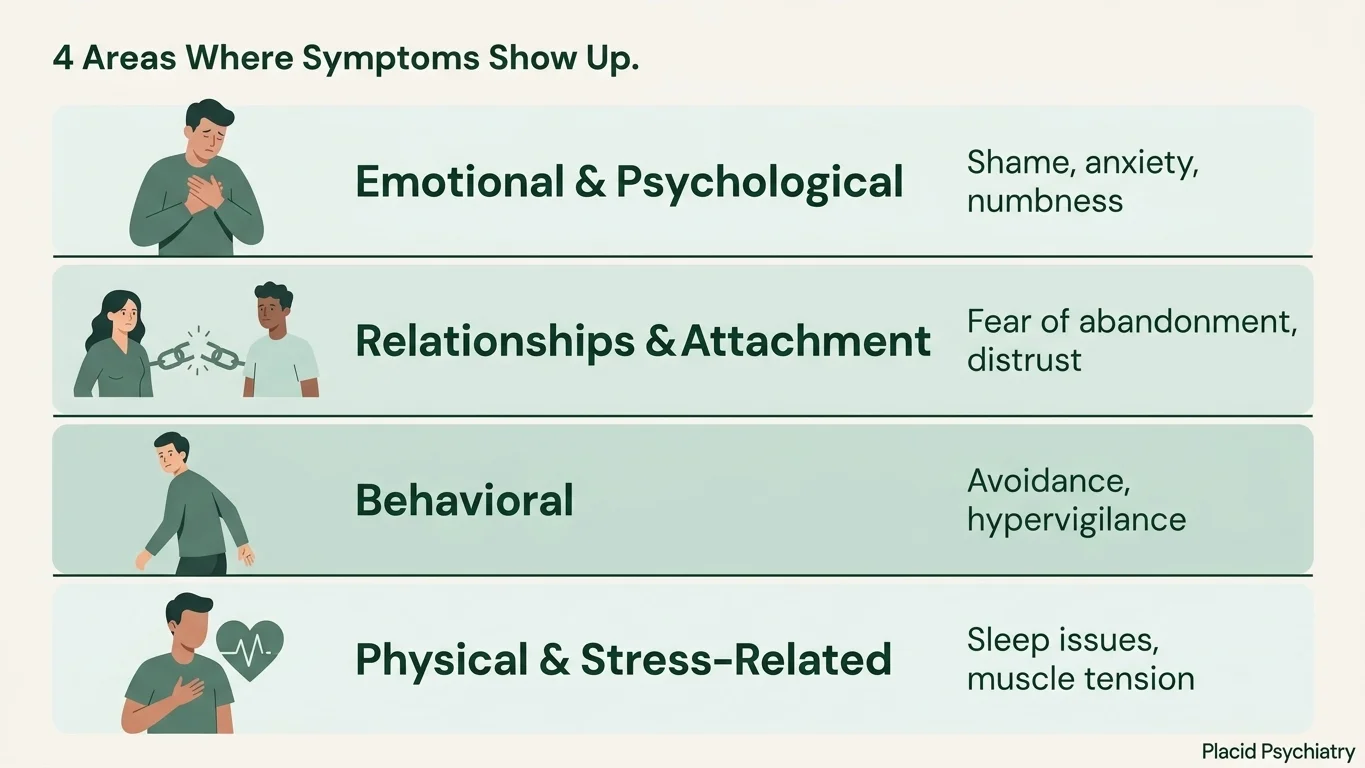
Symptoms can appear emotionally, physically, behaviorally, or in relationships, and they may become more noticeable during stress, conflict, major life changes, or close relationships.
| Symptom area | Possible signs in adulthood |
| Emotional and psychological | Persistent shame or guilt, anxiety, excessive fear, emotional numbness, difficulty managing emotions, low self-esteem, or a negative self-image |
| Relationships and attachment | Fear of abandonment, difficulty trusting others, people-pleasing, trouble setting boundaries, or repeated unhealthy relationship patterns |
| Behavioral | Avoiding certain people or situations, difficulty expressing needs, self-sabotaging behaviors, hypervigilance, need for control, or unhealthy coping habits |
| Physical and stress-related | Sleep difficulties, muscle tension, feeling constantly on edge, recurring physical complaints, or strong physical reactions to stress |
Having one or more of these signs does not automatically mean that childhood trauma is the cause. Similar symptoms can occur with anxiety, depression, stress, relationship problems, and other mental health concerns.
How Childhood Trauma Can Affect Adults
Childhood trauma can influence the way a person responds to stress, relationships, emotions, and everyday challenges later in life. These effects vary from person to person and may become more noticeable during difficult periods, major life changes, or close relationships.
Mental and Emotional Well-Being
Early traumatic experiences may affect emotional regulation and the way you respond to stressful situations. Some adults experience anxiety, persistent shame, emotional numbness, anger, or difficulty calming down after becoming upset.
These experiences do not automatically mean that someone has a specific mental health condition. Emotional difficulties can develop for many reasons, and a professional evaluation can help identify contributing factors.
Relationships and Attachment
Childhood experiences can shape expectations about trust, safety, and closeness. Adults who experienced unstable or unsafe relationships early in life may find it difficult to rely on others, communicate openly, or feel secure in close relationships.
These patterns can affect friendships, romantic relationships, family connections, and the way a person responds to conflict or emotional vulnerability.
Self-Esteem and Sense of Self
Repeated criticism, neglect, rejection, or emotional instability during childhood may influence how a person views themselves later in life. Some adults may struggle with self-confidence, feel overly responsible for others, or question whether their own needs are important.
Over time, these beliefs can affect decision-making, personal goals, relationships, and the ability to advocate for yourself.
Stress and Physical Well-Being
Long-term exposure to stressful childhood environments may influence how the body responds to perceived danger. Some adults remain highly alert during stressful situations or experience sleep difficulties, muscle tension, restlessness, or strong physical stress reactions.
Because these symptoms can have many causes, persistent physical concerns should also be discussed with an appropriate healthcare professional.
Childhood Trauma vs. PTSD: What’s the Difference?
Childhood trauma and post-traumatic stress disorder are connected, but they are not the same thing. Childhood trauma describes an experience or history of difficult experiences. PTSD is a specific mental health condition with diagnostic criteria.
| Feature | Childhood trauma | PTSD |
| What it means | A distressing, frightening, or overwhelming experience during childhood | A mental health disorder that can develop after exposure to trauma |
| Is it a diagnosis? | No, childhood trauma itself is not a diagnosis | Yes, PTSD is a recognized mental health condition |
| Can symptoms occur? | Yes, a person may experience emotional, behavioral, relationship, or physical effects | Yes, symptoms may include intrusive memories, avoidance, mood changes, and increased arousal |
| Does everyone develop it? | No. People respond to childhood trauma differently | No. Not everyone exposed to trauma develops PTSD |
| Can professional help be useful? | Yes, especially when past experiences affect daily life | Yes, professional treatment can help manage PTSD symptoms |
Why Can Childhood Trauma Show Up in Adulthood?
It can be confusing when experiences from childhood seem connected to problems later in life. You may wonder why something that happened years ago still affects you. There are several possible explanations.
Learned Coping and Survival Responses
Children develop ways to cope with difficult environments. For example, staying quiet may have helped avoid conflict. Pleasing others may have helped maintain a sense of safety. Constantly watching other people’s behavior may have helped a child know when something was wrong.
These responses may have been useful at the time. However, they may continue into adulthood even when the original situation is no longer present.
Triggers and Emotional Reactions
Certain situations can remind you of earlier experiences. A raised voice, criticism, rejection, conflict, or feeling ignored may cause a strong emotional or physical response.
The reaction can happen quickly because the brain may connect the current situation with something that felt threatening in the past.
Attachment and Early Relationships
Children learn about trust and relationships through their early connections with caregivers and other important people.
When those relationships are unpredictable, unsafe, or emotionally unavailable, a person may have difficulty understanding what a safe relationship looks like later. This can affect trust, closeness, communication, and expectations in adult relationships.
Avoidance and Suppressed Emotions
Avoiding painful thoughts or feelings can provide short-term relief. However, avoiding difficult emotions may make it harder to understand them or respond to them in healthy ways. Some people keep painful experiences buried for years. Stress, major life changes, or relationship problems may later make these feelings more noticeable.
How Do You Know If Your Struggles May Be Connected to Childhood Trauma?
A symptom list cannot tell you whether childhood trauma is the cause of what you are experiencing. Instead, it may be more useful to notice patterns that repeatedly appear in your emotions, relationships, reactions, and coping habits.
Notice When Reactions Feel Stronger Than the Situation
Pay attention to situations that create unusually intense emotional or physical reactions. Criticism, conflict, rejection, or feeling ignored may sometimes lead to fear, anger, shutting down, or an urge to leave the situation. The reaction itself does not prove that trauma is involved, but repeated patterns may be worth exploring.
Look for Patterns Across Different Relationships
Consider whether similar difficulties appear in multiple relationships rather than in just one situation. You might notice that you regularly expect rejection, avoid depending on others, struggle to express your needs, or become uncomfortable when relationships feel uncertain. Looking at patterns over time can provide more useful information than focusing on one isolated experience.
Pay Attention to Automatic Coping Responses
Some coping habits can happen automatically. You may withdraw during conflict, seek frequent reassurance, keep emotions to yourself, or try to control situations when you feel uncertain.
Ask whether these responses are helping you in your current life or whether they are creating additional stress or relationship difficulties.
Consider How Much These Patterns Affect Daily Life
The most important question is often how much these difficulties interfere with your well-being. If emotional reactions, relationship patterns, or coping habits regularly affect your work, sleep, relationships, or daily responsibilities, professional support may be helpful.
A mental health professional can help you explore possible causes without assuming that every difficulty comes from childhood trauma.
How Is Childhood Trauma Treated in Adults?
Treatment depends on your experiences, symptoms, needs, and personal goals. A mental health professional can help you understand your concerns and determine which approach may be appropriate.
Trauma-Focused Psychotherapy
Trauma-focused psychotherapy helps people understand and address the effects of traumatic experiences.
Treatment may focus on emotional regulation, coping skills, relationships, safety, and processing difficult experiences. The goal is not to force you to revisit painful memories before you are ready. Therapy should move at a pace that supports your needs and sense of safety.
Cognitive Behavioral Therapy (CBT)
Cognitive Behavioral Therapy, or CBT, focuses on the connection between thoughts, feelings, and behaviors. It can help you identify unhelpful thinking patterns and learn healthier ways to respond to stressful situations. CBT may also help you develop practical skills for managing anxiety, negative thoughts, and difficult emotions.
Eye Movement Desensitization and Reprocessing (EMDR)
Eye Movement Desensitization and Reprocessing, commonly called EMDR, is a structured therapy approach used to treat trauma-related difficulties, including PTSD.
It may help some people process distressing memories and reduce the emotional intensity connected to them. A qualified mental health professional can determine whether EMDR is appropriate for your needs.
Coping and Grounding Strategies
Therapy may also include practical skills that you can use in everyday life. Grounding exercises can help you focus on the present moment when you feel overwhelmed.
Breathing exercises, relaxation techniques, healthy routines, and emotional awareness may also support stress management. These skills do not replace professional treatment, but they can be useful tools during recovery.
Can Adults Heal From Childhood Trauma?
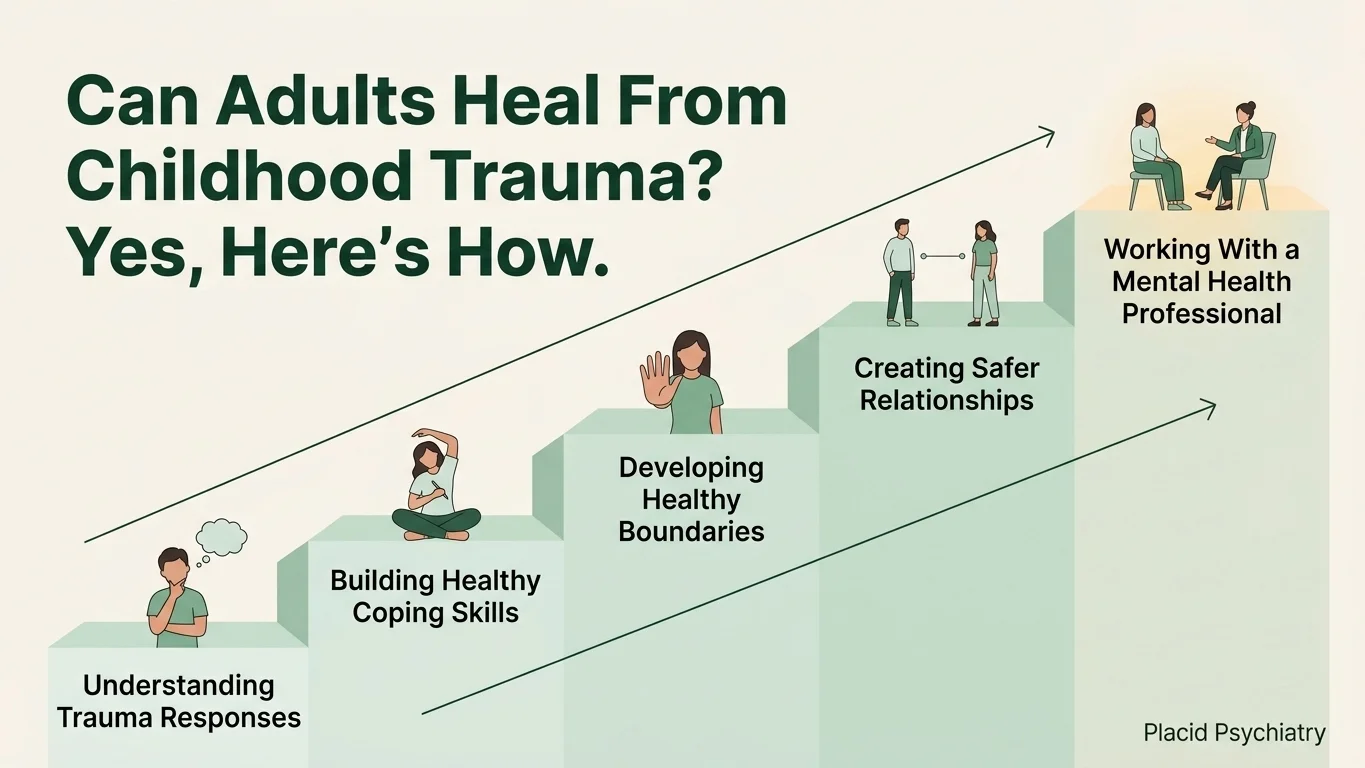
Yes. Healing is possible, although it may look different for each person. Healing does not mean forgetting what happened or pretending that difficult experiences did not matter. It means learning how those experiences may affect you today and developing healthier ways to respond.
Understanding Trauma Responses
Learning about your reactions can reduce confusion and self-blame. For example, you may discover that your need for control developed as a way to feel safe in an unpredictable environment. Understanding the purpose behind an old coping response can help you decide whether you still need it.
Building Healthy Coping Skills
Healthy coping skills can help you manage difficult emotions and stress. Depending on your needs, these may include exercise, relaxation, journaling, breathing exercises, healthy sleep habits, time with supportive people, and therapy. The goal is to find strategies that help you manage stress without causing additional problems.
Developing Healthy Boundaries
Boundaries are an important part of healthy relationships. You may need to practice saying no, expressing your needs, asking for space, or deciding what behavior you will accept from others. This can feel uncomfortable at first, particularly if you learned to put other people’s needs before your own.
Creating Safer Relationships
Supportive relationships can play an important role in healing. Healthy relationships are built through respect, honesty, communication, consistency, and trust. You do not have to trust someone completely right away. Learning to recognize safe and respectful behavior can help you develop stronger connections over time.
Working With a Mental Health Professional
You do not have to work through childhood trauma on your own. A mental health professional can help you understand your experiences, recognize patterns, evaluate your symptoms, and explore treatment options.
Professional support can also help you work toward specific goals, such as improving relationships, managing anxiety, building confidence, or handling stressful situations.
When Should You Seek Professional Help?
You may want to consider professional support when these patterns begin interfering with your daily life.
This may include problems with:
- Relationships
- Work or school
- Sleep
- Emotional control
- Daily responsibilities
- Social activities
- Coping with stress
- Overall quality of life
You do not have to wait until your struggles become severe before asking for help. A professional can help you understand whether your symptoms may be related to childhood trauma, another mental health concern, current stress, or a combination of factors.
If you are experiencing a mental health emergency or believe you may be in immediate danger, seek emergency assistance rather than waiting for a regular appointment.
Conclusion
The symptoms of childhood trauma in adulthood can appear in many different ways. Anxiety, emotional numbness, shame, low self-esteem, relationship difficulties, avoidance, hypervigilance, sleep problems, and strong reactions to stress are some possible signs.
However, these symptoms do not provide a diagnosis on their own. Similar experiences can happen for many reasons. Recognizing repeated patterns can still be valuable. It may help you better understand your emotions, relationships, coping habits, and reactions to stress. Your past does not have to determine your future.
With appropriate support, you can learn healthier ways to manage difficult emotions, build boundaries, develop safer relationships, and improve your overall well-being.
Take the Next Step Toward Healing
If you recognize these patterns in your life, talking with a qualified mental health professional can be a helpful next step. At Placid Psychiatry in Fullerton, CA, you can discuss your concerns, better understand what you are experiencing, and explore personalized mental health support.
A conversation with a professional can be the first step toward understanding your experiences and finding healthier ways to move forward. Contact Placid Psychiatry today to explore your care options and take the next step toward healing.
Frequently Asked Questions
What are the most common symptoms of childhood trauma in adulthood?
Common symptoms may include anxiety, shame, low self-esteem, emotional numbness, trust issues, people-pleasing, hypervigilance, sleep problems, and strong reactions to stress. These signs can also have other causes, so they do not confirm childhood trauma on their own.
Can childhood trauma affect relationships in adulthood?
Yes. Childhood trauma may affect trust, communication, attachment, and boundaries in adult relationships. Some people fear abandonment or rejection, while others avoid closeness or struggle to express their needs.
Can childhood trauma cause anxiety or depression?
Childhood trauma may increase the risk of anxiety or depression, but it is not the only possible cause. Genetics, current stress, relationships, health, and other life experiences can also affect mental health.
Can childhood trauma affect physical health?
Childhood trauma may be associated with stress-related symptoms such as sleep problems, muscle tension, or feeling constantly on edge. Because physical symptoms can have many causes, ongoing concerns should be discussed with a healthcare professional.
Can childhood trauma affect you even if you do not remember it?
Memory can be complex, and not remembering an event does not prove that trauma occurred. Current symptoms alone also cannot confirm a forgotten traumatic experience. A mental health professional can help you explore concerns without making assumptions.