
When stress builds up for too long without a break, your mind and body can reach a point where they simply cannot keep going the way they have been. This is often called a mental breakdown. It can feel scary and confusing, especially if you do not know what is happening or why.
At Placid Psychiatry in Fullerton, CA, we see people every week who are dealing with the early signs of a breakdown, often without realizing what it is. Knowing the symptoms early can make a big difference. The sooner you notice what is happening, the sooner you can get support and start to feel steady again.
What Is a Mental Breakdown?
A mental breakdown is a period of intense mental and emotional distress that makes it hard to function normally in daily life. It is not one single illness. Instead, it is a sign that stress, anxiety, or other struggles have built up past the point a person can manage on their own.
Is a Mental Breakdown a Medical Diagnosis?
The term “mental breakdown” is not an official medical diagnosis. Doctors and therapists use it to describe a period where someone feels completely overwhelmed by stress or emotional strain. What is actually happening underneath, such as anxiety, depression, or burnout, is usually what gets diagnosed and treated.
Mental Breakdown vs. Nervous Breakdown
These two terms are often used to mean the same thing. “Nervous breakdown” is an older phrase that was common years ago, while “mental breakdown” is more commonly used today. Both describe a point where stress becomes too much to handle without support.
Mental Breakdown vs. Burnout and Stress
Stress and burnout can lead to a breakdown, but they are not the same thing. Stress is your body’s normal response to pressure. Burnout is a state of exhaustion that builds up over weeks or months, usually from work or caregiving. A breakdown is what can happen when stress or burnout is left unaddressed for too long, until a person’s ability to cope collapses.
Common Mental Breakdown Symptoms
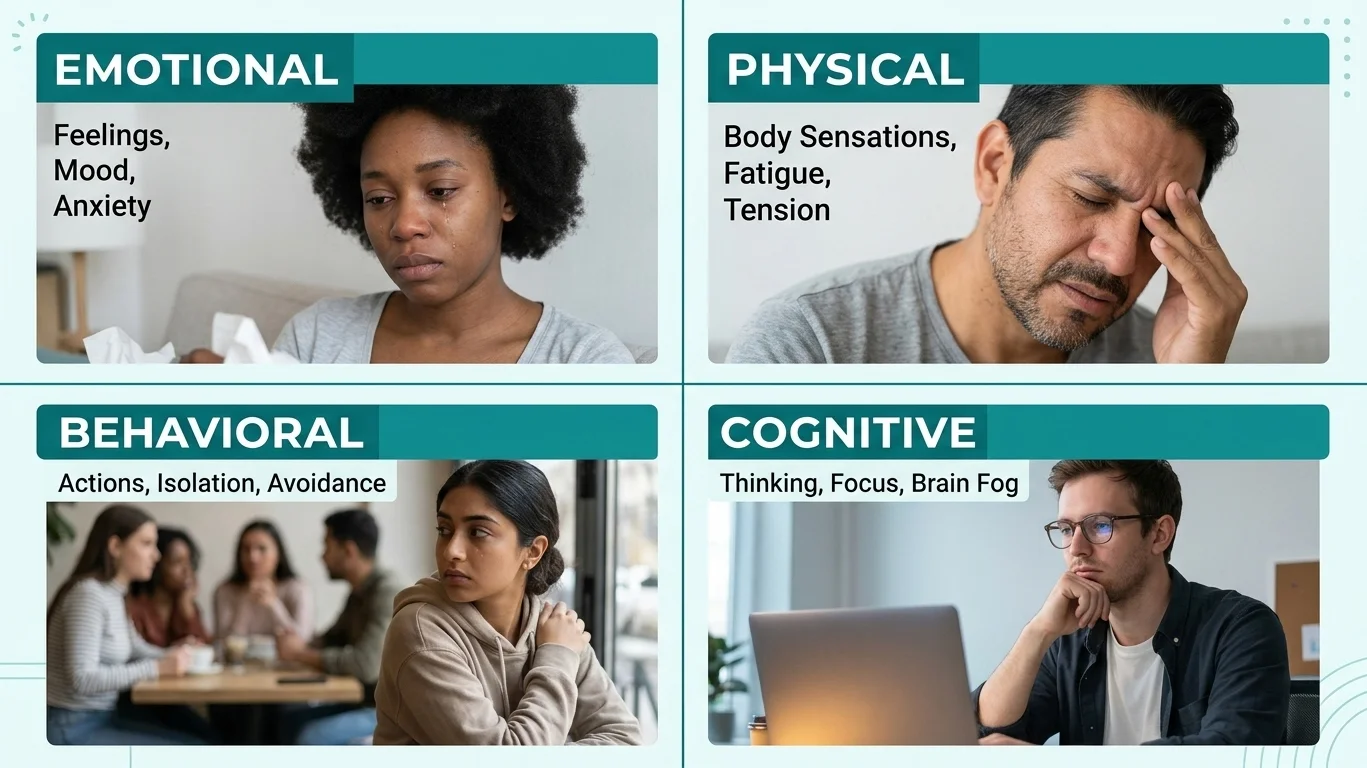
A mental breakdown can show up in different ways, often through emotional, physical, behavioral, and cognitive symptoms all at once.
Emotional Symptoms
- Anxiety
- Feeling overwhelmed
- Frequent crying
- Hopelessness
- Mood swings
Physical Symptoms
- Fatigue
- Headaches
- Sleep problems
- Appetite changes
- Muscle tension
Behavioral Symptoms
- Social withdrawal
- Poor concentration
- Trouble completing daily tasks
- Irritability
- Loss of motivation
Cognitive Symptoms
- Racing thoughts
- Memory problems
- Difficulty making decisions
- Feeling disconnected from reality
Warning Signs That a Mental Breakdown May Be Approaching
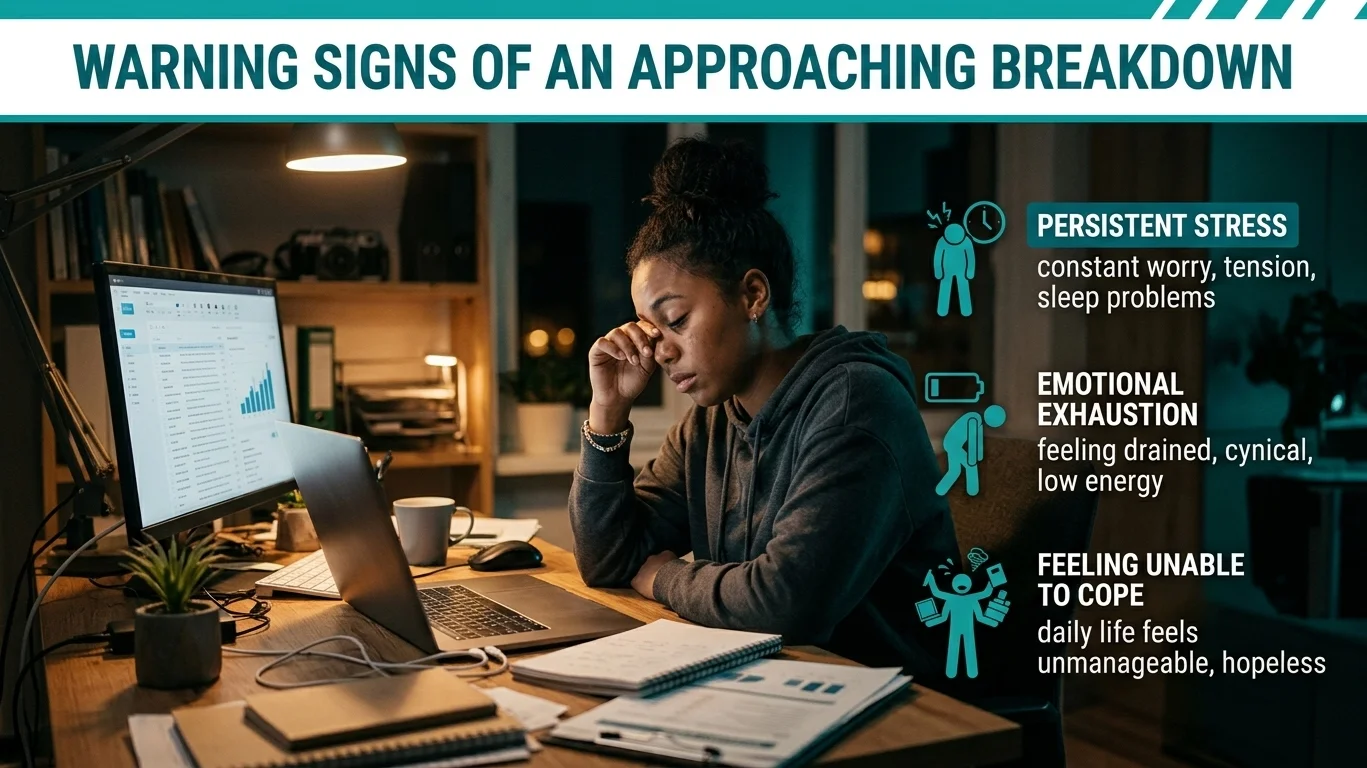
Before a full breakdown happens, your mind and body often send warning signs that something needs to change.
Persistent Stress: Stress that does not let up for weeks at a time, even during moments that used to feel calm, is often one of the earliest warning signs.
Emotional Exhaustion: Feeling emotionally drained, numb, or like you have nothing left to give, even after rest, can signal that a breakdown is building.
Panic Attacks or Severe Anxiety: Sudden waves of intense fear, a racing heart, or trouble breathing can show up more often as stress builds toward a breaking point.
Feeling Unable to Cope: Small daily tasks, like replying to a text or making a decision, can start to feel impossible when your ability to cope is running out.
Changes in Daily Functioning: Missing work, skipping meals, avoiding people, or falling behind on basic routines are all signs that stress has moved past a manageable level.
What Causes a Mental Breakdown?
A mental breakdown almost never comes out of nowhere. It usually builds slowly, often from a combination of ongoing stress, unresolved emotional strain, and life circumstances that stack up faster than a person can keep up with. Things like a demanding job, financial pressure, relationship strain, or an untreated mental health condition can all quietly wear down a person’s ability to cope over time.
What makes it harder to notice is that many of these causes overlap. Someone dealing with chronic stress at work may also be sleeping poorly and pulling away from friends, without realizing each of these is feeding into the others. Recognizing the different causes behind a breakdown, rather than treating it as one single problem, makes it much easier to find the right kind of support and start feeling steady again.
How Is a Mental Breakdown Diagnosed?
There is no single test that confirms a mental breakdown, since the term itself is not an official medical diagnosis. Instead, a doctor or mental health professional looks at your symptoms, how long they have lasted, and how much they are affecting your daily life. This helps them understand what is really driving the breakdown underneath, whether that is anxiety, depression, burnout, or something else.
Medical Evaluation
A medical evaluation usually comes first and includes a physical exam along with questions about your sleep, energy, and overall health. This step helps rule out physical causes that can mimic a breakdown, like thyroid issues or vitamin deficiencies. Your doctor may also ask about medications or substances that could be affecting your mood. This gives a clearer starting point before moving into a deeper mental health assessment.
Mental Health Assessment
A mental health assessment involves talking through your mood, stress levels, and how you have been functioning day to day. A therapist or psychiatrist uses this conversation to identify patterns, such as ongoing anxiety, depression, or burnout, that may be driving the breakdown. This step often includes questions about your history, relationships, and recent life changes. The goal is to understand the full picture, not just the symptoms on the surface.
Ruling Out Physical Health Conditions
Some physical health conditions can cause symptoms that look a lot like a mental breakdown, including fatigue, mood changes, and trouble concentrating. Basic blood tests or a physical exam can help rule these out early in the process. This step matters because treating a physical cause is very different from treating a mental health cause. Ruling this out first helps make sure the treatment plan actually fits what is going on.
Treatment for Mental Breakdown
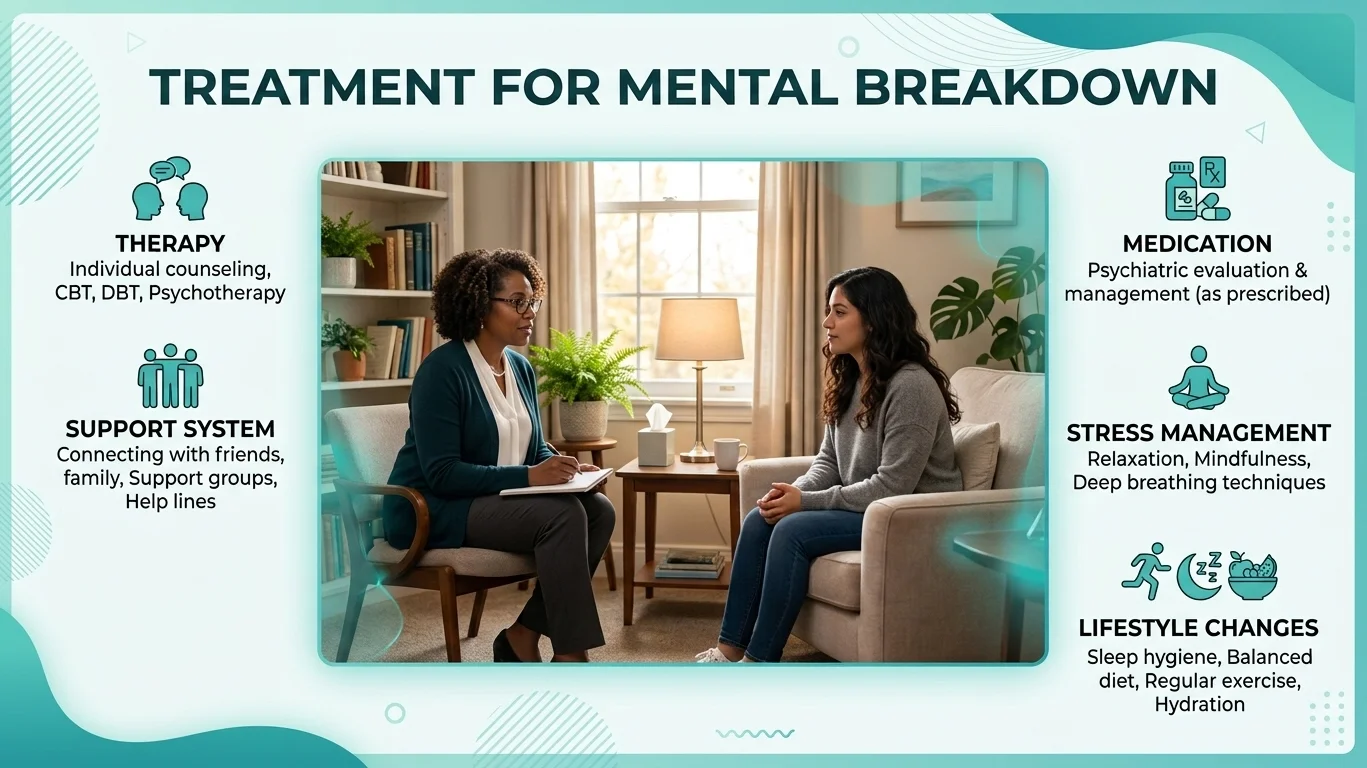
Treatment for a mental breakdown usually starts with figuring out what is driving it, since the right approach depends on the underlying cause. For many people, this means a mix of therapy, medication when needed, and lifestyle changes that help calm the nervous system. Recovery is rarely one-size-fits-all, so a treatment plan is often built around each person’s specific symptoms and daily life.
Therapy and Counseling
Therapy gives you a space to understand what led to the breakdown and to build healthier ways of handling stress going forward. A therapist can help you notice patterns in your thoughts and behavior that may be feeding the breakdown. Over time, this process helps you build tools you can keep using long after treatment ends. Many people find therapy to be one of the most effective parts of recovery.
Medications
Medication may be recommended when anxiety or depression are playing a major role in the breakdown. These medications work by helping balance brain chemicals connected to mood and stress. A psychiatrist can help figure out if medication is a good fit for your specific situation. Medication is often most effective when it is combined with therapy rather than used on its own.
Stress Management Techniques
Stress management techniques, like deep breathing, grounding exercises, and mindfulness, help calm your body’s stress response in the moment. These tools can be used daily, not just during moments of crisis, to keep stress from building back up. Practicing them regularly makes them more effective when you need them most. Over time, they become one of the easiest tools to lean on during recovery.
Lifestyle Changes
Simple changes like better sleep, regular movement, and cutting back on caffeine and alcohol all support your body as it recovers. These changes will not fix a breakdown on their own, but they make therapy and other treatment work better. Small, steady habits often matter more than big, sudden changes. Consistency here tends to make the biggest difference over time.
Support from Family and Friends
Having people around you who understand what you are going through can make recovery feel less isolating. Support does not need to be complicated. Sometimes it just means someone checking in or being willing to listen without judgment. This kind of support often works alongside professional treatment rather than replacing it.
Self-Care Tips During Recovery
Alongside professional treatment, small daily habits can go a long way in helping your mind and body recover.
- Prioritize rest and sleep
- Practice relaxation techniques
- Stay physically active
- Eat a balanced diet
- Build a support system
- Avoid alcohol and recreational drugs
When Should You Seek Professional Help?
Knowing when to reach out for help can be hard, especially when you are in the middle of feeling overwhelmed. As a general guide, if stress, anxiety, or low mood have lasted more than two weeks and are affecting your work, relationships, or daily routine, it is a good time to talk to a mental health professional rather than waiting for things to improve on their own.
Some symptoms call for more immediate attention, such as frequent panic attacks, feeling unable to function, or feeling completely overwhelmed for several days in a row. If you ever have thoughts of harming yourself or others, or feel unable to keep yourself safe, this is a medical emergency. Call 911 or go to the nearest emergency room, or call or text 988 to reach the Suicide and Crisis Lifeline right away.
Can a Mental Breakdown Be Prevented?
While it is not always possible to avoid every source of stress, there is a lot you can do to lower your risk of reaching a full breakdown. Managing stress early, building healthy habits, and reaching out for support before symptoms worsen all play a role. Prevention is rarely about one big change, but rather several small habits working together. The sections below cover the main ways to lower your risk.
Manage Stress Early
Dealing with stress as it comes up, instead of letting it build for weeks or months, makes a real difference. This can mean setting boundaries at work or addressing problems in relationships before they grow. Small check-ins with yourself can help you notice rising stress before it becomes overwhelming. Catching it early is almost always easier than managing it later.
Maintain Healthy Habits
Regular sleep, movement, and balanced meals all help your mind and body handle stress more effectively. These habits will not prevent every stressful situation, but they build a stronger foundation for coping with them. Even small, consistent habits add up over time. This makes daily stress feel more manageable instead of overwhelming.
Seek Help Before Symptoms Worsen
Reaching out for support at the first signs of struggle is far easier than waiting until things feel unmanageable. This might mean talking to a therapist, a doctor, or even a trusted friend. Getting ahead of the problem often shortens recovery time significantly. Waiting, on the other hand, tends to make the process longer and harder.
Practice Regular Self-Care
Making time for rest, hobbies, and connection with others helps keep stress from quietly building up. Self-care does not need to be elaborate to be effective. Even small daily moments of rest or connection can make a real difference over time. This kind of consistency helps protect against reaching a breaking point in the first place.
Take the First Step With Placid Psychiatry
You do not have to face this alone. At Placid Psychiatry in Fullerton, CA, our team offers compassionate, personalized care for anxiety, stress, and mental breakdown symptoms, both in person and through telehealth across the country. Contact us today and starts your path toward feeling steady again. Placid Psychiatry is here to help, whenever you are ready to take that first step.
Conclusion
A mental breakdown can feel overwhelming, but it is not something you have to face alone or push through in silence. Recognizing the emotional, physical, behavioral, and cognitive symptoms early gives you the best chance at a faster, smoother recovery. With the right support, whether that is therapy, medication, or simply leaning on people who care about you, it is entirely possible to recover and feel like yourself again.
Frequently Asked Questions
What are the first signs of a mental breakdown?
Early signs often include ongoing fatigue, trouble sleeping, feeling irritable or overwhelmed, and pulling away from people or activities you usually enjoy. These signs tend to build gradually before reaching a breaking point.
How long does a mental breakdown last?
This varies from person to person. Some people start to feel better within a few weeks with rest and support, while others may need a few months, especially if therapy or medication is part of the recovery plan.
What is the difference between a mental breakdown and burnout?
Burnout usually builds slowly from ongoing stress, often tied to work, and mainly causes exhaustion and detachment. A mental breakdown is a broader term for when stress becomes so overwhelming that a person can no longer function normally, and it can stem from burnout or many other causes.
Should I go to the emergency room for a mental breakdown?
If you are having thoughts of harming yourself or others, or feel unable to keep yourself safe, go to the emergency room or call 911 right away. For symptoms that feel serious but not life-threatening, a mental health professional can guide you on the right next step.
Is anxiety the same as a mental breakdown?
No. Anxiety is a specific mental health condition, while a mental breakdown is a broader term describing a period of being overwhelmed. Anxiety can be one of the causes that leads to a breakdown if it goes untreated.
What should I do if someone I know is having a mental breakdown?
Stay calm, listen without judgment, and encourage them to reach out to a mental health professional. If they mention thoughts of harming themselves, take it seriously and help them contact a crisis line or emergency services right away.