

Your first couples therapy session is mainly a chance to get to know each other. The therapist will learn about your relationship, understand the problems you are facing, and help you set goals for therapy. You do not need to solve all your problems in the first session.
Starting couples therapy can feel a little scary. You may not know what to say, how the session will go, or if your therapist will judge you and your partner. This is normal. Most couples walk into their first session with some nerves, and that is okay.
The good news is that the first session is not as intense as most people think. At Placid Psychiatry in Fullerton, CA, our team works with couples to make that first visit feel calm and easy to follow. If you are ready to take that first step, you can schedule a visit and see what working with the right provider feels like.
This guide walks you through what really happens in your first couples therapy session, how to get ready for it, and what questions you might hear along the way.
Is Couples Therapy Right for You and Your Partner?
Not every couple needs therapy, but almost every couple can benefit from it at some point. Therapy is not just for relationships that are falling apart. It is also for couples who want to build a stronger bond and understand each other better.
Common Reasons Couples Start Therapy
Couples often start therapy after fights that keep repeating without a real fix. Other common reasons include feeling distant from each other, trust problems, money stress, or big life changes like a new baby or a move. Some couples come in simply because they want to feel closer again.
When Couples Therapy Can Help
Therapy tends to help most when both partners are willing to show up and try, even if they do not agree on everything yet. It works well for communication problems, trust issues, and learning how to fight fair instead of hurting each other.
When Another Type of Therapy May Be More Appropriate
If one partner is dealing with something like untreated depression, active addiction, or a mental health crisis, individual therapy may need to come first. In cases involving abuse, a therapist may recommend individual support instead of joint sessions, since safety always comes first.
How to Prepare for Your First Couples Therapy Session
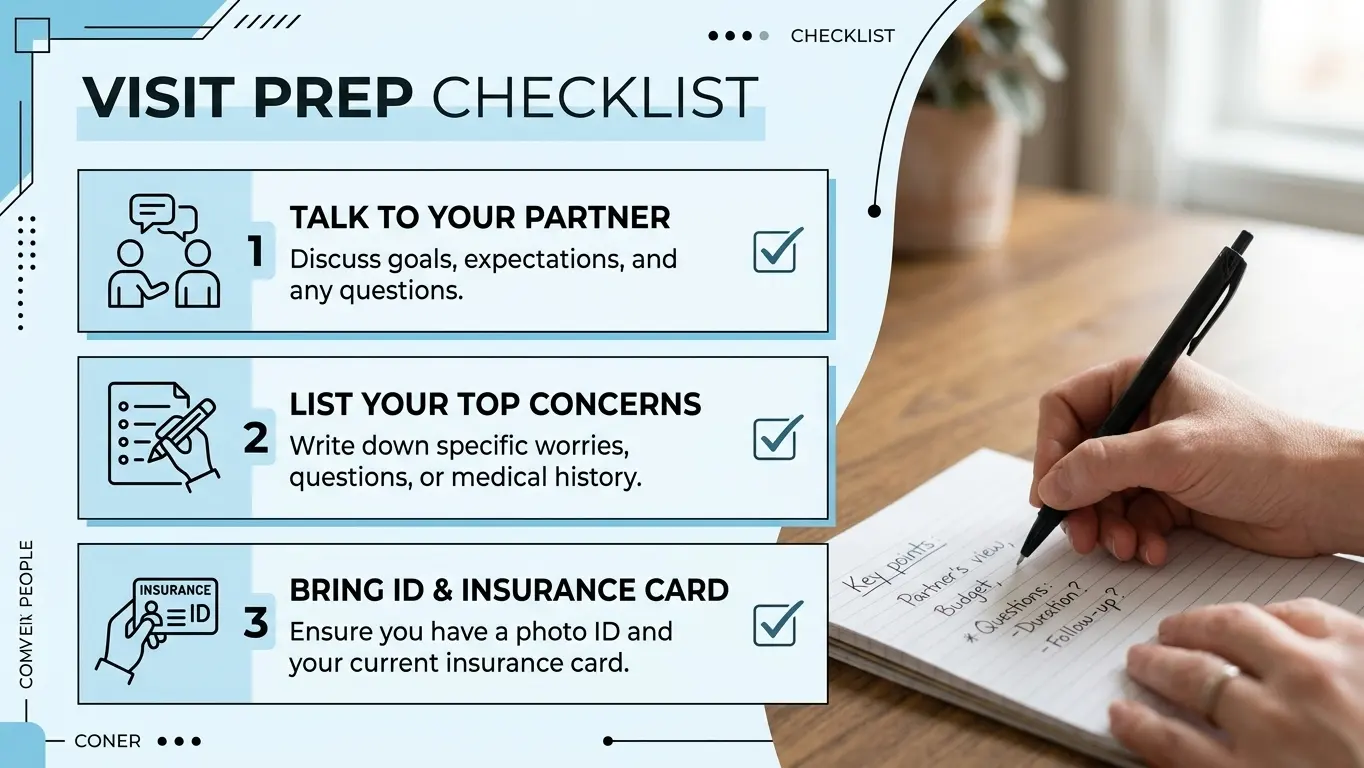
Walking in with a little preparation can make your first session smoother and less stressful for both of you. Before your first appointment, talk with your partner about what you both hope to get out of therapy. You do not need to agree on everything, but having an idea of what you each want helps your therapist understand your relationship faster.
Take a few minutes on your own to think about the issues that bother you the most. Try to keep your list short and focused instead of trying to bring up every problem from the last five years. Your therapist will likely ask how you met, what drew you together, and how your relationship has changed over time.
Thinking about this ahead of time can help the conversation feel less rushed. You do not need to bring much. Some couples like to bring notes about specific concerns. If you plan to use insurance, bring your insurance card and a photo ID as well.
What to Expect During Your First Couples Therapy Session
Your first session is mostly about getting to know each other, not solving every problem right away. Think of it less as diving straight into “fixing” things and more as laying the groundwork so your therapist understands who you are as a couple.
Meeting Your Therapist and Setting Ground Rules
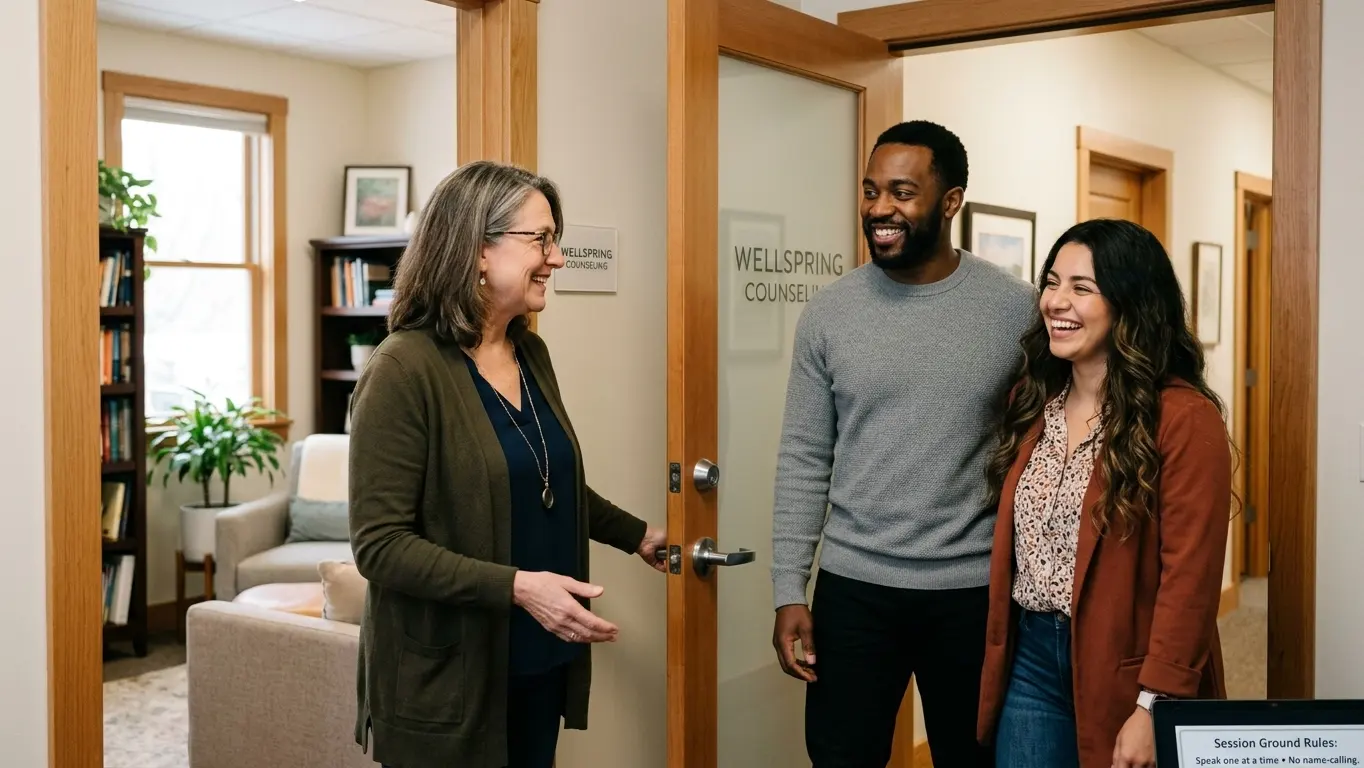
Your therapist will start by introducing themselves and explaining how sessions work, including things like session length, confidentiality, and how often you’ll meet going forward. They will also set a few ground rules, like speaking one at a time and avoiding name-calling, so both partners feel safe speaking up. These ground rules matter more than they might seem — they set the tone that this is a space where both people get heard, not just whoever talks the loudest or fastest.
Sharing Your Relationship Story and Current Concerns
Next, you and your partner will share your relationship story in your own words, starting with how you met and working through the highlights and hard points along the way. Your therapist listens closely here to understand your history and how you both see the current problems, often noticing where your two versions of the story line up and where they differ. It’s common for partners to realize during this part that they’ve never actually heard each other describe things this way before.
Discussing Your Goals for Therapy
Your therapist will ask what you hope to get from therapy. This might be better communication, more trust, less fighting, or simply feeling closer again. You and your partner don’t need to have identical goals here; one of you might want to rebuild trust after a specific event while the other wants to feel more emotionally connected day-to-day, and your therapist will work with both.
Exploring Communication and Conflict Patterns
Your therapist pays close attention to how you and your partner talk to each other during the session, not just what you say but how you say it. This helps them spot patterns, like one partner shutting down or the other getting defensive, that likely show up at home too. Even small things, like who tends to interrupt or who goes quiet first during a disagreement, give your therapist useful clues about the dynamic they’ll be helping you shift.
Identifying Immediate Concerns and Relationship Needs
If there is something urgent going on, like a recent fight or a big decision you are facing, your therapist will make time to address it, even in the first session. This might mean setting aside the broader relationship history for a moment to help you both get through the immediate issue with some stability, especially if it’s something that could otherwise escalate before your next appointment.
Creating a Plan for Future Sessions
Before you leave, your therapist will outline a rough plan for the sessions ahead, including how often you will meet and what you will likely work on first. This isn’t a rigid contract, it’s more of a starting map, and your therapist will likely revisit and adjust it as they learn more about your relationship over the next few sessions.
What Your Therapist Is Looking For During Couples Counseling
While you talk, your therapist is quietly noticing patterns that matter for your treatment plan. Your therapist watches how you talk and argue, since these patterns often repeat outside of therapy too. They also look at how connected and safe you both feel with each other, and whether trust issues are present.
Since personal struggles like anxiety or depression can affect a relationship, your therapist may ask a few questions about each partner’s mental health. Your therapist also looks for what is already working well, since building on your strengths is just as important as fixing problems.
Common Concerns About Your First Couples Therapy Session
Walking into a first couples therapy session, most people worry about a handful of the same things: will the therapist end up taking sides, do they have to share every painful detail right away, and what happens if they and their partner want completely different things out of therapy.
These worries are completely normal, and a good therapist is trained to stay neutral, let trust build at its own pace, and help two people with different goals still move forward together. Other common fears are about commitment and conflict: what if one partner isn’t fully on board, or what if something really difficult comes up mid-session.
The reassuring part is that showing up is already a good sign, even for a hesitant partner, and therapists are trained to keep hard moments calm and productive rather than letting them spiral, so nothing that comes up in session is likely to blindside you.
What Couples Therapy Is Like After the First Session
Once the first session is done, therapy moves into a more focused stage of steady work.
Creating a Personalized Treatment Plan Your therapist builds a plan based on your goals, your history, and the patterns they noticed in your first visit.
Learning New Communication and Conflict Skills Future sessions often focus on practical tools, like how to listen better and how to disagree without hurting each other.
Working Through Trust, Intimacy, and Relationship Problems As sessions continue, you will work through deeper issues at a pace that feels manageable for both partners.
Tracking Progress Toward Your Relationship Goals Your therapist checks in regularly to see what is improving and what still needs work, adjusting your plan as needed.
Will Couples Therapy Include Individual Sessions?
Some couples therapy plans include one-on-one time with each partner in addition to joint sessions. This is a common and normal part of the process, not a sign that something has gone wrong or that the therapist has picked a side. Depending on the approach your therapist uses, individual sessions might happen once at the start to get a fuller picture of each partner, or periodically throughout treatment whenever it seems useful.
When Individual Sessions May Be Helpful
Individual sessions can help when one partner needs extra space to talk about something personal, like anxiety or a past trauma, that affects the relationship. Some things are simply easier to open up one-on-one, especially early on, before there’s enough trust built to share them in front of a partner. Individual time can also be useful when one partner is struggling with something like grief, a health issue, or stress from work that spills over into the relationship but isn’t really about the relationship itself.
How Individual and Couples Therapy Can Work Together
Individual and couples sessions can work side by side, giving each partner room to grow while still building the relationship together. What one partner works through on their own say, managing anxiety or processing an old wound often shows up as real progress in the joint sessions too, since a calmer, more grounded partner tends to communicate better as a couple.
Your therapist will usually keep both tracks connected, using what comes up individually (with appropriate boundaries around privacy) to inform the work you do together, rather than treating the two as separate, unrelated processes.
How to Get the Most Out of Couples Therapy
Therapy works best when both partners put in real effort, both during sessions and at home. It’s easy to show up once a week and expect change to happen just by talking, but the sessions themselves are really just the starting point for the harder work that happens in between.
Try to speak honestly about how you feel without turning it into an attack on your partner. Focus on truly hearing your partner instead of just waiting for your turn to talk. Be willing to try new tools your therapist suggests, even if they feel awkward at first most communication skills feel unnatural before they feel normal. The real change happens between sessions, when you practice what you learned at home, since a single hour a week can’t undo patterns that took years to build.
How Long Does Couples Therapy Take?
There is no set number of sessions that works for every couple, since every relationship is different. How long therapy takes depends on things like how long the problems have been going on, how open both partners are, and how complex the issues are. Couples dealing with one specific rupture, like a recent betrayal of trust, often move faster than couples working through years of built-up resentment or communication breakdown.
Some couples see real change in a few months, while others benefit from longer term support, especially for deeper trust or communication issues. Signs of progress include fewer repeated fights, better listening, and feeling more like a team instead of opponents. It’s also normal for progress to feel gradual rather than sudden. Most couples notice the shift in hindsight, looking back at how differently they’re handling things compared to a few months earlier.
Conclusion
Your first couples therapy session is really just a starting point. It is a chance for your therapist to understand your relationship, hear both of your concerns, and build a plan that fits your specific goals, not a generic checklist. You do not need to have everything figured out before you walk in the door, and you do not need a perfect relationship to benefit from the process.
If you and your partner are ready to take that first step, Placid Psychiatry in Fullerton, CA offers a supportive space to begin, with both in person and telehealth options depending on what works best for your schedule. Reach out today to schedule your first appointment and start building a stronger relationship together
Frequently Asked Questions About Couples Therapy
What Happens in the First Couples Therapy Session?
Your therapist sets ground rules, then asks about your relationship history, current concerns, and goals. This helps them understand how you communicate and where things have gotten stuck. You’ll leave with a rough plan for what future sessions will focus on.
What Questions Are Asked in Couples Therapy?
Expect questions about how your relationship started, how you each handle conflict, and what you want to be different a year from now. Your therapist may also ask whether you tend to shut down or get defensive during disagreements. These questions help them spot patterns early on.
How Should We Prepare for Couples Therapy?
Talk with your partner beforehand about your goals, and think through the two or three issues that bother you most. You don’t need to agree on everything going in, just have a sense of what you each want. Bring your insurance card and ID if you plan to use insurance.
Is Couples Therapy Worth It?
It’s worth it for couples who show up consistently and are willing to be a little vulnerable. It’s less about finding a magic fix and more about both people trying something different. Couples expecting the therapist to solve things for them tend to be more disappointed.
Does Couples Therapy Really Work?
Yes approaches like Emotionally Focused Therapy and the Gottman Method show real improvement in communication and satisfaction. The biggest factor isn’t the specific technique, it’s whether both partners stay engaged between sessions and keep practicing what they learn.
How Long Does Couples Therapy Usually Last?
Many couples meet weekly for a few months, though it depends on how long-standing and complex the issues are. Couples working through one recent issue tend to see progress faster than those untangling years of built-up resentment.
Can Couples Therapy Help If We Are Considering Separation?
Yes. Discernment counseling can help you both get clarity on whether to stay together or separate, respectfully and clear-headed. Even if you do separate, the skills you build can make the process less painful, especially with kids involved.
What If My Partner Does Not Want to Go to Couples Therapy?
You can start individual therapy on your own it often changes how you show up in the relationship even without your partner in the room. Many reluctant partners become more open to joining once they see you making progress or once the fear of being “blamed” fades.