
Yes, depression can cause memory loss. It’s one of the most overlooked symptoms of depression, right alongside sadness and loss of interest. It can make it harder to hold onto conversations, follow through on tasks, or think with any real clarity. This isn’t “in your head” in the dismissive sense. It’s a measurable effect on how the brain encodes and stores information.
This kind of memory loss shows up in specific ways. Short-term memory is usually hit hardest: forgetting a conversation minutes after it ends, misplacing keys, walking into a room and forgetting why. Concentration suffers too, which makes new information harder to store in the first place. Some people describe it less as sudden memory loss and more as brain fog, a slower, fuzzier quality to their thinking.
The reassuring part is that this type of memory loss is usually reversible. Once depression is treated, memory and focus tend to improve alongside mood. At Placid Psychiatry in Fullerton, California, we see this pattern often. Someone comes in worried they’re developing a serious cognitive problem, and depression turns out to be the root cause. Below, we’ll walk through why this happens in the brain, how to tell it apart from something more serious like dementia, and what actually helps.
Can Depression Really Cause Memory Loss?
Many people think of depression as just feeling sad. But depression affects the whole brain, not just your mood. Research shows that depression can slow down thinking, make it hard to focus, and cause real problems with memory. One study of 285 people with major depression found that nearly 6 in 10 had a measurable impairment in at least one area of cognitive function, like memory, attention, or processing speed.
Another long-term study found that cognitive complaints were reported during 94% of acute depressive episodes, and that even after depression went into remission, people still reported concentration and memory problems 44% of the time.
How Depression Affects the Brain and Memory
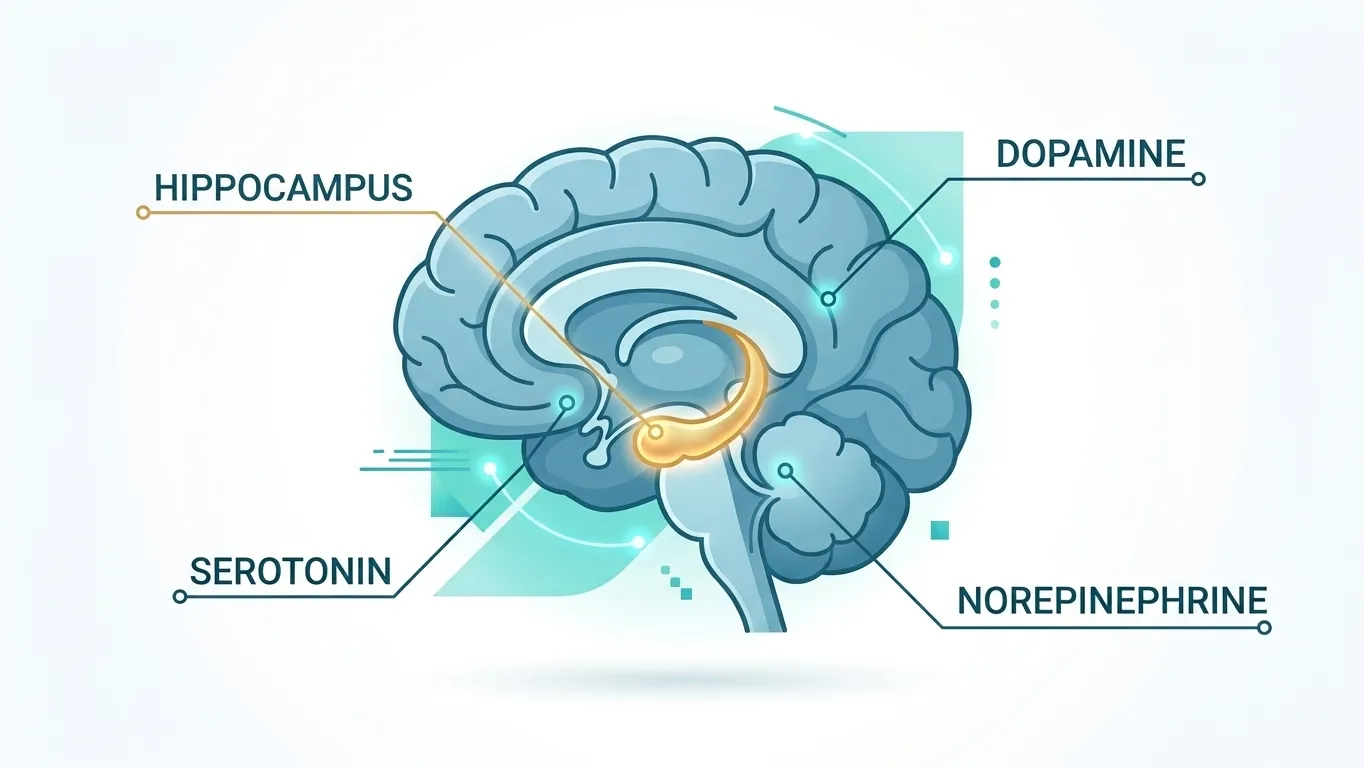
Depression can change how the brain works by affecting brain chemicals and the hippocampus, the part of the brain that helps form memories. This can make it harder to focus, remember new information, and think clearly.
Changes in Brain Chemicals
The brain uses chemicals called neurotransmitters to send messages between nerve cells. Depression disrupts the balance of three key chemicals. Serotonin helps regulate mood, sleep, and memory. Low serotonin levels are linked to both depression and poor memory.
Dopamine controls focus, motivation, and the ability to feel pleasure. When dopamine is low, it becomes hard to pay attention, which makes it harder to store new memories. Norepinephrine helps the brain stay alert and focused. Low norepinephrine makes it hard to concentrate and process new information, which directly affects memory.
The Role of the Hippocampus
The hippocampus is a small area deep in the brain that plays a big role in forming new memories. It takes information from your daily life and helps store it for later recall. Chronic stress and depression can actually shrink the hippocampus over time.
High levels of the stress hormone cortisol, which is often elevated during depression, damage the cells in this area. A smaller or less active hippocampus means weaker memory. Brain imaging studies back this up directly. One study found that people with depression had hippocampal volumes nearly 19% smaller than people without depression, and a larger analysis pooling multiple studies found an average reduction of 8 to 10%.
Poor Concentration Makes Memory Worse
Memory is a two-step process. First, you have to pay attention to something. Then your brain can store it. When you are depressed, your mind is often distracted by negative thoughts, worry, or a kind of mental numbness.
You may be physically present in a conversation or a room, but your brain is not taking in information properly. If information never gets stored in the first place, there is nothing to remember later.
What Types of Memory Are Affected?
Memory has different types, and the type that is affected depends on the cause. Problems like depression, aging, head injuries, or certain brain conditions can affect memory in different ways.
Short-Term Memory
Short-term memory holds information for a brief period, usually just seconds to minutes. Depression hits short-term memory hard. People with depression commonly forget conversations that just happened. They misplace everyday items like keys, phones, or glasses. They forget tasks they planned to do just minutes earlier.
Long-Term Memory
Long-term memory stores information over days, months, and years. Depression can also affect this type of memory. People may have trouble recalling older memories or specific details from the past. Memories can feel foggy or incomplete. Some people find it hard to remember important events, conversations, or experiences from their own life.
Working Memory
Working memory is the ability to hold information in your mind while you use it. Think of it like a mental whiteboard. Depression weakens working memory. Following a set of instructions becomes harder. Keeping track of a conversation while also thinking of a response feels overwhelming. Doing two things at once, like cooking while listening to someone talk, becomes difficult.
Why Does Depression Cause Memory Problems?
Depression can affect memory in several ways. Cortisol is useful in short bursts, but when it stays high for weeks or months, it damages brain cells, especially in the hippocampus. Long-term stress can harm the parts of the brain that help you remember things. It can also cause poor sleep, making it harder for your brain to store new memories. As a result, you may have trouble focusing or remembering everyday information.
Depression can also lower your motivation and cause brain fog, making thinking feel slow and unclear. When you stop doing activities that keep your brain active, like reading or spending time with others, your memory and thinking skills may become weaker over time.
Depression Memory Loss vs. Dementia: What’s the Difference?
Depression and dementia can both cause memory problems, but they show up differently.
| Depression-Related Memory Loss | Dementia-Related Memory Loss | |
| Onset | Comes on quickly, around when depression starts | Develops slowly over months or years |
| Awareness | Person notices and is often frustrated by it | Person often doesn’t realize memory is failing |
| Pattern | Patchy; some things still remembered clearly | Progressive and increasingly widespread |
| With treatment | Improves once depression is treated | Keeps worsening even with treatment |
| Severe cases | Rarely forgets own name or address | Can eventually forget basic personal information |
In some cases, depression-related memory loss is severe enough to resemble dementia. Doctors call this pseudodementia, or depression-related cognitive dysfunction. It’s not a formal diagnosis, but a pattern psychiatrists watch for, especially in older adults. Unlike true dementia, it doesn’t come from neurodegeneration, and it typically improves once depression is treated. Even so, it deserves a full medical workup, not just a depression screening, since people with pseudodementia have a higher long-term risk of developing true dementia later on.
Other Conditions That Can Cause Memory Loss
Depression is not the only condition that affects memory. Other causes include anxiety, which overloads the brain with worry and makes it hard to focus. ADHD makes it hard to pay attention and store information. Chronic stress keeps cortisol high and weakens the hippocampus. A lack of vitamin B12 can cause brain fog and memory problems.
Thyroid disorders slow down brain function. Some medications list memory problems as a side effect. Alcohol and drug use damage the brain over time. And natural aging gradually slows thinking and recall.
Signs That Depression May Be Affecting Your Memory
Depression does not just affect your mood. It can also show up in how you think and remember things. Here are the most common signs that depression may be hurting your memory.
- You forget appointments or plans you made just a short time ago
- You lose focus in the middle of a task and forget what you were doing
- Your thinking feels slow, like your brain is running in slow motion
- You forget what you just read even right after finishing it
- You struggle to find the right word when talking to someone
- Making simple everyday decisions feels much harder than before
- You ask the same question twice without realizing you already asked it
- You start a task and then completely forget to finish it
How Doctors Diagnose Memory Problems Caused by Depression
Doctors use several tools to figure out whether depression is behind memory problems. They start with a medical history to understand when symptoms began and what else might be going on in the person’s life. Depression screening uses a short set of questions to measure how severe the depression is.
Memory and thinking tests check things like recall, attention, and problem solving. Blood tests can rule out physical causes like thyroid problems or vitamin deficiencies. Brain imaging, such as an MRI or CT scan, is used in some cases to check for physical changes in the brain, though it is not always needed.
Can Memory Improve After Depression Treatment?
Yes. In most cases, memory improves when depression is treated. The brain is more flexible than many people think. Therapy, especially cognitive behavioral therapy (CBT), helps by changing negative thought patterns, and as mood improves, focus and memory often follow. Antidepressants may help too by balancing brain chemicals, though they usually take a few weeks to work. Good sleep and stress management matter as well, since sleep is when the brain stores new memories.
Can Antidepressants Cause Memory Loss?
Sometimes, yes, depending on the antidepressant. Mild memory or concentration issues can show up in the first few weeks of a new medication, but they usually settle as the body adjusts.
Long-term dementia risk is the bigger question, and it comes down to anticholinergic effects, drugs blocking acetylcholine, a brain chemical tied to memory. Older tricyclics and a few SSRIs like paroxetine carry this risk, especially in adults over 65. Most common SSRIs and newer antidepressants don’t carry it. Some research even suggests long-term SSRI use may lower the risk of progressing to Alzheimer’s in people with mild cognitive impairment, likely because treating the depression itself protects the brain.
Noticing memory problems on an antidepressant? Don’t stop on your own. Talk to your prescriber about whether your medication is anticholinergic and whether another option fits better.
Tips to Improve Memory When You Have Depression

Treating depression itself is what helps memory the most, but a few habits can speed things along.
Exercise Regularly
Physical activity increases blood flow to the brain and helps brain cells grow and connect. Even a 20-minute walk a few times a week makes a difference, and it’s one of the most well-supported ways to improve both mood and memory.
Get Quality Sleep
Go to bed and wake up at the same time each day, and keep a consistent routine so your brain has less to track. Good sleep is when your brain actually stores new memories, so this matters more than almost anything else on this list.
Eat for Your Brain
Omega-3s from fish, walnuts, and flaxseeds support brain health, as do leafy greens and berries. Too much sugar and processed food tends to make brain fog worse.
Use Notes, Calendars, and Reminders
There’s no shame in writing things down. A notebook, a phone calendar, or a reminder app takes pressure off your brain while it heals.
Stay Socially Connected
Conversation requires focus, memory, and quick thinking, which makes it a kind of natural brain exercise. It also reduces isolation, which can otherwise make depression worse.
Is Depression Affecting Your Memory? Get Help Today
If depression is affecting your memory, your focus, or your ability to think clearly, you do not have to figure it out on your own. At Placid Psychiatry in Fullerton, California, we specialize in treating depression and the cognitive symptoms that come with it, including memory problems, brain fog, and difficulty concentrating. Our provider takes time to understand what you are going through and builds a treatment plan that fits your life.
Memory problems caused by depression are treatable. The sooner you get the right help, the sooner your brain starts to feel like yours again. Contact us or visit to schedule your appointment today. Same-week appointments are available, and telehealth is offered across all 50 states.
Conclusion
So, can depression cause memory loss? Yes, and it’s backed by research showing brain chemical changes, a shrinking hippocampus from chronic stress, poor sleep, and low motivation all working together to disrupt how memory forms and is recalled.
The difference between this and something like dementia comes down to one word: reversible. Depression-related memory loss responds to treatment. Therapy, medication, consistent sleep, and small daily habits like exercise and writing things down all help memory come back online, usually alongside improvements in mood, though thinking often takes a little longer to catch up.
If forgetfulness, brain fog, or trouble concentrating have been nagging at you, it’s worth asking whether depression could be behind it, especially if it started around the same time as changes in your mood or motivation. It’s a treatable cause, not a life sentence, and the sooner it’s addressed, the sooner your memory starts working with you again instead of against you.
Frequently Asked Questions
Could depression cause memory loss even in young adults?
Depression can affect people of any age, and so can the memory problems that come with it. Young adults with depression often report trouble concentrating, forgetting things, and feeling mentally slow. Age does not protect against depression-related cognitive problems.
Is it normal to feel impatient with how slowly my memory is improving?
Yes, completely normal. Memory tends to lag behind mood. Many people start feeling emotionally better before their thinking fully clears up, which can be frustrating if you’re expecting both to improve at the same pace. Give it time, and mention it to your provider if it’s not improving at all, not just slower than you’d like.
Can anxiety and depression both affect memory?
Yes. Both anxiety and depression interfere with memory, but in slightly different ways. Anxiety floods the brain with worry, which takes up mental space and makes it hard to focus. Depression slows the brain down overall. Many people have both conditions at the same time, which can make memory problems worse.
How long does it take for memory to improve after depression treatment?
It varies from person to person. Some people notice improvements in thinking and memory within a few weeks of starting treatment. For others, it may take several months. Full recovery depends on how long the depression lasted, how severe it was, and how consistently treatment is followed.
Is brain fog the same as depression-related memory loss?
They overlap, but brain fog is a broader term. It describes feeling mentally slow, unfocused, or foggy, while depression-related memory loss specifically refers to trouble forming or recalling memories. Depression can cause both. Treating depression usually improves each.